
You can turn a tight, hallway-like space into a cozy spot by moving furniture away from walls. Strategic furniture placement is key to fixing awkward shapes and making your home welcoming.
Many people push all furniture against walls, leaving a middle area that feels empty. Try moving your sofa or using area rugs to make clear zones for talking and relaxing.
By planning furniture placement carefully, you improve both flow and comfort. These proven design strategies will help you use your space well while keeping your home looking great.
Table of Contents
Understanding the Challenges of a Long Narrow Living Room
If your living room feels like a hallway, you’re not alone. Many struggle with designing a long narrow living room. This shape can make the space feel disconnected and hard to furnish.
Common Layout Issues
One big mistake is putting all seating against the walls. It might save space, but it makes the room feel odd and formal. This leaves a big empty space in the middle, making it feel like a hallway.
Another problem is making a single path through the seating area. This messes up your furniture arrangement and makes the room feel unwelcoming. It’s key to break this path to make your home feel cozy.
Importance of Choosing the Right Furniture
Finding the right furniture is key to peace in your home. Big sofas or sectionals can make a long narrow living room feel cramped. Look for light pieces, like chairs with exposed legs or glass tables.
The size of your furniture is as important as where you put it. Choosing furniture that fits the room’s size helps avoid clutter. A smart furniture arrangement can turn a tough layout into a cozy, stylish space.
Creative Layout Ideas for a Long Narrow Living Room
Placing furniture wisely can make a small room feel cozy. By changing your layout ideas, you can make your home look bigger. These tips help your room feel planned, not just a random space.
Floating Furniture Arrangement
Don’t push your sofa against the wall. It makes the room feel like a tunnel. Try moving your main seating away from walls for a floating furniture arrangement.
This change lets you walk behind the sofa, adding depth. Also, angle your couch to make the room seem wider. This trick makes your brain think the room is bigger than it is.
Zone Creation Techniques
Divide your long narrow living room into smaller areas. Use area rugs to mark these zones. This creates clear spaces without walls or dividers.
For example, put a rug under your seating and another under a desk or reading nook. This furniture arrangement keeps your room organized and functional. It’s perfect for small spaces.
Incorporating Open Spaces
Keep your home feeling open by avoiding clutter. Don’t fill your layout ideas with too much furniture. Leave space between pieces for a room that breathes.
Keep the center of the room open in some areas. Choose furniture that’s functional but doesn’t take up too much space. This way, your home stays stylish and easy to move around in.
Utilizing Vertical Space in Design
Vertical space is often ignored in long, narrow living rooms. By focusing on the ceiling, you can hide the room’s narrowness. These design tips make your room feel taller and more open.
Shelving Ideas to Maximize Storage
Tall bookcases are great for saving space. They hold books and decor without blocking the way. Floating shelves also keep the floor free, making the room feel airy.
Open shelving lets light through, making the room bright. Using wall space fully makes organizing easier.
Decorative Wall Elements and Art
Big artwork or a vertical gallery wall can be a stunning centerpiece. Hanging art high makes you look up, highlighting the ceiling. This adds drama to a plain wall.
Mirrors can also make a room seem bigger. A tall mirror on a narrow wall expands your space. These tricks make your room feel special, not cramped.
Choosing the Right Color Palette
Choosing the right colors can make a small room feel cozy. The colors you pick for walls and furniture affect how big your small living room seems. The right colors can make it feel airy.
Light and Bright Colors for Open Feel
Light, neutral colors make small areas feel bigger. Soft whites, pale grays, and warm creams reflect light. This helps maximize space and keeps walls from feeling too close.
Painting your ceiling the same color as your walls helps too. It makes the room look seamless. A bright, single-color scheme lets furniture pop without feeling too much.
Accent Walls and Color Blocking
Accent walls add personality. Painting a darker or bolder color on the back wall makes it seem closer. This trick makes your small living room look more balanced.
Color blocking defines areas in your room. Using different shades for a reading nook or media area adds depth. It makes your design look planned, not random.
| Color Strategy | Primary Benefit | Best Application |
|---|---|---|
| Monochromatic Light | Increases brightness | All walls and ceiling |
| Dark Accent Wall | Reduces room length | Far end wall |
| Color Blocking | Defines functional zones | Specific furniture areas |
Furniture Selection for Style and Functionality
Choosing the right furniture can make a small space feel cozy. The right pieces make your furniture arrangement both useful and nice to look at. Each item should add comfort or help in some way.
Multi-Functional Furniture Options
In a long, narrow room, you need furniture that does more than one thing. Look for space-saving furniture that hides things but still serves a purpose. For example, an ottoman can be a footrest, a coffee table, or extra seating.
Nesting tables are great because they fold up when not needed. They keep your floor open without losing space. Choosing furniture that changes with your needs keeps your space feeling open and tidy.
Proportional Furniture Sizing
Size matters a lot in small spaces. Use the 2/3 couch rule to keep your room balanced. This means your coffee table or side tables should be about two-thirds the length of your sofa.
Maintaining proper proportions stops furniture from taking over the room. A too-big sofa makes the room feel tight and hard to move around. Always check your floor space before buying new furniture to get the perfect fit.
Lighting Solutions for Long Narrow Spaces
Good lighting is key to making a long, narrow space feel open. By planning your lights well, you can get rid of dark spots. These spots can make a small living room feel tight and unwelcoming.
To keep your home easy to move around, make sure main paths are at least 3 feet wide. This makes sure your lights don’t block your way.
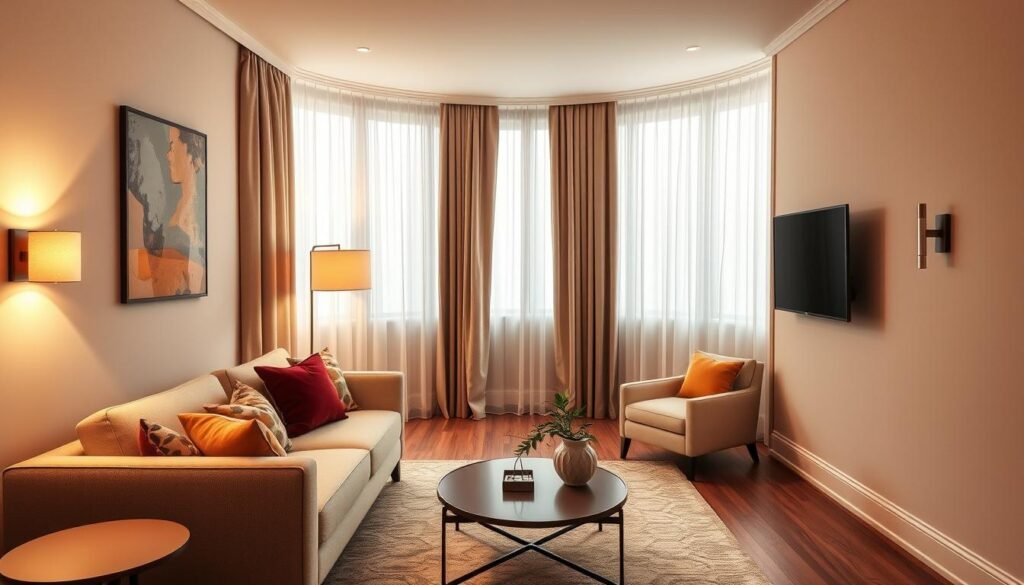
Layered Lighting Techniques
A good lighting plan has three parts. Start with ambient lighting for a general light.
Then, add task lighting near places you read or work. This makes it easier to see. Use accent lighting to show off special features or art, adding depth and interest.
Strategic placement of these lights stops the tunnel effect in long rooms. This way, you get a space that works for you all day.
The Role of Natural Light
Using natural light is a great way to make your home feel bigger. Keep your window treatments simple to let in more light.
Choose sheer fabrics or blinds that filter light but still let you see outside. These keep your space feeling light and airy, which is important for a small living room.
Using mirrors opposite windows can also help spread light. This trick makes even the farthest parts of your home bright and welcoming.
Accessories and Decor Ideas
Choosing the right decor solutions unifies your narrow living area. The final details make your space feel intentional. These elements connect your furniture and designer look.
Rugs That Enhance the Space
A large, centered rug anchors the room. It makes the space feel stable. A rug that spans your seating area defines a zone.
This prevents the room from feeling like a hallway. It adds visual warmth to your home.
Use a rug with a horizontal pattern to make the room seem wider. This is a great trick for narrow rooms. Make sure the rug is big enough for your sofa and chairs.
Curtains That Complement Your Layout
Window treatments soften your walls. Mount curtain rods higher and wider than the window. This makes your windows look bigger and lets in more light.
Choose lightweight fabrics like linen or sheer cotton. Heavy, dark drapes can make a room feel small. These solutions make your windows beautiful focal points.
| Decor Element | Primary Benefit | Placement Tip |
|---|---|---|
| Large Area Rug | Anchors the seating zone | Center under furniture |
| Sheer Curtains | Softens wall edges | Mount high and wide |
| Wall Mirrors | Reflects light | Place on long walls |
| Accent Pillows | Adds texture | Use in odd numbers |
Creating a Focal Point
Choosing the right anchor is key to a balanced room. In long, narrow spaces, a focal point stops the room from feeling like a hallway. It gives your furniture a clear purpose and direction.
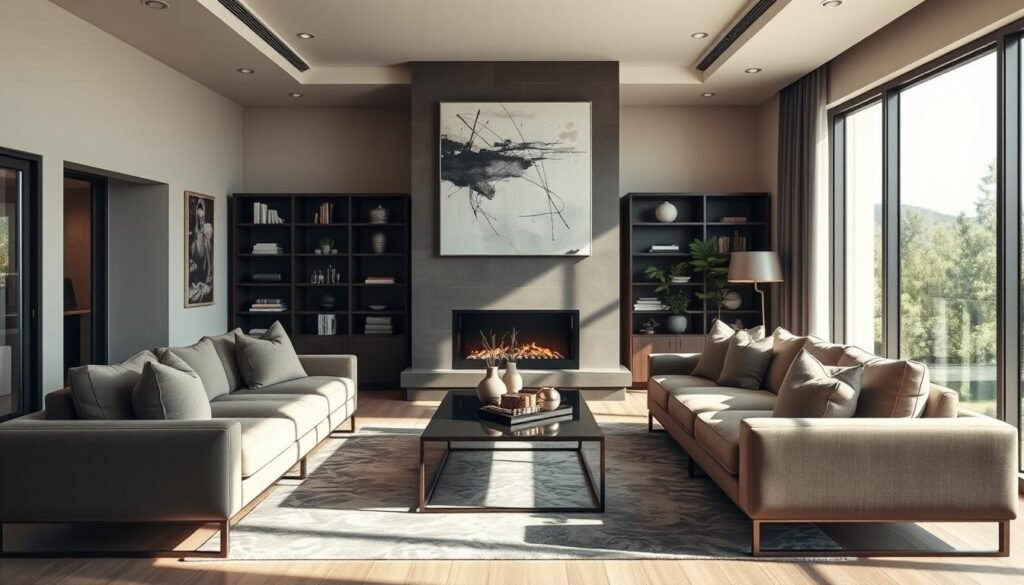
Options for TVs and Artwork
Mounting a TV on a wall or using a low-profile media console keeps the room open. Surround it with artwork or floating shelves to balance the screen. This way, the TV doesn’t take over the wall.
Using the 3-5-7 rule for your display creates natural asymmetry. This makes your decor look intentional and professional. These decor solutions also add personality to your walls.
Using Fireplaces as Central Features
A fireplace is often the heart of a home. But it can compete with the TV for attention. Place your seating in an L-shape to face both the fireplace and the TV. This lets you enjoy the fire while watching TV.
If the fireplace is off-center, a large mirror or bold art above the mantel draws the eye. Strategic placement of rugs also defines the fireplace area. This keeps the room organized, not cluttered.
| Focal Point Type | Primary Benefit | Styling Tip |
|---|---|---|
| Fireplace | Adds architectural warmth | Use symmetrical decor |
| Television | Provides daily entertainment | Hide wires for clean look |
| Large Artwork | Creates visual interest | Use the 3-5-7 rule |
Practical Tips for Maintaining Flow
You can make your narrow living area feel open by focusing on flow. Every piece of furniture in a long, thin room is important. This ensures your space is both beautiful and functional.
Avoiding Clutter for a Spacious Feeling
Clutter makes a narrow room feel small. Use space-saving furniture to keep things tidy. Wall-mounted units and hidden storage ottomans are great decor solutions for keeping things out of sight.
Minimalism is key in a small space. Limit decorative items to avoid visual clutter. A clean, simple look lets your eye move freely, making the room feel open.
Walking Paths for Easy Movement
Clear paths are crucial for a comfortable home. Make sure main traffic lanes are free of obstacles. This keeps your daily life smooth.
Here’s a table to help you arrange your space for better movement:
| Strategy | Benefit | Impact on Flow |
|---|---|---|
| Floating Furniture | Creates visual depth | High |
| Wall-Mounted Shelves | Reduces floor clutter | High |
| Clear Walkways | Prevents congestion | Maximum |
| Multi-functional Pieces | Saves square footage | Moderate |
Clear paths make your home feel welcoming. Using these decor solutions and space-saving furniture maximizes your space. With some planning, your room will feel airy, organized, and perfect for your lifestyle.
Designing for Comfort in Narrow Spaces
Comfort is key in any home, even with tricky layouts. You can make your living area cozy by thinking about how furniture fits the space. These design tips will help you make a snug space, not a tight one.
Cozy Seating Arrangements
The secret to a comfy small living room is furniture grouping. Don’t push all seats against walls, as it makes the room feel like a hallway. Pull chairs and sofas a bit from walls for better conversation.
A good chat distance is 8 feet. Chairs too far apart make the room feel cold. Grouping furniture close together makes it cozy and inviting.
Pillows and Textiles for Warmth
Adding soft textures can soften narrow spaces. Use plush throw pillows and thick blankets for texture and depth. These make your small living room feel cozy and lived-in.
Try mixing fabrics like velvet, wool, or linen for a touchable feel. Layering rugs can also warm up your space. Soft details make your home a cozy haven, no matter its shape.
Transforming Your Long Narrow Living Room
Your home should show who you are and be a cozy place to escape. Making a challenging space beautiful takes time and a clear idea. Use these design tips to make your room a lovely sanctuary.
Before and After Inspirations
Start by drawing your dream room on paper. It’s easier and cheaper to move pictures on a floor plan than heavy furniture. Look at Emily Henderson’s projects to see how small changes make big differences. These ideas help you spot problems before you arrange furniture for good.
Budget-Friendly Redecoration Tips
You don’t need to spend a lot to make your room look fancy. Look around your house to see if you have items that fit your new design. Paint is the cheapest way to change a room, using light colors to make it feel bigger. Thrift stores and online sites have unique items that add charm without the high cost.
Choose quality fabrics and lighting to make your room feel special. Sticking to these tips will keep your living room both beautiful and useful for many years.

[…] Renter Friendly Wall Decor Ideas to Refresh Your SpaceHow to Decorate Your First Apartment Tips for BeginnersLong Narrow Living Room Layout Ideas That Actually Work […]
[…] to Fit a Desk in a Small Living RoomLong Narrow Living Room Layout Ideas That Actually WorkCreative Studio Apartment Bed Divider Ideas You’ll […]