
Keeping up with a routine is key to protecting your home. By spending time each month on proactive property care, you stop small problems from getting big. This saves you money and stress.
Experts say to save 1-3% of your home’s cost each year for repairs. This money helps fix small issues before they become big problems.
Having a plan helps avoid sudden repairs. Regular house maintenance keeps everything working well. It also keeps your home’s value high. Use this guide to keep your home safe and comfy.
Table of Contents
Importance of Monthly House Maintenance
Your house is probably your biggest investment. It needs regular, proactive care. By spending time each month on house maintenance, you keep your home safe and comfy for your family. Regular upkeep stops small problems from becoming big ones.
Protecting Your Investment
Good building maintenance protects your money. Fixing small things early keeps your home strong and systems working right. This care also keeps your home’s value high over time.
Here are the main benefits of regular upkeep:
- Extended lifespan of big appliances and systems.
- Improved energy efficiency, which lowers your bills.
- Enhanced safety for everyone in your home.
Enhancing Curb Appeal
Regular residential maintenance does more than just fix things inside. Keeping the outside clean and nice boosts your home’s look. A neat home shows you care and makes your neighborhood look better.
| Maintenance Type | Frequency | Primary Benefit |
|---|---|---|
| Proactive | Monthly | Prevents damage |
| Reactive | As needed | Fixes failures |
| Preventative | Seasonal | Saves money |
Preventing Costly Repairs
The biggest plus of regular house maintenance is catching problems early. Small leaks or electrical issues are cheap to fix if caught fast. But ignoring them can lead to expensive fixes or even replacing whole systems.
By focusing on building maintenance, you avoid costly surprises. Regular residential maintenance helps you budget better. It saves you time and money in the long run.
You Might Also Like:
First Apartment Budget Checklist for Beginners
10 Cleaning Habits That Keep Your Home Clean Every Day
Best Under Sink Organizer Ideas for Small Apartments
Seasonal Maintenance Tasks
Weather changes how we keep our homes all year. By changing our upkeep with the seasons, we avoid damage from extreme weather. Keeping up with property upkeep makes your home safe and cozy, no matter the weather.
Preparing for Winter
When it gets cold, focus on keeping warm and dry. Sealing gaps in windows and doors helps save on energy. Make sure your sump pump works well to avoid basement floods when it thaws.
Spring Cleaning Essentials
Spring is the best time to fix damage from winter. A good house maintenance plan includes cleaning up your yard and checking your roof. Also, deep clean your home to get rid of winter allergens.
Summer Home Care
Summer brings its own problems, like damage to outside surfaces and cooling systems. Clean your siding and check outdoor lights for heat damage. Keeping up with property upkeep in summer protects your home from sun and storms.
Being proactive with house maintenance helps avoid big repairs. Following these seasonal tips keeps your home’s value and condition high all year.
Interior Maintenance Tasks to Tackle
Keeping up with interior maintenance stops small problems from becoming big ones. By spending time each month on these tasks, you keep your property value high. You also make sure your living space is healthy. Paying attention to details is key for good home repairs and care.
Checking and Replacing HVAC Filters
Your heating and cooling system needs clean filters to work well. Check these filters every month, more often in busy seasons. Getting help from maintenance services can tell you if your system needs a deep clean.
Changing a dirty filter is easy and makes the air in your home better. A clean filter stops dust and allergens from spreading. Regular replacement saves on energy costs and makes your HVAC last longer.
Inspecting Smoke and Carbon Monoxide Detectors
Your safety is most important when doing building maintenance. Test your smoke and carbon monoxide detectors every month. Just press the test button and listen for the alarm.
If the alarm doesn’t sound, change the batteries right away. Also, check the expiration date on the back of the device. Reliable safety equipment is your first defense against emergencies.
Cleaning Gutters and Downspouts
Clearing gutters is important, even though it’s often seen as an outside job. Clogged gutters can cause water damage inside your home. Doing these home repairs yourself saves money and stops damage.
Make sure your downspouts are clear and point away from your home. This simple step stops basement flooding and protects your siding. Consistent drainage management keeps your whole property safe.
Exterior Maintenance You Can’t Ignore
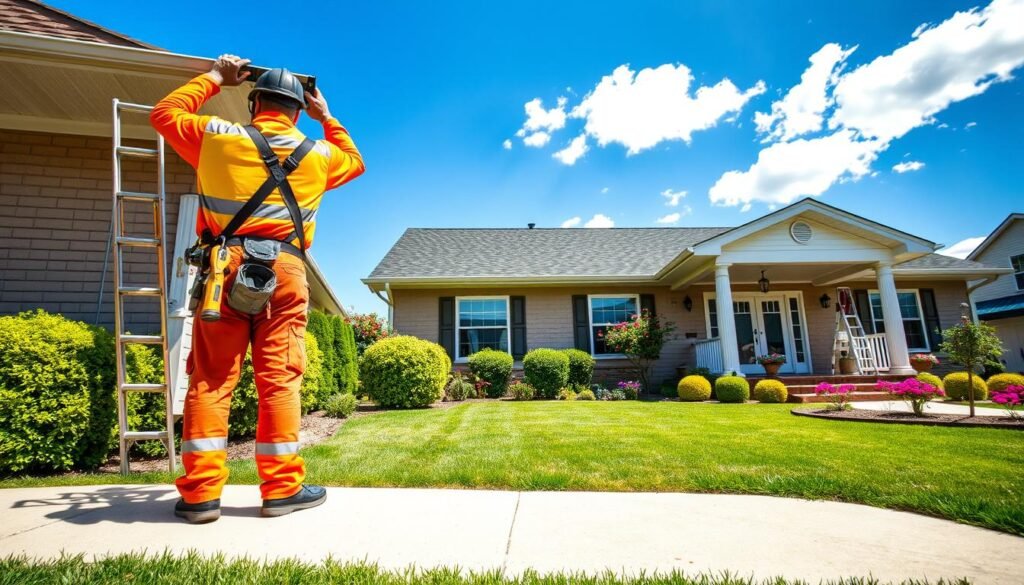
Your home’s exterior protects it from bad weather and damage. Regular residential maintenance keeps it strong and weather-proof all year. This way, you avoid expensive repairs later.
Inspecting Roof Condition
Check your roof from the ground every month. Look for missing, cracked, or curling shingles. Also, clean off debris and moss to stop moisture damage.
Cleaning and Repairing Siding
Keep your siding clean to stop mold and mildew. A hose or mild detergent can make it look new. This also helps find and fix loose panels or cracks.
Checking for Near-Water Issues
Water harms your home’s foundation and walls. Make sure downspouts send water away from your foundation. Look for signs of water damage or erosion near your home.
| Task | Frequency | Goal |
|---|---|---|
| Roof Inspection | Monthly | Prevent leaks |
| Siding Wash | Quarterly | Remove debris |
| Drainage Check | Monthly | Protect foundation |
| Sealant Review | Bi-annually | House improvement |
Adding these residential maintenance steps to your routine helps a lot. A well-kept exterior looks great and saves money on repairs.
Plumbing Checks You Shouldn’t Skip
Looking after your plumbing can save you from big problems. It keeps your home safe from water damage and makes sure things work right. You can do many checks yourself, or get help from maintenance services.
Inspecting for Leaks
First, check all pipes and connections for moisture. Look under sinks and around toilets. A small leak can cause big damage or mold.
- Check for damp spots on walls or ceilings near plumbing lines.
- Listen for the sound of running water when no faucets are in use.
- Inspect supply lines for any signs of corrosion or mineral buildup.
Testing Water Pressure
High water pressure can harm your pipes. It’s important to test your home’s pressure. It should be between 40 and 60 PSI.
You can buy a pressure gauge for your hose bib. If it’s over 80 PSI, get a pressure-reducing valve. This stops pipes from bursting and saves your appliances.
Flushing the Water Heater
Sediment builds up in your water heater tank. It makes your heater less efficient and noisy. Flushing it once or twice a year is key.
To flush, attach a hose to the drain valve and direct it to a drain. Open the valve until the water is clear. This keeps your hot water working well.
Lawn and Garden Maintenance for Every Month
Keeping your outdoor space lively needs a year-round effort in property upkeep. Taking care of your yard helps your home’s foundation and makes it look better. A well-kept landscape adds to your home’s beauty.

Managing Seasonal Plants
Good gardening means timing your work with the weather. In spring, cut dead branches and get soil ready for new plants. Summer is for deep watering to keep plants healthy.
In autumn, remove old plants and mulch to protect roots from cold. This household maintenance keeps your garden clean and ready for winter.
Lawn Fertilization Schedule
A green lawn needs the right food at the right time. Fertilize in early spring and late fall for strong growth. Use a good fertilizer that fits your grass type.
| Season | Primary Task | Goal |
|---|---|---|
| Spring | Fertilization | Growth stimulation |
| Summer | Deep Watering | Heat stress prevention |
| Autumn | Aeration | Soil health improvement |
Weed Control Strategies
Weeds steal water and nutrients from your plants. Use pre-emergent treatments in spring to stop weeds. Pulling weeds is best to avoid harming other plants.
Keep your lawn edges clean to stop weeds from spreading. This way, you avoid harsh chemicals and keep your property upkeep looking neat.
Electrical System Safety Checks
Electrical safety is often overlooked, yet it’s very important. By checking your electrical system, you can avoid fires and shocks. This keeps your home safe and working well.
Inspecting Outlets and Light Switches
Walk through each room to check your outlets and switches. Look for any signs of damage or loose parts. Tightening loose screws keeps dust out of the electrical box.
If switches feel warm or buzz, stop using them right away. These signs mean you need a pro to fix it. Regular checks can catch big problems early.
Testing GFCI Outlets
GFCI outlets are key in wet areas like kitchens and bathrooms. They stop dangerous shocks by cutting power fast. Press the “Test” and then “Reset” buttons every month.
If the outlet doesn’t work right, it’s bad and needs to be replaced. Fixing this keeps your home safe. It’s a simple task that gives you peace of mind.
Checking Outdoor Lighting
Outdoor lights face the weather, which can damage them. Check for broken lenses or exposed wiring. Make sure all lights are sealed well.
Change any bulbs that are out to keep your home bright at night. If lights are loose, fix them to stop water damage. These steps keep your home safe and welcoming all year.
Pest Control Measures for Homeowners
Being proactive is the best way to fight off pests. By adding pest control to your household maintenance, you can stop small problems before they grow. This keeps your home safe and comfortable for your family.
Conducting Monthly Inspections
Do a full walk-through of your home every month. Look closely at dark, damp places like basements and under sinks. These areas attract pests like cockroaches.
Check your home’s foundation for cracks or gaps. Also, make sure window screens and door sweeps are in good shape. Finding these problems early helps a lot with maintenance services.
Preventative Strategies
Keeping your home clean is key to keeping pests away. Store food in sealed containers and clean counters often. Also, take out the trash regularly to avoid attracting pests.
Keep your yard tidy by trimming trees and storing firewood far from your home. This helps prevent pests from getting inside.
When to Contact a Professional
If pests are too much to handle, it’s time to call for help. Look out for signs like wood shavings or chewed wires. These mean you need professional help.
Also, if pests keep coming back, get expert help. Maintenance services can use safe and effective treatments. They make sure the problem is fixed right.
| Feature | DIY Pest Control | Professional Services |
|---|---|---|
| Cost | Low initial expense | Higher investment |
| Effectiveness | Best for prevention | Best for infestations |
| Safety | Requires caution | Certified handling |
| Time Required | High personal effort | Minimal effort |
The Importance of a Maintenance Log
Keeping a written record of your work changes how you manage your home. A simple notebook or a digital app helps you track every detail of your home repairs over time.
Tracking Tasks and Efficiency
Documenting your work lets you see when you last serviced your appliances or inspected your roof. This habit makes you more efficient. You won’t repeat chores too soon or miss critical deadlines.
You get a clear picture of your house improvement history with every entry.
Setting Reminders
Digital calendars or physical planners are great for your property care schedule. You can set alerts for seasonal tasks like cleaning gutters or testing smoke alarms. These prompts keep your home in top shape without you having to remember every date.
Reviewing and Adjusting Your Routine
Your needs change as your house ages and your budget shifts. Look back at your log once a year to see which systems need more attention. You can adjust your plan to focus on areas that show wear.
Consistent documentation turns your property care into a smart, long-term strategy for comfort and value.