
Keep your home clean by using a weekly cleaning checklist. It helps you manage tasks easily. This way, you can clean every room without feeling stressed.
Being consistent is key to a calm home. Set aside time for each area to stop dirt from piling up. This organized system lets you enjoy your weekends while keeping your home clean all year.
Table of Contents
Introduction to Your Weekly Cleaning Checklist
Having a regular cleaning routine can free up your time. Breaking big tasks into smaller ones makes cleaning less overwhelming. A good household cleaning schedule helps you stay on track without stress.
Why a Weekly Cleaning Checklist Matters
Many people get tired trying to clean everything at once. This can lead to burnout. By cleaning a little each day, you keep your home tidy with less effort.
A cleaning routine planner makes cleaning easier to see. It turns big tasks into small wins. Your home will look great with small, daily improvements instead of big cleaning days.
Benefits of Regular Cleaning
Cleaning regularly does more than make your home look good. It also makes it healthier. Here are the main benefits:
- Reduced stress levels by getting rid of clutter.
- Improved air quality from regular dusting and vacuuming.
- Better time management by avoiding big cleaning tasks.
- Increased longevity of your furniture and appliances.
How to Use This Checklist
Being flexible is key to keeping your home clean. Some like setting specific cleaning days. Others prefer a more flexible schedule.
You can adjust this method to fit your life. If you’re busy during the week, clean high-traffic areas then. Save big tasks for the weekend. The goal is to make cleaning fit your life, not the other way around.
Essential Supplies for Cleaning
Having a good cleaning kit is key for a weekly house cleaning list. The right tools save time and effort. You won’t have to stop to look for things.
Must-Have Cleaning Tools
Good tools make a big difference. Choose durable, versatile items for all surfaces. A strong vacuum, microfiber cloths, and scrub brush are essential.
These tools help clean dust, grime, and dirt easily. The right tool for the job protects your home. Microfiber cloths are great because they catch dust, not spread it.
Eco-Friendly Cleaning Products
Many prefer natural cleaners over harsh chemicals. White vinegar, baking soda, and lemon juice clean well without harmful fumes. They’re safe for your family and pets.
Make your own cleaners or buy eco-friendly ones. These choices are better for your home and easier to shop for. They work on many household stains.
Organizing Your Cleaning Supplies
Keep your cleaning plan organized with a dedicated space. A portable caddy lets you carry everything you need. This saves trips to the closet.
Use a binder or clear sleeve for your checklists. Mark them up with dry-erase markers. This keeps your routine on track and saves time.
| Tool Name | Primary Use | Frequency |
|---|---|---|
| Microfiber Cloth | Dusting surfaces | Weekly |
| Vacuum Cleaner | Carpets and rugs | Weekly |
| Scrub Brush | Bathroom tiles | Bi-weekly |
| Spray Bottle | Applying solutions | As needed |
Living Room Cleaning Tasks
The living room is the heart of your home. It’s key to keep it clean on your weekly house cleaning list. It gets dusty and cluttered fast because of all the people walking through.
Having a regular cleaning routine keeps it welcoming and clean for everyone.
Dusting Furniture and Electronics
Begin by dusting all hard surfaces like shelves and coffee tables. Use a microfiber cloth to catch dust. Always start from the top so dust falls on clean areas.
Don’t forget to clean high-touch items like remote controls and light switches. Use a gentle disinfectant wipe. This makes your living space much cleaner.
Vacuuming and Carpet Care
Vacuuming keeps your carpets and rugs clean. Pay extra attention to areas where people walk a lot. Use slow, overlapping strokes to catch more dust and allergens.
If you have hardwood or tile floors, use a soft brush attachment. Move furniture to clean hidden dust bunnies. Regular care keeps your floors looking new.
Organizing Books and Magazines
Clutter can make a room look messy. Spend a few minutes organizing books and recycling old magazines. This is a big part of your weekly chore list to keep things tidy.
Use decorative baskets or bins for loose items like blankets. This keeps things organized and makes cleaning easier. A clean surface looks better and makes dusting faster.
Kitchen Cleaning Tasks
A clean kitchen is key to a healthy home. Your weekly house cleaning list makes it easy. This room is the heart of your home, needing special care for food safety and hygiene.
Breaking down cleaning into steps keeps your kitchen functional and welcoming.
Wiping Down Counters and Surfaces
Begin by clearing countertops for a deep clean. Use a top-notch disinfectant spray to remove crumbs, spills, and bacteria. Sanitizing these surfaces stops germs from spreading during cooking.
Cleaning Appliances and Fixtures
Work on the outside of big appliances like the fridge, oven, and microwave. Fingerprints and grease can stick to finishes. Use a microfiber cloth to make them shine again. Adding these tasks to your weekly house cleaning list stops grime from getting tough.
- Wipe down the exterior of the dishwasher and oven.
- Polish appliance handles to remove smudges.
- Dust the tops of cabinets and light fixtures.
Ensuring a Clean Sink and Drains
The kitchen sink is a hot spot for bacteria. Scrub it well with a gentle cleaner to get rid of food bits and spots. Deodorizing your drains with baking soda and vinegar keeps your kitchen smelling good.
End your kitchen cleaning by mopping the floor to catch hidden dirt. Sticking to this weekly house cleaning list saves time and keeps your kitchen ready for cooking.
Bathroom Cleaning Duties
Keeping your bathroom clean is key. These rooms get wet and can grow bacteria and mold. A regular cleaning routine keeps your space clean and welcoming.
Scrubbing Toilets and Showers
Begin by using a strong disinfectant on the toilet and shower walls. Let it sit for a few minutes to dissolve grime and soap scum. Scrubbing these areas well gets rid of hidden bacteria and stops buildup.
Pay extra attention to wet spots like faucet handles and showerheads. A stiff brush helps get into corners where mildew hides. Then, rinse with warm water for a streak-free finish.
Cleaning Mirrors and Fixtures
Mirrors and chrome fixtures get water spots and fingerprints fast. Use glass cleaner and a microfiber cloth to make mirrors clear. Polishing faucets and shower handles makes your bathroom look professional.
Don’t forget to clean the vanity countertop with a damp cloth and mild cleaner. This removes dust and makeup that builds up. A clean surface makes your bathroom look organized and inviting.
Managing Towels and Supplies
Check your bathroom supplies weekly. Replace used towels and bath mats with fresh ones. Restocking essentials like toilet paper, soap, and shampoo means you’re always ready.
- Swap out damp towels for fresh ones.
- Check toilet paper levels and add extra rolls.
- Empty the trash bin to prevent odors.
- Organize toiletries to keep the vanity clutter-free.
Having these items ready saves time in the morning. A well-organized bathroom is always ready for use, making your home stress-free.
Bedroom Cleaning Responsibilities
Keeping your bedroom clean is key for a good night’s sleep. It’s a must-do in your weekly cleaning routine. A tidy bedroom helps you relax and sleep better.
Setting aside time each week to clean your bedroom makes it a peaceful place. This habit stops dust from building up. It also keeps your space organized and calm.
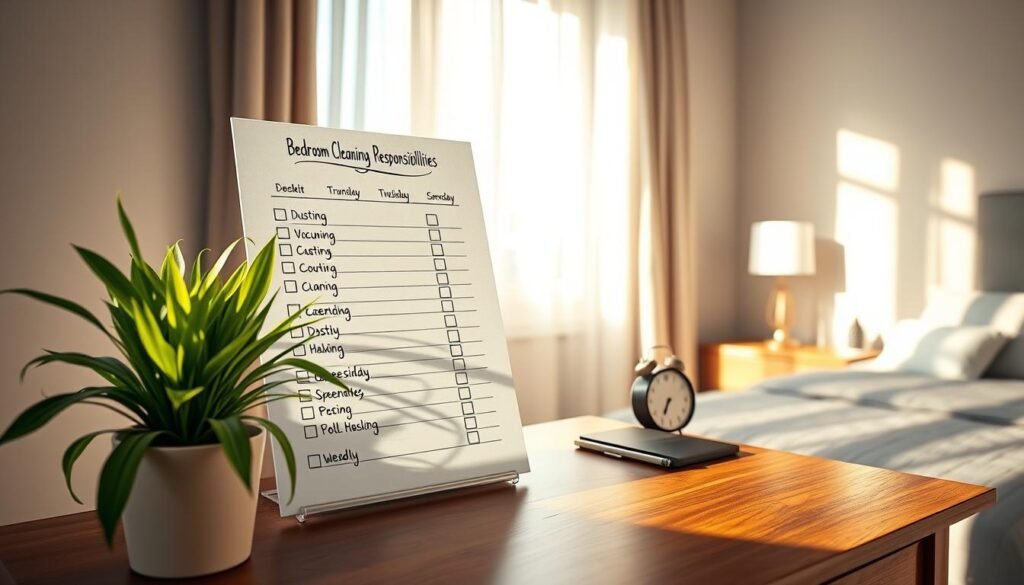
Changing Bed Linens and Pillowcases
Fresh sheets are crucial for a comfy bed. Make sure to change your bed sheets, pillowcases, and duvet covers weekly. This is part of your weekly chore list.
Changing your bedding regularly gets rid of allergens and dead skin. Washing your bedding often means you always sleep on clean sheets.
Dusting Nightstands and Dressers
Dust builds up fast on bedroom surfaces, affecting air quality. Use a microfiber cloth to clean your nightstands, dressers, and decorations.
Remember to dust the tops of lamps and picture frames too. Keeping these areas dust-free is important for a healthy sleep environment.
Decluttering Closets and Drawers
A cluttered closet can make your bedroom feel overwhelming. Spend a bit of time each week tidying up. Organize your clothes to keep your space neat.
If you find items you don’t need, think about donating them. Keeping organized makes it easier to find what you need. It also makes your bedroom a peaceful retreat.
Dining Room Maintenance Tips
Keeping your dining room clean is key to an organized cleaning plan. It’s where family meals and gatherings happen. So, it’s important to keep it tidy and welcoming. A little time each week can stop clutter from building up.
Cleaning Dining Surfaces
Begin by clearing the table of any items. Use a damp microfiber cloth and mild cleaner to wipe down the table. Make sure to clean into the corners where crumbs hide. Sanitizing your dining surface regularly keeps it clean for your family.
Polish and Care for Tableware
If you have decorative tableware or silver out, dust them weekly. A soft cloth can make glassware and metal shine again. Caring for your dining accessories makes them last longer and keeps your home looking great.
Vacuuming or Sweeping Floors
End by cleaning the floors. This removes food and dust that falls under chairs. A good sweep or vacuum makes the room feel clean. As part of your organized cleaning plan, don’t forget to keep your home’s exterior and transit areas clean too.
Here are some quick tasks to add to your weekly routine:
- Sweep the front porch to remove leaves and debris.
- Clear out trash and organize items in your car.
- Wipe down baseboards near the dining area.
Organizing Your Cleaning Schedule
Keeping your home clean is more than just hard work. It needs a smart plan to keep everything spotless. A weekly cleaning checklist can turn big tasks into easy habits. This way, you avoid getting tired and make sure every part of your home is clean.
Frequency of Different Tasks
Not every cleaning task needs to be done every day. You should sort tasks into daily, weekly, and monthly jobs. Daily tasks, like cleaning counters or making beds, keep your home feeling new. Weekly tasks tackle deeper dirt and grime.
A cleaning routine planner makes it easy to see these tasks. By spreading out big jobs, you won’t get too tired from cleaning all at once.
Creating a Balanced Routine
A good routine is key to keeping your home clean over time. Mix high-energy tasks with easier ones to keep your energy up. For example, vacuum one room while waiting for laundry to finish.
This way, your cleaning task tracker stays realistic and doable. When your tasks are balanced, you’re more likely to follow your cleaning plan without feeling overwhelmed.
Tracking Your Progress
Seeing what you’ve done makes you feel good and keeps you on track. Use a dry-erase marker on a laminated checklist to mark off tasks. Wipe it clean at week’s end to start fresh.
This visual feedback helps keep you motivated. Here’s a simple way to organize your weekly cleaning to work most efficiently.
| Task Category | Frequency | Primary Goal |
|---|---|---|
| Surface Wiping | Daily | Prevent grime buildup |
| Floor Care | Weekly | Remove allergens and dust |
| Appliance Deep Clean | Monthly | Maintain equipment longevity |
| Decluttering | Weekly | Reduce visual stress |
Deep Cleaning vs. Routine Cleaning
Keeping your home clean is more than just tidying up once a week. It’s about knowing the difference between regular cleaning and deep cleaning. Your household cleaning schedule keeps things looking good. But deep cleaning gets rid of the dirt that builds up over time. This keeps your home looking great all year.
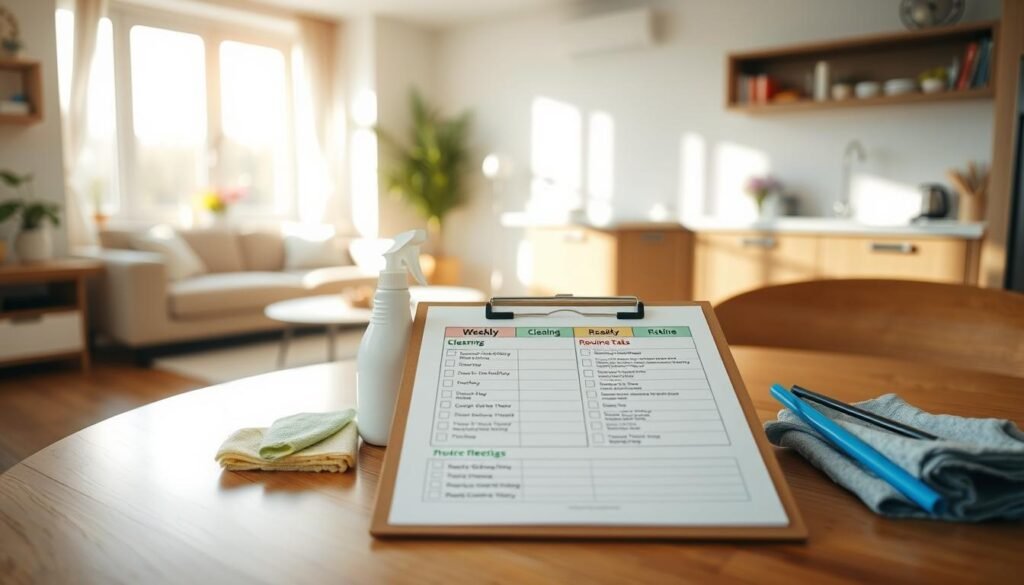
What to Include in Deep Cleaning
Deep cleaning is more than just your usual cleaning tasks. It’s about tackling areas you might miss during quick cleanings. Doing these deep tasks helps keep your home healthy.
- Dusting and washing ceiling fans and light fixtures.
- Scrubbing baseboards, door frames, and window tracks.
- Cleaning behind and underneath heavy appliances like refrigerators.
- Deep shampooing carpets or steam cleaning upholstery.
- Washing curtains and deep-cleaning blinds.
When to Schedule Deep Cleaning
It’s best to do deep cleaning with the seasons. Doing these big tasks every three to four months stops dirt from sticking around. An organized cleaning plan makes these tasks easier to handle.
| Season | Focus Area | Goal |
|---|---|---|
| Spring | Windows and Closets | Refresh and Declutter |
| Summer | Outdoor Areas and Fans | Deep Dusting |
| Fall | Kitchen and Appliances | Sanitization |
Balancing Routine and Deep Cleaning
Managing your home is easier when you mix both cleaning types into your routine. Use your household cleaning schedule for daily and weekly tasks. Set aside weekends for deep cleaning.
Consistency is the key to making deep cleaning easier. Regular upkeep makes deep cleaning faster and less hard. This way, your home stays clean without constant, hard work.
Involving Family in Cleaning
Working together at home can save time and reduce stress. When everyone helps, it builds pride in our living space. This way, no one feels too much pressure to keep the house clean.
Assigning Age-Appropriate Tasks
Children can do real tasks based on their age. This helps parents and teaches kids important skills. Use a cleaning task tracker to keep track of who does what.
- Toddlers: Putting toys in bins or wiping low surfaces with a damp cloth.
- School-age children: Making beds, sorting laundry, or dusting reachable furniture.
- Teenagers: Vacuuming floors, loading the dishwasher, or cleaning bathroom mirrors.
Creating a Cleaning Schedule Together
Planning chores together makes everyone more willing to help. When kids help plan, they’re more likely to do their part. Show your cleaning task tracker in a place like the kitchen.
Sticking to a cleaning schedule keeps your home tidy. Set a time each week for cleaning. This makes it a regular, predictable part of life.
Making Cleaning Fun for Kids
Make cleaning fun by playing music or setting a timer. This turns cleaning into a game. It makes kids look forward to helping out.
Give small rewards for doing chores well. This could be picking the movie on Friday or a special treat. Working together strengthens family bonds and keeps your home welcoming.
Staying Motivated with Cleaning
Staying motivated is key to mastering your weekly home maintenance checklist. It’s normal to feel overwhelmed by a long to-do list. But, changing how you see things can help a lot. Small changes can turn cleaning into a habit.
Setting Goals and Rewards
Break your chores into smaller tasks to avoid feeling too tired. Using a cleaning task tracker helps you see your progress. Crossing off tasks makes you feel good and keeps you going.
Think about rewarding yourself when you reach your weekly goals. Enjoying a favorite snack or watching a show can make cleaning worth it. Small treats help you keep up with your routine.
Listening to Music or Podcasts
Make cleaning fun by listening to music or podcasts. Upbeat tunes or your favorite shows make time go by quickly. You’ll work better when you’re listening to something fun.
Audiobooks are also great for cleaning. They turn boring chores into productive learning sessions. You might even look forward to cleaning to listen to your favorite stories.
Finding Cleaning Inspiration Online
Get stuck? Look for new ideas on social media or home blogs. Many share tips for better cleaning task trackers. Seeing others’ organized homes can inspire you.
Follow accounts about minimalist living or home care for daily tips. You’ll find new ways to make cleaning easier and faster. Being part of an online community keeps you motivated to keep your home tidy.
Conclusion and Final Thoughts
A clean home brings calm and clarity to your life. You now have the tools to make cleaning easier and better for your health.
The Value of Consistency
Using a cleaning schedule keeps you on track without stress. Doing small tasks often stops dirt from piling up. This saves energy and keeps your home fresh.
Embracing Your Personal Pace
Creating new habits takes time and patience. Your needs might change as your schedule does. Make your cleaning plan fit your life, not the other way around. Success is about finding a pace that works for you.
Lasting Habits for Success
Keep your cleaning supplies easy to reach for quick tasks. Brands like Method or Seventh Generation make cleaning simpler. Focus on making progress, not being perfect. Your dedication to these steps will keep your home comfortable for years.



[…] Weekly Cleaning Checklist for a Clean Home Every WeekHow to Master Your Nightly Kitchen Reset Routine Every DayHow to Speed Clean Your Room in 10 Minutes Step by Step […]