
You should clean your bath linens after every three to four uses. This stops bacteria from building up. Keeping up with this simple schedule makes your bathroom clean for your daily routine.
Always wash new items before you use them for the first time. This removes chemicals from the factory that might irritate your skin or make towels less absorbent. Proper maintenance keeps your towels soft and effective for a long time.
Our towel washing guide has all the expert tips you need for better laundry. By following these habits, you keep yourself healthy and make your favorite bathroom items last longer.
Table of Contents
Why Towel Hygiene is Important
Your bathroom towels might look clean, but they often hide microscopic threats. It’s key to follow towel hygiene tips for a clean home. Knowing what lives on your towels helps keep you healthy and comfortable.
The Build-Up of Bacteria
Towels often have harmful germs like E. coli and MRSA. These bacteria grow in the moist, organic environment of towels. Bathrooms are humid, making towels a perfect place for these germs to grow.
Preventing Unpleasant Odors
Ignoring laundry can lead to musty smells. This smell means mildew is growing in your towels. Using towel hygiene tips helps get rid of these smells before they stick around.
Extending Towel Longevity
Good care does more than keep you clean; it also saves your towels. Washing them regularly stops fibers from breaking down. This keeps your towels soft and absorbent for a long time.
| Risk Factor | Impact on Towels | Maintenance Benefit |
|---|---|---|
| Bacterial Growth | High risk of infection | Improved skin health |
| Mildew Accumulation | Persistent sour odors | Fresh, clean scent |
| Fiber Degradation | Reduced absorbency | Longer product life |
You Might Also Like:
Bathroom Shelf Ideas That Add Storage Without Clutter
Linen Closet Organization Ideas That Keep Everything Neat
Morning Cleaning Routine to Keep Your Home Tidy
General Guidelines for Washing Towels
Washing towels often is key to good skin health and clean bathrooms. Instead of using a calendar, watch how often you use them. This way, towels stay fresh longer.
Recommended Frequency
Wash towels after every three uses for best hygiene. This stops dead skin, moisture, and bacteria from growing in towels.
Stick to a towel washing schedule to keep your skin clean. In humid places, wash towels more often to stop mold.
| Towel Type | Usage Limit | Recommended Action |
|---|---|---|
| Bath Towel | 3 Uses | Machine Wash |
| Hand Towel | 2 Days | Machine Wash |
| Washcloth | 1 Use | Immediate Wash |
Signs Your Towels Need Washing
Change how often you wash towels based on where you live and how you use them. Keep an eye on your towels to see if they need washing sooner.
Look out for these signs to know when to wash towels:
- A lingering, musty smell that persists even after drying.
- A noticeable change in texture, such as feeling stiff or scratchy.
- Visible stains or discoloration on the fabric surface.
- The towel remains damp for more than a few hours after use.
By watching closely, you can figure out how often to wash towels just right. This keeps towels soft and clean for you every day.
Washing Different Types of Towels
Following specific towel care instructions keeps your towels soft and clean. Different towels face different bacteria and dirt. This is because they have different uses.
Bath Towels
Bath towels soak up a lot of water and skin cells. It’s best to wash them after three to four uses.
Hang bath towels in a well-ventilated spot to dry between uses. This stops mildew and keeps towels smelling fresh.
Hand Towels
Hand towels get used a lot, more so in big families or with many guests. They pick up germs quickly.
Change hand towels every two to three days for cleanliness. In big families, change them more often to avoid germs spreading.
Washcloths
Washcloths need the most care since they touch your face and body. Use a new one for each shower or face wash.
For makeup removal, pick black or dark-colored fabrics. They hide stains well, making cleanup easier.
Knowing when to wash towels is simpler with a routine. Here’s a guide to keep your towels clean:
| Towel Type | Usage Frequency | Wash Interval |
|---|---|---|
| Bath Towels | Daily | Every 3-4 uses |
| Hand Towels | High Traffic | Every 2-3 days |
| Washcloths | Daily | After every use |
- Always separate white towels from colored ones to prevent bleeding.
- Avoid overloading your washing machine to ensure a thorough clean.
- Check labels for specific fabric requirements to extend the life of your towels.
Optimal Washing Techniques
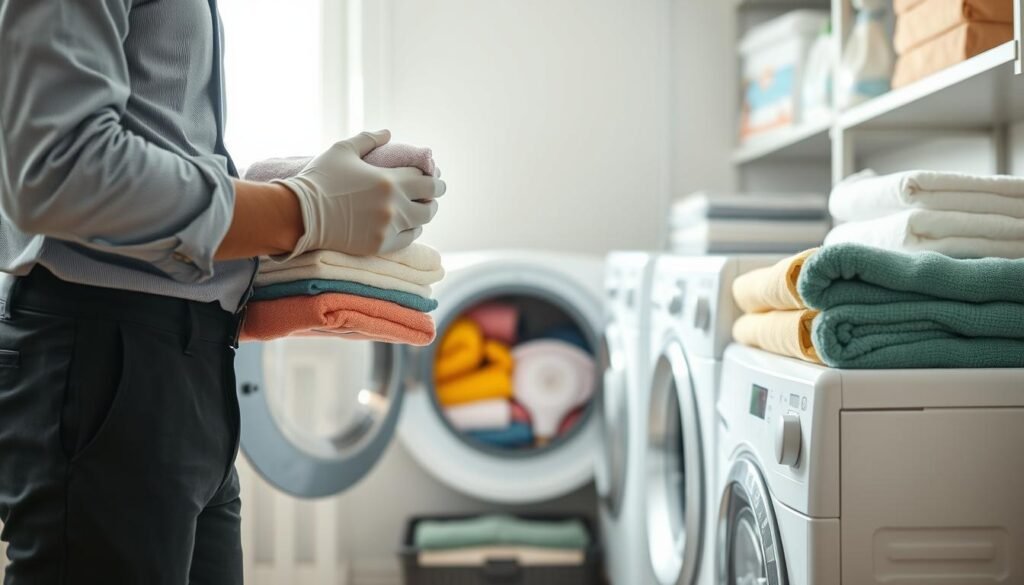
Learning the best practices for washing towels can make them last longer. It keeps them soft, absorbent, and smell good. This is key to keeping your towels in top shape.
Water Temperature
Choosing the right water temperature is crucial. Hot water is great for killing germs in white towels. But, it can be too rough on the fabric.
For colored towels, use warm water. This stops them from fading too fast and keeps the fabric strong. It’s a simple trick for a clean towel that lasts.
Detergents and Softener Choices
It’s important to follow towel care instructions closely. Don’t use fabric softeners in the wash.
These products leave a residue on towels. This residue stops towels from soaking up water well. It makes them less useful over time.
Drying Methods
How you dry towels is just as important as how you wash them. Don’t dry towels too long, as it can make them hard and scratchy.
Use a medium heat setting in the dryer to keep them fluffy. Air drying is even better. It keeps towels fresh without damaging them from heat.
| Feature | Recommended Setting | Reasoning |
|---|---|---|
| Water Temp (White) | Hot | Sanitization |
| Water Temp (Color) | Warm | Prevent Fading |
| Softener | None | Maintain Absorbency |
| Drying | Medium Heat | Prevent Fiber Damage |
Tips for Keeping Towels Fresh Between Washes
Keeping your linens fresh is more than just washing them often. Using towel hygiene tips helps keep them clean longer. It also makes your bathroom smell nice.
Proper Storage
Don’t fold or stack towels when they’re still wet. A little moisture can cause mildew and bad smells.
Make sure towels are completely dry before storing them. Good air flow in your storage area stops musty smells.
Air Drying Tips
For air drying, lay towels flat on a rack or hook. This lets air move around and stops bacteria.
Choose a spot with good air flow for faster drying. A sunny bathroom or a window spot is best for keeping towels fresh.
Using Essential Oils
Wool dryer balls can make your towels smell better naturally. They’re a better choice than chemical dryer sheets.
Just add a few drops of your favorite essential oil, like lavender or eucalyptus, to the wool balls. This trick softens towels and adds a nice scent that lasts.
The Role of Humidity and Climate
Your local weather patterns greatly affect how you handle bathroom linens. The moisture in your home reflects the outside climate. This moisture level impacts how fast fabrics dry.
When towels stay damp, they become a home for bad bacteria. Knowing this helps you change your daily routine. By controlling how you dry towels, you can stop bad smells from forming.
Impact on Towel Drying
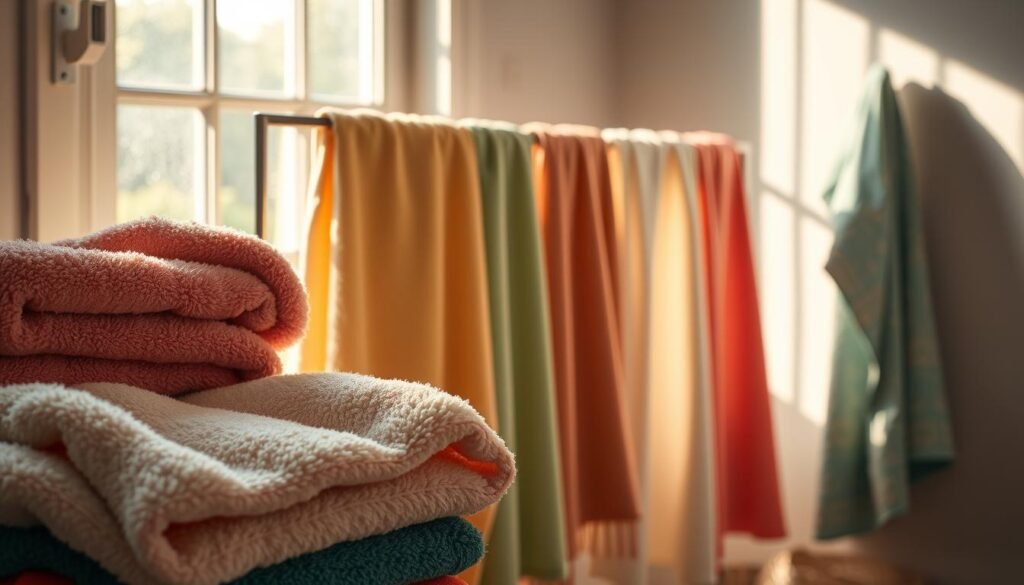
Wet towels create a warm, moist spot where mildew smells grow fast. Without good air flow, towels stay wet for a long time. This is why they often smell bad.
To fight this, hang towels right. Maximizing airflow helps towels dry faster. Always lay towels flat on a rack, not folded or bunched.
Regional Considerations
High humidity makes keeping towels fresh harder. In wet places, towels dry slower, even when hung well. You might need special ways to keep towels fresh all year.
Here are some tips for managing towels in humid or damp areas:
- Use a heated towel rack to speed up drying.
- Run a bathroom exhaust fan after showers to lower humidity.
- Put a small dehumidifier in the bathroom if it’s always damp.
- Change towels often so they dry fully between uses.
In dry, arid places, towels dry quickly. But, good air flow is still key to keep towels soft and clean. No matter where you live, air flow is crucial for towel longevity.
Special Considerations for Sensitive Skin
Your skin needs gentle care, like the towels you use every day. If you have eczema or sensitive skin, your laundry is key to feeling good. New towels can have chemicals that make your skin react.
Choosing Gentle Detergents
Choosing the right cleaner is the first step for your skin. Look for hypoallergenic and fragrance-free detergents. They clean without harsh smells or colors.
When buying laundry stuff, check if it’s tested by doctors. Also, follow these tips for washing:
- Use an extra rinse cycle to get rid of all soap.
- Stay away from detergents with brighteners, as they can be rough on skin.
- Choose liquid detergents that dissolve well in water.
Avoiding Fabric Softeners
Softeners make towels soft, but they’re bad for sensitive skin. They cover fibers with chemicals that can hurt your skin’s natural barrier. This can cause redness, itching, or skin problems.
Don’t use chemical softeners. Instead, add half a cup of white vinegar in the rinse. It softens fibers and removes detergent without harming your skin. Simple, clean routines keep your towels gentle on your skin.
Environmental Considerations in Towel Care
Caring for your linens is more than just cleaning them. It’s about being kind to the environment too. By following best practices for washing towels, you can help the planet. Making small changes in your laundry can make a big difference.
Eco-Friendly Washing Practices
Washing towels separately is a great start. It lets you use the right amount of detergent and cycle time. Using less detergent keeps towels soft and absorbent without harsh chemicals.
Choosing the right soap is also important. Go for concentrated, plant-based detergents to cut down on plastic and chemicals. These best practices for washing towels make your home care more eco-friendly.
Reducing Water and Energy Use
Using less water and energy is key to living sustainably. Washing in cold or warm water saves energy. Running full loads in your machine is another way to save.
How you dry towels matters too. Air drying saves electricity and makes towels last longer. Here’s how your choices affect your home:
| Practice | Energy Impact | Water Usage | Towel Longevity |
|---|---|---|---|
| Cold Water Wash | Low | Standard | High |
| Full Load Cycles | Medium | Efficient | High |
| Air Drying | Zero | None | Very High |
| High Heat Drying | High | None | Low |
What to Do If Towels Smell Despite Washing
Even with the best care, towels can still smell musty. This is often due to trapped bacteria in the fabric. To keep towels fresh, follow proper towel maintenance tips.
Deep Cleaning Techniques
For mildew smells, skip regular detergent. Use a half cup of baking soda instead. It helps get rid of lingering odors.
For tougher smells, try laundry sanitizer or white vinegar. These kill bacteria that regular soap misses. Always use hot water to clean best.
When to Replace Towels
Some towels can’t be saved, even with deep cleaning. If towels are stiff, discolored, or smell bad, it’s time for new ones. This means the fibers have broken down too much.
Proper towel maintenance also means knowing when to replace towels. Buying new towels is better than dealing with old, smelly ones. Fresh towels make your bathroom more comfortable and clean for everyone.
Final Thoughts on Towel Maintenance
Starting with quality linens is key. Choose premium cotton towels from brands like Brooklinen or Parachute. This keeps your towels soft and durable for many washes. Investing in good materials makes caring for them easier.
Personal Preferences and Frequency
Your towel cleaning needs depend on your lifestyle and family size. Some like to wash towels daily, while others do it weekly. Adjust your schedule based on your bathroom’s dryness and how many people use it.
Creating a Towel Care Routine
Being consistent is the best way to keep towels fresh. A regular washing schedule prevents odors and keeps bacteria away. Proper care protects your towels and ensures they stay soft and clean. Begin your new routine today for a cleaner home.