
Do you dread weekends spent cleaning? Many people feel overwhelmed by housework. But, you can change your routine without losing free time.
Life today is all about being flexible and efficient. Instead of long cleaning sessions, try daily tasks of 30-60 minutes. This way, you can keep your home tidy, no matter your life stage.
Building consistent habits makes a tidy home possible. Consistency is the secret ingredient to less stress and order. When you see chores as manageable, you take back control of your space.
Let’s find out how to make a cleaning schedule that suits you. With the right plan, you can have a clean home and still enjoy your favorite activities.
Table of Contents
Assessing Your Home and Lifestyle Needs
Creating a good cleaning schedule begins with knowing your daily life. Every home is different, based on family size, pets, and layout. It’s important to look at these factors to keep your household chore routine effective and easy to follow.
Identifying High-Traffic Areas
Walk through your home to find the dirtiest spots. Places like entryways, kitchens, and living rooms need daily cleaning. Focusing your energy here stops messes from spreading.
Notice that your mudroom or hallway might need daily sweeping. But guest bedrooms or formal dining areas might only need weekly cleaning. This helps keep your home tidy without too much work.
Evaluating Your Available Time
Be real about how much time you have for chores each day. A busy person with a big family has different needs than someone living alone. Your cleaning schedule should fit into your busy life.
If you only have fifteen minutes in the morning, don’t plan for an hour of cleaning. Being consistent is more important than doing a lot at once. Small, regular tasks work better than one big cleaning session.
Determining Your Personal Cleanliness Standards
Your idea of a clean home is personal and should not follow social media. Some like a few things on the counter, while others want everything off. Setting your own regular house tidying plan helps you focus on what’s important to you.
Embrace the standard that makes you feel good in your home. If some tasks don’t improve your life, skip them. A good cleaning schedule supports your lifestyle without adding stress.
Establishing Your Daily Cleaning Plan
You can make your home better by following a cleaning routine. A good daily cleaning plan is key to keeping your home clean. Doing small tasks every day helps stop messes from growing.
Managing Essential Daily Tasks
Some chores need to be done every day. Start by making your bed in the morning. This makes your bedroom look neat.
Also, clean the kitchen counters after meals. This stops dirt from piling up. Sweeping floors often keeps them clean too. These essential steps make your home welcoming without a lot of work.
Incorporating Quick Tidying Habits
Adding small habits to your day makes cleaning easier. For example, clean the bathroom sink after you brush your teeth. It’s quick and keeps things fresh.
Try a 15-minute tidy-up each evening. Quickly put things back where they belong. This cleaning schedule keeps your space tidy.
Setting Realistic Expectations for Busy Days
Life can get busy and mess with your plans. On crazy days, just do the must-do tasks. It’s better to do a little than nothing at all.
Remember, your daily cleaning plan is for your benefit. If you miss a day, start again the next morning. A flexible cleaning schedule helps you stay on track without getting tired.
Developing a Weekly Housekeeping Schedule
Start making your home easy to keep up with by making a weekly housekeeping schedule. Break big tasks into 30-minute bits. This stops dirt from building up and makes weekends less stressful.
Assigning Specific Tasks to Days of the Week
Use a structured cleaning timetable to clean one area each day. For example, dust on Mondays and vacuum on Tuesdays. This makes your life easier and more predictable.
“The secret of getting ahead is getting started. The secret of getting started is breaking your complex overwhelming tasks into small manageable tasks, and then starting on the first one.”
Balancing Heavy and Light Chores
Keep your cleaning routine balanced. Do big tasks like mopping on Wednesdays. Then, do something easy like wiping mirrors. This keeps your energy up all week.
| Day | Primary Task | Secondary Task |
|---|---|---|
| Monday | Dusting | Decluttering |
| Wednesday | Mopping | Wiping Mirrors |
| Friday | Vacuuming | Laundry |
Creating a Rotating Chore System
Use a rotating system to keep your cleaning schedule going. Don’t clean every room every week. Instead, focus on different areas each month. This keeps your cleaning routine efficient and stops you from getting too tired.
By sticking to your structured cleaning timetable, you’ll have control over your home. Being consistent makes keeping your home clean easy. It won’t feel like a chore anymore.
Implementing a Monthly Cleaning Checklist
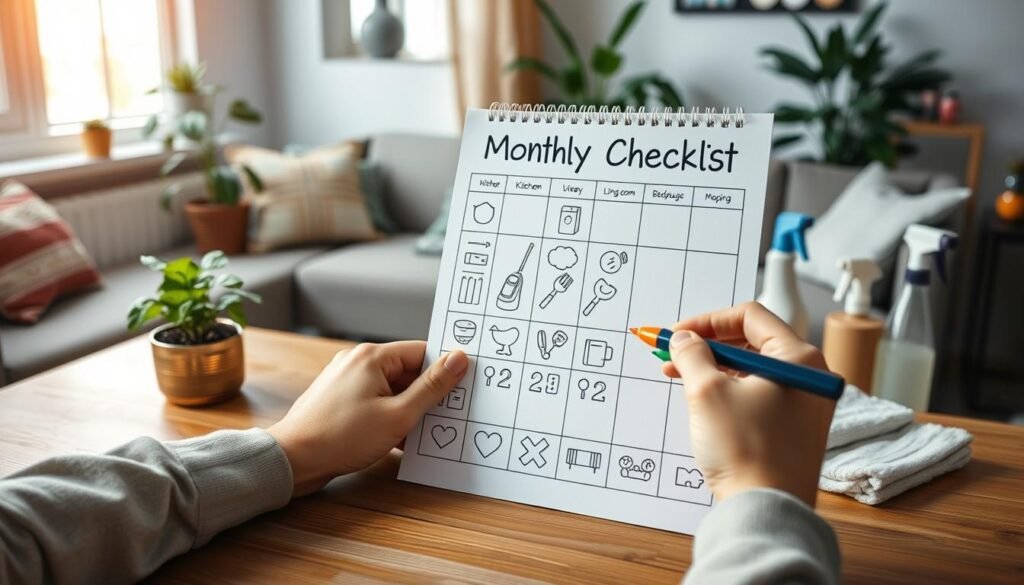
Using an organized cleaning calendar makes home care easier. Daily and weekly chores keep your home neat. But, monthly tasks tackle hidden dirt that builds up.
Breaking big jobs into smaller parts keeps your home healthy and clean.
Tackling Deep Cleaning Projects
Zone cleaning helps organize monthly deep cleaning by room. Instead of cleaning the whole house at once, focus on one area. This method stops burnout and lets you clean spots like baseboards and ceiling fans better.
Maintaining Appliances and Fixtures
Appliances and fixtures need regular care to work well. A cleaning schedule reminds you to clean your coffee maker and oven. These small tasks help your appliances last longer and save money on repairs.
Seasonal Maintenance Tasks
Your home also needs seasonal care for weather changes. A detailed monthly cleaning checklist includes tasks like checking smoke detectors and cleaning window tracks. These steps keep your home safe and comfy all year.
| Task Category | Frequency | Primary Goal |
|---|---|---|
| Deep Cleaning | Monthly | Remove hidden dust and grime |
| Appliance Care | Monthly | Improve efficiency and longevity |
| Seasonal Checks | Quarterly | Ensure safety and home integrity |
Adding these tasks to your organized cleaning calendar helps control your home. Being consistent is key. Schedule these tasks when you have lots of energy. With a good cleaning schedule, deep cleaning becomes part of your routine, not a stress.
Choosing the Right Tools for Your Cleaning Schedule
Choosing the right tools can make cleaning easier. The right supplies save you time and effort. A good cleaning schedule needs tools that work well and save you energy.
Selecting Efficient Cleaning Supplies
Choose quality over quantity for your cleaning supplies. Microfiber cloths pick up dust and dirt better than paper towels. Pick multi-purpose cleaners for different surfaces to save space.
Always check the labels to make sure they’re right for your home. The right cleaner keeps your surfaces safe and looking good. This makes your cleaning routine effective and safe for your family.
Organizing Your Cleaning Caddy
Keep your cleaning supplies in a portable caddy. This makes it easy to move around without wasting time. You won’t have to go back and forth to get what you need.
This simple change helps you stay focused. It keeps you from getting distracted while cleaning.
| Tool Category | Primary Benefit | Frequency of Use |
|---|---|---|
| Microfiber Cloths | High absorption | Daily |
| Portable Caddy | Time efficiency | Weekly |
| Digital App | Task tracking | Daily |
Utilizing Technology and Apps for Tracking
Modern tech helps keep your cleaning schedule organized. Apps like Tody or Sweepy remind you and track your progress. They make you feel accomplished as you finish tasks.
Using these apps keeps you on track. You know exactly what to do next. It makes keeping your home clean easy and stress-free.
Customizing Your Cleaning Schedule
No two homes are the same. Your cleaning plan should fit your life, not the other way around. If a cleaning routine doesn’t work for you, change it.
“Flexibility is the key to stability; when you adapt your methods to your environment, you create a space that truly supports your well-being.”
Adapting to Family Size and Pets
Bigger families mean more mess. Pets add extra work for vacuuming and wiping surfaces. Your cleaning plan should focus on busy areas where everyone hangs out.
Adjusting for Different Home Layouts
Your home’s layout affects your cleaning routine. Homes with many floors need a smart cleaning plan to save energy. Group tasks by floor to make cleaning easier.
| Home Type | Primary Focus | Frequency |
|---|---|---|
| Apartment | Surface dusting | Weekly |
| Multi-story | Staircase safety | Bi-weekly |
| Pet-friendly | Floor sanitation | Daily |
Modifying the Plan for Seasonal Changes
Seasons change your cleaning needs. In busy times, focus on the basics. In quiet months, do deep cleaning to keep your home perfect.
Your cleaning plan should always be open to changes. This way, your home stays a cozy haven, no matter what life brings.
Overcoming Common Obstacles to Consistency
Even the most dedicated planners face days when a regular house tidying plan seems hard. Life can throw surprises that make it hard to keep up. Remember, it’s okay if things aren’t perfect.
Dealing with Procrastination and Burnout
When you feel too much, start small. Do just one little thing to get moving again. Self-grace is key; a clean home should help you, not stress you.
Try breaking tasks into short, 15-minute chunks. This makes them feel less big and scary. It keeps your cleaning schedule from feeling like a burden.
Handling Unexpected Interruptions
Life can throw curveballs like illness or work emergencies. Don’t try to do it all at once. Just pick up where you left off the next day.
Have a “catch-up” day once a month for missed tasks. This keeps your home tidy without feeling like you’ve failed.
Involving Other Household Members
Sharing the work is a great way to keep your home tidy. Getting others to help not only makes your life easier but also teaches kids responsibility. Give them tasks that fit their age to help keep your space clean.
| Obstacle | Immediate Action | Long-term Strategy |
|---|---|---|
| Procrastination | Set a 10-minute timer | Break tasks into smaller steps |
| Burnout | Take a rest day | Simplify your daily requirements |
| Interruptions | Prioritize essentials only | Use a flexible buffer day |
| Lack of Help | Hold a family meeting | Create a shared chore chart |
Optimizing Your Cleaning Regimen for Efficiency
An efficient cleaning regimen needs smart planning and regular action. By changing how you clean, you can save a lot of time. This way, you keep your home clean without feeling stressed.

Applying the Top-to-Bottom Cleaning Method
Gravity helps a lot when cleaning. Start with dusting high places like ceiling fans and shelves. Then, clean floors last to catch any falling dust.
Cleaning floors first can make dust fall on clean surfaces. Cleaning from top to bottom saves time and effort. It makes your home look great for longer.
Grouping Similar Tasks Together
Switching between cleaning tools or products can slow you down. Clean one thing all over the house at once. For example, clean all mirrors with glass cleaner and microfiber cloths at once.
This method helps you stay focused and move faster. It turns a long list of chores into a smooth process.
Minimizing Clutter to Reduce Cleaning Time
Clutter makes cleaning slower and harder. Every item on a surface needs to be moved or cleaned around. Clear surfaces help you clean faster.
Here’s how clutter affects your cleaning speed:
| Task Type | Cluttered Surface | Clear Surface |
|---|---|---|
| Dusting | High effort (moving items) | Low effort (one swipe) |
| Wiping | Slow (navigating objects) | Fast (direct path) |
| Vacuuming | Requires moving furniture | Clear, open floor space |
Having fewer decorations in busy areas helps a lot. Less to clean means easier maintenance. A simple home decor is key to quick cleaning.
Tracking Progress and Refining Your Routine
Keeping your home in good shape is all about tracking and improving. Watch your habits closely to see what works and what doesn’t. This way, your home stays cozy and stress-free.
Reviewing Your Schedule Weekly
Make time each week to review your cleaning schedule. This helps you spot any missed tasks. Consistency stops small messes from getting big.
Compare your progress to your goals. If some areas are always messy, adjust your schedule. This keeps your home care on track.
Making Necessary Adjustments Based on Results
Your daily cleaning plan should be flexible. Life changes mean your routine might need to too. You might need to change days or simplify tasks.
Adjusting your weekly housekeeping schedule keeps it relevant. Changes in family size or work can require updates. Adaptability is key to a clean home.
Celebrating Small Wins and Milestones
Don’t just focus on what’s left to do. Acknowledge your achievements too. Celebrating small victories keeps you motivated and positive about your home.
Marking milestones makes the effort feel worth it. You’re building a system that supports your health. Keep improving your weekly housekeeping schedule and enjoy a well-kept home.
Maintaining a Sustainable Home Environment
Building a lasting home environment means changing your habits over time. A regular cleaning schedule is key to a peaceful home. It helps keep your space clean and supports your daily life.
By sticking to a cleaning plan, you save time. This time is for your family and fun activities. Your home becomes a cozy place when you focus on balance, not perfection.
Try one new habit this week. See how your home feels when it’s tidy. Share your tips with others to stay motivated. Your path to a cleaner home begins with today’s choices.



[…] Creating a cleaning schedule means finding a balance. Spend 30 to 60 minutes each day on cleaning. This keeps your home tidy without taking too much of your time. […]
[…] Having a regular schedule means you don’t have to do big, tiring cleanings. By cleaning up small messes right away, you stop them from getting too big. Routine maintenance keeps your place feeling new and organized always. […]
[…] free up your time. Breaking big tasks into smaller ones makes cleaning less overwhelming. A good household cleaning schedule helps you stay on track without […]