
Does your home feel like a stress spot instead of a calm place? Many people say a messy home can make their mind feel cluttered too. This makes it hard to unwind after a long day.
By following a 10-week plan, you can take back control of your space. This method breaks down big tasks into smaller weekly goals. This way, you make progress without feeling overwhelmed.
This decluttering guide helps you change your home in just three months. You’ll learn to think differently about keeping things organized. This will help you succeed in the long run.
With this easy declutter checklist, you can get rid of things that hold you back. Start today to make a home that helps you feel good and peaceful.
Table of Contents
The Psychology and Benefits of a Clutter-Free Home
Your living space affects your peace of mind. Too many things around can make your brain feel tense. By organizing your home, you make a calm place for rest and focus.
Understanding the Impact of Physical Environment on Mental Health
Your home shows how you feel inside. Studies say a clutter-free home lowers stress hormones. This lets your mind rest after a busy day.
Too many things can make you feel tired or stressed. Keeping your space tidy helps you focus better. It’s not just about looks; it’s good for your mind.
How Minimalism Reduces Daily Stress and Decision Fatigue
Every item in your home takes some brain power. Minimalist living means fewer choices. This saves your brain for important things.
Living simply helps you see what’s truly important. It makes your life simpler and more meaningful. A clutter-free home is a safe place for your happiness.
Essential Tools for Your Decluttering Process
To start cleaning your home, you need more than just determination. You also need the right tools. Having all your supplies ready makes your decluttering process easier and keeps you focused. This way, you won’t get sidetracked and give up.
Must-Have Supplies for Sorting and Storage
First, gather some basic items for sorting. You’ll need strong trash bags, clear bins, and markers. Labels are also key, as they help you find what’s inside without opening everything.
Drawer organizers are great for keeping small things tidy. They can turn a messy drawer into a neat space quickly. Good storage solutions help keep everything in its place, which is your main goal.
“For every minute spent organizing, an hour is earned.”
Setting Up Your Staging Area for Maximum Efficiency
A dedicated area is crucial for a smooth workflow. Clear a spot in your room for sorting. This keeps your items organized and your progress clear.
Here’s a table to help you sort things out:
| Category | Container Type | Primary Purpose |
|---|---|---|
| Keep | Clear Bin | Items for daily use |
| Donate | Cardboard Box | Gently used goods |
| Trash | Heavy-duty Bag | Broken or expired items |
| Sell | Labeled Bin | High-value belongings |
Keeping each area separate helps avoid mixing things up. This method keeps your decluttering process organized from start to end. By following these organization tips, you’ll save time and feel less stressed.
The Ultimate Declutter Checklist for Every Room
A good declutter checklist helps you take back your space. It makes sure you check every part of your home. This way, cleaning up feels easier.
Room-by-Room Breakdown for Systematic Clearing
Start by cleaning one room at a time. Your decluttering checklist helps you decide what to keep and what to throw away. This makes your home more useful.
Stay focused on one room at a time. This avoids spreading yourself too thin. It’s the best way to get a clutter-free home.
Prioritizing Zones Based on Usage Frequency
Begin with rooms you use a lot, like the kitchen. These areas get a lot of use. Cleaning them first makes you want to keep going.
After that, tackle less-used rooms like guest areas or closets. This order makes your main living spaces clutter-free first. Using this decluttering checklist keeps your home tidy and open.
Step-by-Step Strategy for Tackling High-Traffic Areas
You can make your home feel new again by focusing on the places you use most. The kitchen and living room are the heart of your home but get cluttered fast. A good decluttering guide helps you take back these key areas.
Clearing the Kitchen and Pantry
The kitchen is the busiest room. Start by emptying your pantry shelves. Check each item to see if it’s still good.
Managing Countertop Appliances and Expired Goods
Look at your kitchen appliances. If you haven’t used something in months, it’s time to store it or give it away. This makes your counters clear and simple.
“Simplicity is the ultimate sophistication.”
Organizing the Living Room and Entertainment Spaces
Your living room should be calm, not cluttered. Start by cleaning off coffee and side tables. This makes it easier to declutter the rest of your space.
Dealing with Cables and Media Storage
Too many cables can make a room look messy. Use clips to keep them tidy. Sort your media, keeping only what you love. Digitize the rest to save space.
| Zone | Primary Goal | Frequency |
|---|---|---|
| Kitchen Pantry | Remove expired items | Monthly |
| Countertops | Clear unused appliances | Weekly |
| Living Room | Organize media/cables | Quarterly |
By following this decluttering guide in your busiest rooms, you start a good habit. Keeping these areas tidy stops clutter from building up. A clean space means a clearer mind.
Managing Sentimental Items Without the Guilt
It’s hard to let go of things from your past. But it’s a big part of decluttering checklist. Many feel they’ll lose memories if they throw away something special. But, you can keep your memories and still have a tidy home.
Focus on the story behind the object, not the object itself. This way, you can keep your space tidy without losing your favorite memories.
The Three-Pile Method for Emotional Objects
Use the three-pile method for emotional items. Make a Keep pile for things you use or show off. Then, have a Gift or Donate pile for items that can make others happy.
The last pile is for Release. This is for things that are broken, not needed, or don’t fit your life anymore. Remember, letting go of the item doesn’t mean you’re losing the memory.
Digitizing Memories to Save Physical Space
If you have lots of old photos, school work, or letters, scan them. This way, you can keep your memories without using up space. Store them on a cloud or an external hard drive.
This method keeps your memories safe and easy to find. It’s a smart way to declutter your home while keeping your history safe for the future.
| Storage Method | Space Required | Accessibility | Durability |
|---|---|---|---|
| Physical Boxes | High | Low | Low |
| Digital Cloud | None | High | High |
| Display Shelves | Medium | High | Medium |
“The things you own end up owning you. It is only after you lose everything that you are free to do anything.”
Sorting Systems for Efficient Organization
Keeping your home tidy is more than just wanting to. It needs a good system for handling your stuff. Without a plan, too many items can feel overwhelming. A steady way to deal with your things helps keep your home neat and lowers stress.
Good home organization isn’t about being perfect. It’s about making a system that fits your life. When everything has a place, you waste less time looking for things. These tips help you stay organized for good.
The Keep, Donate, Sell, and Trash Framework
Sorting your stuff into four piles is the best way to start. Go through each room and put everything into one of these piles. This stops clutter from moving around without being dealt with.
Here’s how to sort your items well to make your work easier:
| Category | Definition | Action Required |
|---|---|---|
| Keep | Items you use often or value a lot. | Put back in its place. |
| Donate | Stuff you still need but don’t use. | Bag for charity. |
| Sell | Things worth money that are still good. | Post online to sell. |
| Trash | Things that are broken or can’t be used. | Throw away or recycle. |
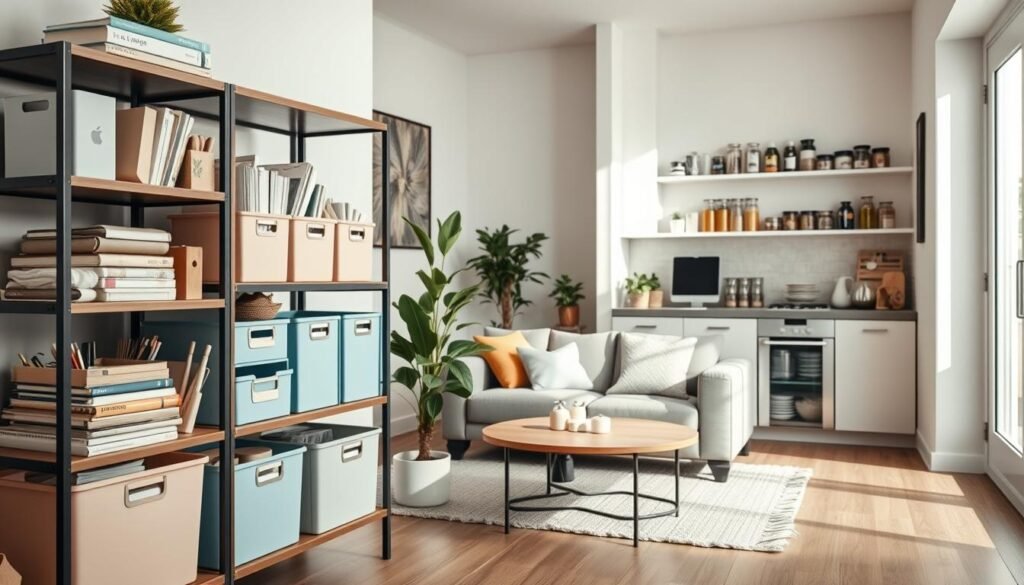
Implementing Vertical Storage Solutions
After sorting, use your walls to store things. Walls are often ignored, leading to messy floors and surfaces. Using your walls is a top organization tip for small spaces.
Think about adding shelves, tall bookcases, or organizers that hang over doors. This keeps your stuff off the floor and makes rooms feel bigger. It also makes cleaning easier every day.
Remember, keeping your home organized is an ongoing task. By following these organization tips, cleaning your home will become easier. Stick to it, and you’ll enjoy a tidy living space.
Maintaining Your Space with Daily Habits
Turning your home into a peaceful place is easy with simple habits. After you clean, keeping it tidy is the next step. Using decluttering tips helps keep your space clean for good.
The One-In-One-Out Rule Explained
The “One-In-One-Out” rule helps keep your home tidy. For every new thing, get rid of an old one. This stops clutter from building up.
“Have nothing in your house that you do not know to be useful, or believe to be beautiful.”
This rule makes you think about each new item. If you can’t get rid of something, maybe don’t buy the new thing. It keeps your space balanced.
Establishing a Five-Minute Nightly Reset Routine
A quick clean before bed makes mornings easier. Just five minutes to put things away. This stops small messes from getting big.
| Task | Time Required | Benefit |
|---|---|---|
| Clear surfaces | 2 Minutes | Visual peace |
| Sort mail | 1 Minute | Reduced stress |
| Put away shoes | 2 Minutes | Tidy entryway |
Being consistent is key to a clean home. A few minutes each night helps a lot. These small steps make your home and life less stressful.
Handling Digital Clutter and Paperwork
Digital files and too many emails can make you stressed every day. Your computer and cloud storage can get messy. A good decluttering guide helps you clean up your digital space.

Digitizing Important Documents and Records
First, collect all your paper documents like tax forms and medical records. Use a good scanner app on your phone to turn them into PDFs. This is a great way to clear your desk.
After scanning, save these files in a safe place like Google Drive or Dropbox. Make folders for things like “Financial” and “Medical.” Use the same names for files, like “YYYY-MM-DD_DocumentName,” so you can find them fast.
“Simplicity is the ultimate sophistication.”
Cleaning Up Your Desktop and Email Inbox
Your desktop should be clean, not a place for random files. Put all icons in folders or delete them if you don’t need them. A tidy screen helps you stay focused.
Then, clean up your email inbox by unsubscribing from unwanted newsletters. Use filters to sort emails into folders. This way, your inbox won’t stress you out every day.
Keeping your digital space clean takes regular effort, just like your home. Spend a few minutes each week to tidy up your downloads and empty the trash. This decluttering guide keeps your digital world as neat as your living room.
Sustainable Disposal Methods for Your Unwanted Items
Responsible disposal makes your declutter checklist better for the world. After sorting your stuff, you need a plan to get rid of it. Choosing green ways helps clear space and keeps the planet safe.
Donating Responsibly to Local Charities
Donating is great for giving old items a new life. Places like Goodwill or the Salvation Army take clothes, books, and more. Make sure to check your decluttering checklist before dropping off. This ensures everything is clean and works well.
Selling High-Value Items on Online Marketplaces
For valuable items, selling is a good option. Sites like eBay, Poshmark, or Facebook Marketplace help you find buyers. Good photos and honest descriptions help sell items quickly.
Eco-Friendly Recycling Options for Household Waste
Not all items can be donated or sold. But, they shouldn’t go to the landfill either. Use Earth911 to find places to recycle electronics, batteries, or textiles. A good decluttering checklist can show you what needs special care.
| Method | Best For | Impact |
|---|---|---|
| Donation | Clothing, Books | High Social Value |
| Resale | Electronics, Furniture | Financial Return |
| Recycling | Batteries, Metals | Environmental Safety |
Using these disposal methods makes your declutter checklist good for your home and the planet. Sorting waste right is a small step with big benefits for your community.
Sustaining Your Minimalist Living Lifestyle
Changing your mind is key to keeping your home tidy. You can make your living space clean and inviting for years.
Last year, Molly Maid cleaned homes 1.7 million times. This shows many people want a clean home. But, you are the one who keeps it clean every day.
Living simply brings peace and freedom. By sticking to these tips, you avoid clutter. Think of it as a journey, not a one-time task.
Begin with one drawer or shelf each week. These small steps make a big difference in your mind. Tell friends about your progress to stay excited about your space.



[…] home also needs seasonal care for weather changes. A detailed monthly cleaning checklist includes tasks like checking smoke detectors and cleaning window tracks. These steps keep your home […]
[…] to care for fabrics well keeps your home neat. By adding these tasks to your household chore checklist, you control your space. This reduces stress and makes cleaning […]
[…] Use This Declutter Checklist to Clear Your Home EfficientlyHow to Create a Cleaning Schedule That Works for YouYour Daily Cleaning Routine Guide for a Tidy Home Every Day […]