
You can turn a messy kitchen closet into a super-efficient space. Small storage areas are often easier to manage because they make you think about where everything goes.
Begin by emptying your shelves to see what you have. Put similar items like baking supplies, canned goods, and snacks together. Utilizing vertical space with stackable bins or shelf risers lets you see everything easily.
Keeping often-used items at eye level is key to good pantry organization. A clear system cuts down on food waste and saves time when cooking. Keeping your kitchen tidy helps everyone in your home stay calm and focused.
Table of Contents
Why Organizing Your Pantry Matters
Did you know you might lose a lot of money each year? It’s because you can’t find what’s in your pantry. A messy pantry is not just ugly; it also costs you money by making you buy things twice.
When you organize your pantry, you can see what you have. This stops you from buying things you already have.
Benefits of a Well-Organized Pantry
A clean pantry means less food waste. You won’t let things go bad because you can’t see them. Good pantry organization tips help you use what you have before buying more.
A tidy pantry also makes you feel better. You won’t get frustrated looking for ingredients while cooking. Knowing what you have lets you plan meals easily and confidently.
Boosting Efficiency in the Kitchen
An organized pantry makes your kitchen run smoothly. You can find what you need fast. This saves time, which is great on busy nights when you need to cook quickly.
| Feature | Disorganized Pantry | Organized Pantry |
|---|---|---|
| Food Waste | High due to expiration | Minimal through rotation |
| Shopping Habits | Frequent duplicate buys | Targeted, list-based shopping |
| Meal Prep Time | Slow and stressful | Fast and efficient |
| Storage Capacity | Feels cramped | Optimized for space |
By organizing pantry shelves, you make a system that helps your daily life. This makes your kitchen a place of calm, not stress. Start these habits now and save time and money for a long time.
You Might Also Like:
Small Pantry Ideas That Make Every Inch Count
How to Organize a Pantry for Maximum Space and Order
Use This Declutter Checklist to Clear Your Home Efficiently
Assessing Your Pantry Space
You can’t have a great kitchen without knowing your pantry’s size. Before you start organizing pantry stuff, figure out what you can fit. This way, you won’t buy things that don’t fit.
Measuring Your Pantry Dimensions
First, empty your pantry and spread things on the counter. This lets you see what you have. Measuring shelf depth, width, and height is key to finding the right storage.
Remember the space between shelves. This tells you how big containers can be. If your shelves can move, think about rearranging for taller items. Getting the measurements right is crucial.
Analyzing Current Storage Solutions
After measuring, check how your current setup works. Find out which spots are not used well or slow you down. Pinpointing these pain points helps you know where to add new storage.
| Storage Type | Best Use Case | Efficiency Rating |
|---|---|---|
| Fixed Shelving | Bulk items | Moderate |
| Adjustable Racks | Variable heights | High |
| Door Organizers | Small packets | Excellent |
When organizing pantry areas, look for unused vertical space. Many miss the height of cereal boxes or spice jars. By spotting these gaps, you can use every inch of your kitchen.
Decluttering Your Pantry: The First Step
Changing your storage area begins with pantry decluttering. You must get rid of items you don’t use anymore. This makes room for what you really need.
This first step is key for pantry organization. By getting rid of old or unused items, you make space for what you use often.
Identifying Expired Products
Start by taking everything off your shelves. Look at the labels and check expiration dates. Ask yourself if you’ll use items that have been there for over a year.
If it’s expired, throw it away. Removing expired goods helps you save space in your pantry.
| Item Category | Typical Shelf Life | Action Required |
|---|---|---|
| Canned Goods | 1-2 Years | Check for dents |
| Dried Spices | 6-12 Months | Check for aroma |
| Flour/Grains | 6 Months | Inspect for pests |
Sorting Items into Groups
After getting rid of expired items, sort what’s left. Group things like baking supplies, canned proteins, pasta, and breakfast items.
Categorizing your inventory helps you see how much space you need. This makes sure your storage fits your needs perfectly.
Choosing Storage Solutions for Your Pantry
Start by picking the best tools for your kitchen. High-quality hardware is key for a lasting system. Choose durable materials and designs for a tidy space for years.
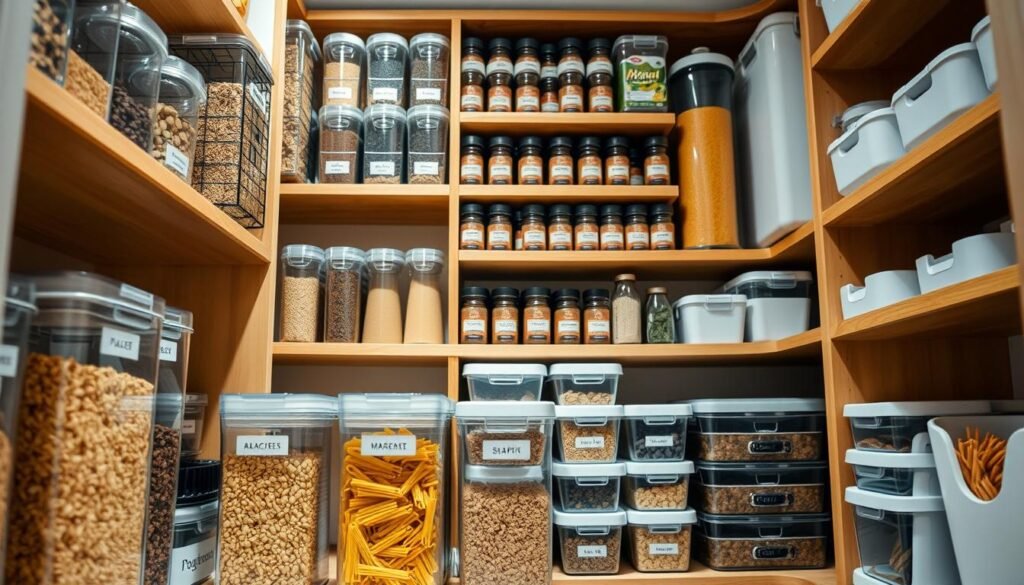
Shelving Units: What to Consider
When looking at pantry shelving, think about weight and adjustability. Shelves must hold heavy items without bending. Adjustable shelves are great for different sizes.
Think about the material for your shelves. Wire racks are good for air, while wood or laminate are easy to clean. The right pantry storage solutions make a strong base.
Containers and Bins: Types and Uses
Use clear, airtight pantry organization containers for dry goods. They save space and help you avoid buying too much. This removes bulky packaging.
Use bins for small items like snacks or spices. Clear bins show what you have, while opaque baskets hide clutter. This keeps your pantry looking neat.
Labeling: Tips for Clarity
Pantry organization labels help everyone put things back. Clear labels make the system work, even when it’s busy. Use waterproof labels for durability.
| Storage Type | Best Use Case | Primary Benefit |
|---|---|---|
| Clear Plastic Bins | Snacks and loose items | High visibility |
| Airtight Canisters | Dry goods like flour | Maintains freshness |
| Wire Shelving | Heavy canned goods | Superior durability |
| Adjustable Dividers | Small spice packets | Customized spacing |
Keep your labels consistent for a clean look. Place tags in the same spot on all containers. This makes your pantry organization look complete and useful.
Maximizing Vertical Space
Start by looking up to make your pantry more useful. Most people ignore the space above their food. This empty area is perfect for pantry organization.
By using this space, you avoid losing items in deep shelves. It makes your pantry more efficient.
Utilizing Stackable Bins
Stackable bins are key for a tidy pantry. They help you use vertical space, doubling your storage. Choose clear bins so you can see what’s inside without moving them.
Put heavy items at the bottom and light ones on top. This keeps your pantry organized and easy to use.
Installing Shelf Risers
Shelf risers add a second level to your shelves. They let you store small items under taller ones. In small pantries, add a Lazy Susan on top for easy access.
This setup helps you organize items and find what you need quickly.
| Storage Tool | Primary Benefit | Best Use Case |
|---|---|---|
| Stackable Bins | Vertical height | Dry goods and snacks |
| Shelf Risers | Tiered visibility | Canned goods and spices |
| Lazy Susans | Easy access | Condiments and oils |
Using these tools will make your pantry better. They help with pantry organization and pantry shelving. These pantry organization containers make your kitchen more efficient.
Designing a Functional Layout
Creating a functional pantry layout changes your kitchen experience daily. It makes your pantry work like a professional store. This way, you can find what you need quickly while cooking.
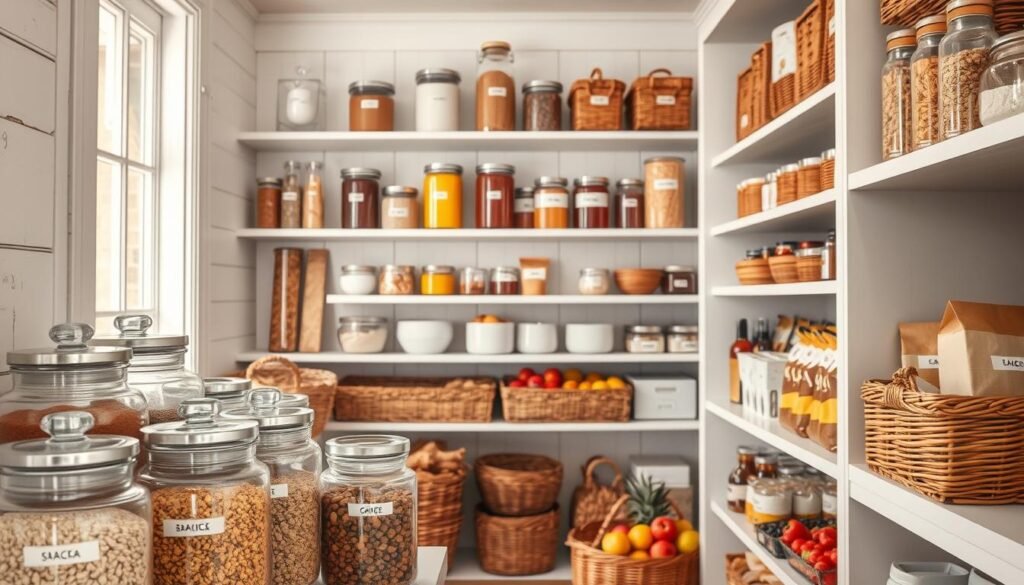
Creating Zones for Different Items
Organize your food into zones like baking, canned goods, and breakfast items. Pantry organization containers help keep these areas clear. This way, you can see what you have and avoid buying too much.
Having a set place for each item makes it easy for everyone to put things back. Quality pantry storage solutions help keep your space organized for a long time.
Prioritizing Frequent Use Items
Put your most used items where you can see them. This includes spices, oils, and grains. It saves you from bending or stretching.
Heavy items like flour go on the bottom shelves. Snacks for kids can be on lower or middle shelves. The right pantry organization containers keep snacks organized.
| Shelf Level | Item Category | Accessibility |
|---|---|---|
| Top Shelf | Lightweight, Occasional Use | Low |
| Eye Level | Daily Essentials | High |
| Bottom Shelf | Heavy Bulk Items | Medium |
Seasonal Pantry Organization Tips
Changing your storage space with the seasons is key. As you move from winter stews to summer salads, your pantry needs to change too. A quick seasonal update keeps your kitchen ready all year.
Rotating Stock for Freshness
Check your pantry every month to keep food fresh. Look at canned goods, spices, and dry items. Use older items first by putting them up front.
If you can’t use something before it expires, donate it. This keeps your pantry clean and helps others. It’s a simple way to manage your pantry well.
Storing Seasonal Ingredients Efficiently
Ingredients change with the seasons. For example, you might need baking supplies in winter or grilling items in summer. Smart pantry organization tips help you handle these changes smoothly.
Store seasonal items in bins or baskets. When the season ends, move them to different shelves. This way, your most frequently used ingredients are always easy to find.
Maintaining Your Organized Pantry
A well-organized pantry changes with your habits. The first setup is great, but keeping it up is key. Simple pantry organization tips make it easy to stay organized. Staying consistent keeps your pantry tidy.
Regular Check-Ins: How Often?
Put things back right after shopping. This habit stops clutter from building up. A weekly check keeps everything in place.
Every month, do a deeper clean. This is the time for pantry decluttering to get rid of old items. Being proactive keeps your kitchen efficient all year.
| Task | Frequency | Goal |
|---|---|---|
| Restocking | Weekly | Maintain order |
| Expiration Check | Monthly | Ensure freshness |
| Layout Review | Quarterly | Optimize flow |
Adjusting Your Layout as Needed
Your storage needs change with your habits or family size. Don’t stick to your original design if it’s not working. Flexibility is key for a useful kitchen.
Move daily items to easy-to-reach spots. Changing your layout helps you use your pantry better. Making these small adjustments keeps your pantry helpful, not stressful.
Clever Storage Hacks for Small Pantries
Small pantries have hidden potential. They can change how you cook every day. When space is tight, find creative ways to use every inch. Smart pantry storage solutions make your kitchen work well, even without a big pantry.
Using Door Space Effectively
The back of your pantry door is a great spot that’s often wasted. An over-the-door shelving system adds a lot of extra storage. It’s perfect for spices, sauces, or small boxes that clutter your shelves.
Using this space saves shelf room for bigger items. These pantry organization ideas keep your most-used ingredients easy to find while cooking.
Incorporating Pull-Out Drawers
Pull-out drawers are a big help if you can’t reach items on deep shelves. They work like a kitchen filing cabinet, bringing items to you. This design makes it easy to find what you need without moving everything.
Installing sliding drawers makes the most of your pantry’s depth. It keeps food from getting lost in dark spots. Here are some ideas to make your kitchen better:
| Storage Solution | Primary Benefit | Best Use Case |
|---|---|---|
| Over-the-Door Rack | Saves shelf space | Spices and condiments |
| Pull-Out Drawers | Improves accessibility | Heavy cans and jars |
| Stackable Bins | Vertical optimization | Dry goods and snacks |
By using these ideas, you can make your pantry very efficient. Even the smallest pantry can be organized well with the right approach.
Family Involvement in Pantry Organization
Getting your family involved in pantry management keeps it organized for a long time. A good system needs the daily use of everyone. Making storage a shared task creates a lasting benefit for your home.
Encouraging Kids to Help
Choose the right tools for kids to make the kitchen safer. Use plastic containers instead of glass to avoid breakage. This lets kids get snacks or ingredients safely.
Visual cues help teach kids where things go. Use clear pantry organization labels with pictures or big text. This way, even the youngest can help put things away right.
Assigning Roles for Maintenance
Keeping your space organized needs consistency. Assign tasks to each family member to share the work. These pantry organization ideas work best when everyone knows their part.
Make a simple chart to track these tasks. When everyone knows their job, the pantry stays neat and efficient. Use the table below to set clear expectations for your family.
| Family Member | Primary Responsibility | Frequency |
|---|---|---|
| Young Children | Sorting snacks into bins | Weekly |
| Older Children | Checking expiration dates | Bi-weekly |
| Adults | Restocking and inventory | Monthly |
| Entire Family | General tidying | Daily |
Rotating tasks keeps things interesting and fair. Update your pantry organization labels as your kids grow. This keeps the system working well for years.
Conclusion: Enjoying Your Organized Pantry
Turning your kitchen into a peaceful space is amazing. Now, your pantry looks and works great. This makes weeknights less stressful.
Celebrating Your Achievements
Enjoy the calm you’ve created. No more searching for hidden items. Clear labels make it easy for everyone to find what they need.
Your kitchen now helps you, not hinders. It’s a big relief.
Staying Inspired with a Fresh Layout
Keep your pantry in order by checking supplies often. Small changes keep it useful as your cooking habits evolve. You might use labels for tracking or grouping snacks.
Regular decluttering keeps your home running smoothly. It makes cooking a pleasure.



[…] Organizing Pantry Shelves for Maximum StorageStorage and Organization Tips for Everyday LivingOver the Toilet Storage Ideas for Small Bathrooms […]