Did you know nearly 70% of people find moving very stressful? The excitement of moving out is real. But, the details can feel too much. Staying organized is the secret to a smooth move with first apartment checklist.
When you move into your first apartment, having a plan helps a lot. Many people don’t realize how much work it is. From setting up utilities to packing, a good plan keeps you on track.
A reliable checklist is your guide through the move. It breaks down the tasks into smaller steps. This way, you feel ready for anything. Preparation is your best tool for a stress-free move. It lets you enjoy your new place without worrying about the details.
Table of Contents
Understanding the Apartment Rental Process
Getting your first apartment is exciting. But, you need to know the rental process well. A good first apartment checklist for first time renters helps you stay organized.
Researching Locations and Neighborhoods
As a first apartment checklist you need to Find neighborhoods that fit your lifestyle and budget first. Think about your commute, grocery stores, and public transport. Check local crime statistics and visit areas at different times.
Use tools like Walk Score or Google Maps to see how walkable areas are. Talking to current residents can also help. This research helps you avoid a bad move in your first apartment checklist.
Understanding Lease Terms
The lease is a contract that outlines your duties. Always read it carefully before signing. Look at the lease length, renewal rules, and security deposit and pet policies.
Know what happens if you break the lease early or sublet. If something is unclear, ask the landlord. This protects your money and avoids problems later.
Knowing Your Rights as a Tenant
Renters in the U.S. have rights to safe, clean homes. Document the apartment’s condition when you move in. This helps you get your deposit back.
Landlords need to give notice before entering, usually 24 to 48 hours. Report needed repairs in writing. Knowing your rights helps you deal with your landlord better.
Budgeting for Your First Apartment
Being financially stable is key when you get your first apartment checklist. A good budget helps you know how much to spend on rent and other living costs. Planning ahead can help you avoid surprises.
Estimating Monthly Expenses
For this first apartment checklist, list your monthly costs like rent, insurance, and how you get around. Don’t forget about things that change, like food, eating out, and fun. Tracking your spending for a few months will show you what you usually spend.
Many people use the 50/30/20 rule. This means 50% for needs, 30% for wants, and 20% for saving. This rule is great for keeping your finances in check.
Setting Up Initial Costs
Moving has costs that might surprise you. You’ll need to save for security deposits, application fees, and maybe a pet deposit. Setting aside an emergency fund for these costs helps you avoid using your rent money.
Think about the cost of movers or renting a truck for big furniture. You’ll also need to buy basic cleaning stuff and kitchen essentials. Remember these costs to make your move easy and stress-free.
Including Utilities in Your Budget
Utilities are a big part of your monthly costs. You’ll need to budget for electricity, water, gas, and internet. Contacting local providers to get cost estimates is a smart move.
Some landlords include utilities in the rent, making things easier. Always check what’s included in your lease. Keeping track of these costs helps you stay on track with your first apartment checklist all year.
Essential Items for Your First apartment checklist
Turning an empty space into a cozy home needs a smart shopping plan. Focus on new apartment essentials to avoid mess and have what you need every day. Choosing items that work well helps you save money and not buy too much.
Kitchen Necessities
The kitchen is the heart of your home. Start with tools that are good for many things. Get a quality non-stick skillet, a medium saucepan, and a chef’s knife. These must-have items for first apartment living help you make simple meals easily.
Also, get a set of dinnerware, flatware, and mixing bowls. A reliable can opener and a sturdy spatula are small but important for cooking.
Living Room Essentials
For living areas, choose items that are comfy and can be used in many ways. A sofa or loveseat is key for sitting or having guests over. A coffee table is handy for drinks, books, or remotes.
Good lighting makes your room feel welcoming. A floor lamp or table lamp can change the room’s feel. Adding a small rug helps define the space and makes it cozier.
Bedroom Basics
Your bedroom should be a place for rest and recovery. Start with a good mattress and quality sheets that fit your bed. These essential items for first apartment setups help you sleep well every night.
Get pillows and a cozy comforter for your bed. If you have little closet space, a small dresser or under-bed storage bins can help keep clothes neat and easy to find.
Bathroom Supplies
Having the right things in your bathroom saves you from last-minute trips to the store. A durable shower curtain with rings is essential to keep your floor dry. You’ll also need plush towels, a bath mat, and a small wastebasket.
Keep a plunger and a basic cleaning brush for regular cleaning. These simple items help keep your bathroom clean and working well from the start.
Organizing Your Move
Getting your move organized is key to a smooth transition. When you’re moving into first apartment, staying organized helps avoid headaches. It also keeps your stress down.
Creating a Moving Timeline
Begin planning at least eight weeks before your lease starts. Make a schedule with weekly tasks, like booking a truck or setting up utilities.
Tracking your progress helps you not miss important tasks. A good timeline lets you deal with surprises without messing up your plan.
Planning Your Packing Strategy
Packing well is crucial for a smooth move. Use an apartment move-in checklist to keep track of your stuff as you pack by room.
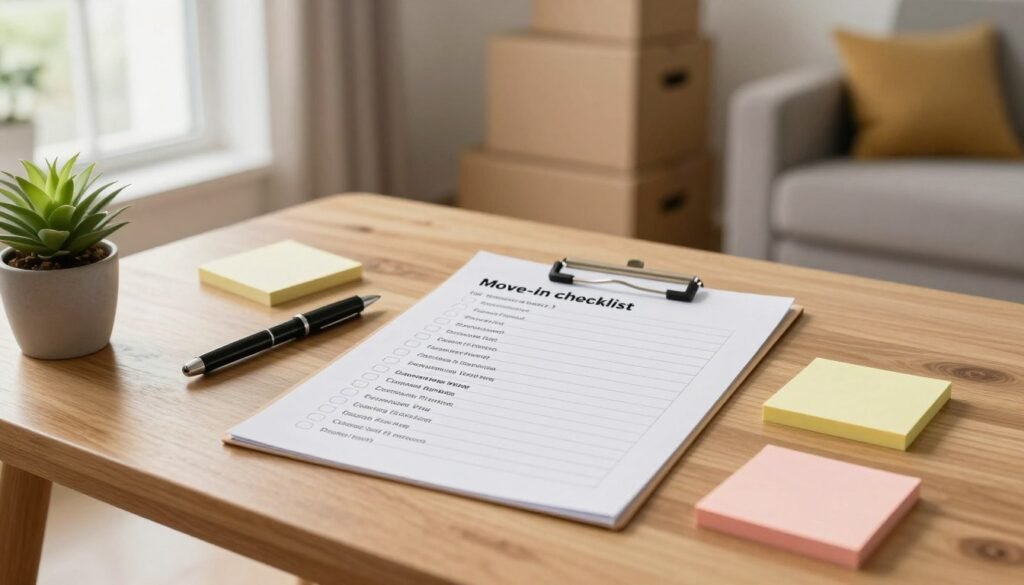
Make sure to label boxes clearly with what’s inside and where it goes. Also, pack a first-night box with essentials like toiletries and kitchen basics for a comfy first night.
Hiring a Moving Company vs. DIY
Choosing between movers and doing it yourself depends on your budget and how much stuff you have. Movers offer significant convenience and protect your furniture and health.
Doing it yourself saves money but costs for truck rental and packing supplies. No matter your choice, staying organized with your apartment move-in checklist makes the move easier. It helps you unpack every box.
Setting Up Utilities and Services
Getting your utilities set up early can save you from dark nights. Try to do this two weeks before you move in. Planning well means your new place will work right when you get there.
Electricity and Water
Call your local utility providers as soon as you know your move-in date. Some cities have one provider for electricity, while others let you choose. Make sure to ask if water service is included in your rent or if you need to set up a separate account.
When you call, tell them your exact move-in date. This ensures your billing starts right. Ask if a technician needs to come to turn on your meter. Many buildings can turn it on remotely, making things easier.
Internet and Cable Options
Look up internet providers in your area before you move. Some buildings have deals with specific companies, which might limit your choices. Checking online with your new address is the quickest way to see what’s available.
Choose a plan and set up the installation for the day after you move. This lets you get your furniture in without worrying about the technician. If you want to do it yourself, ask if they have a self-install kit to save money.
Gas Services
If your apartment uses gas, contact the gas company early. Gas services often need a safety check before they can be turned on. Never turn on gas valves yourself if they’ve been off for a while.
Make sure the technician can come when you’re there. They’ll check for leaks and make sure pilot lights are working. Doing this early means you can have a hot shower and cook a meal on your first night.
Decorating Your New Space
Your new apartment is a blank canvas waiting for your personal touch. It’s better to decorate slowly. This way, you can see how your space works before buying big things.
Choosing a Color Scheme
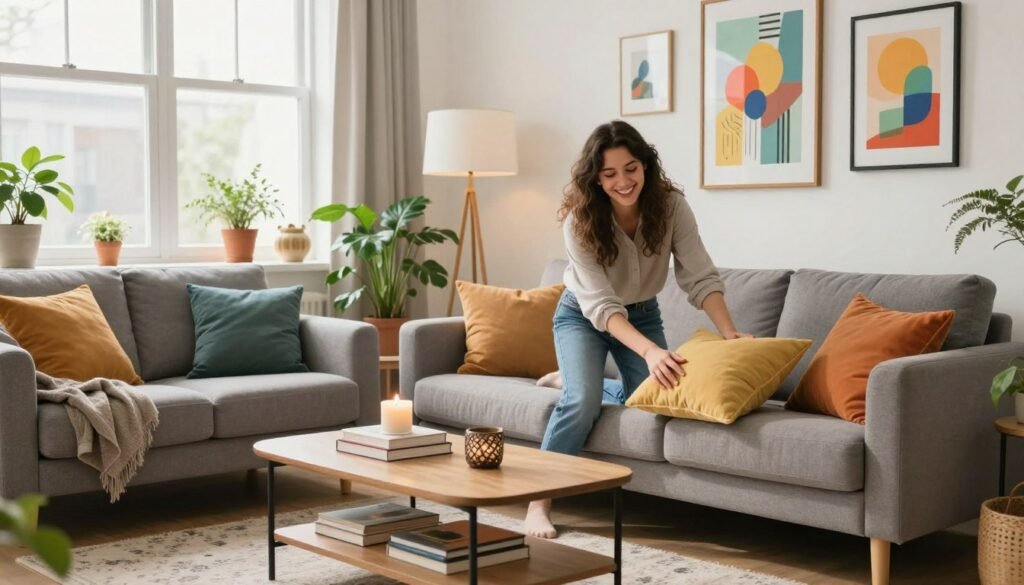
A good color scheme makes your home feel harmonious. Start with a neutral color for walls and big furniture. This keeps your space feeling open.
Then, add colors with throw pillows, rugs, or art. This adds depth and character. Think about the mood you want in each room. Soft colors are good for bedrooms, while warm colors are better for living areas.
Furnishing on a Budget
You don’t need to spend a lot to make your home stylish. Choose furniture that does more than one thing. This saves space and looks good.
Look for secondhand items to save money. A little paint or new hardware can make an old piece look new. Buy the essentials first, then add more as you can.
Personalizing with Decor
Your home should show who you are. Use personal items like photos, souvenirs, or family treasures. These meaningful touches make your home feel truly yours.
Lighting is also important. Use floor or table lamps instead of overhead lights for a softer glow. Add curtains and blankets for more comfort and style.
Safety and Security Considerations
Choosing a safe place to live is key. Your first apartment should be a safe haven. Start now to feel safe and protected.
Choosing Safe Neighborhoods
Look up the area’s safety before you sign a lease. Use police websites or community forums for crime stats. Visit the neighborhood at different times to see how it feels.
Check the street lights and building upkeep. A clean area with friendly neighbors is a good sign. If it feels off, look elsewhere.
Installing Security Measures
Make your apartment safer with easy upgrades. Think about a smart doorbell or a portable camera. These let you watch your door from your phone.
Make sure all locks work right. If allowed, add a security bar to doors or windows. These steps help you feel safer at night.
Understanding Emergency Protocols
Learn about your building’s safety features right away. Find the fire exits, stairwells, and extinguishers. Know how to get out in case of an emergency.
Save important phone numbers, like the police and utility companies. Know what to do in emergencies. Being ready helps you stay calm when it counts.
Cleaning and Maintenance Tips
Starting fresh in your first apartment means a deep clean before unpacking. A clean home makes moving in easier. Use a apartment move-in checklist to clean every part of your new place.
Pre-Move-In Cleaning Checklist
First, clean areas you can’t reach later. Wipe down cabinets, drawers, and closets with a mild cleaner. This keeps dust off your things.
Then, clean the bathroom and kitchen well. Scrub the tub, sink, and toilet. A apartment move-in checklist helps you not miss spots like baseboards.
Routine Maintenance Tasks
Keeping your apartment clean is key. Clean kitchen counters daily and vacuum often. These habits stop dirt from piling up.
Check smoke detectors and fire extinguishers monthly. Regular maintenance keeps you safe and avoids problems with your landlord. Keeping a log of these tasks helps a lot.
Seasonal Cleaning Tips
Deep clean every few months. Wash windows, clean behind big appliances, and flip your mattress. These tasks keep your furniture and air fresh.
Deep clean your carpets or rugs twice a year. Staying proactive with these tasks keeps your home nice. Regular cleaning keeps your space valuable and welcoming.
Shopping for Household Items
Starting your first apartment shopping list is exciting. It’s important to plan carefully. Buying only the new apartment essentials helps you save money. This way, you can make your home cozy without spending too much.
Finding Affordable Stores
Looking for must-have items for first apartment living? Big-box stores and discount shops are great. Places like Target, Walmart, or IKEA have lots of useful items at good prices. You can save money by buying kitchenware or bedding in sets.
Utilizing Online Marketplaces
Wondering what to buy for first apartment setups? Try local online marketplaces first. Sites like Facebook Marketplace, Craigslist, or OfferUp are full of gently used items. People sell quality stuff at low prices when they move or upgrade.
Thrifting for Unique Finds
Thrifting is a great way to find essential items for first apartment decor. Local thrift stores, estate sales, and consignment shops have unique finds. Shopping strategically here lets you get special pieces that make your place feel like home.
Settling In: Making Your Apartment a Home
Turning a blank space into your own home is the real start of living on your own. You’ve handled the big stuff, now it’s time to make it feel like home.
Building Community Connections
Meet your neighbors to feel part of your new place. Saying hello in the hallway or chatting by the mailboxes makes you feel safe. It makes moving in much nicer.
Curating Your Personal Space
Show off your style by displaying personal items. Use your essentials to organize in a way that feels welcoming. Soft lights and cozy things help you unwind.
Establishing Daily Habits
Find a balance between work and rest in your new home. Check your shopping list to make sure you have what you need. Keeping routines helps you manage time and keep things neat. Enjoy the freedom of your own space as you start this new chapter.