
Keeping your home tidy is easier with small, daily habits. These habits turn big cleaning tasks into simple steps. This way, you can keep your home clean without feeling overwhelmed.
Having a clean home is possible at any stage of life. Pay extra attention to areas that get a lot of use. This helps keep your space calm and useful.
Begin by setting a timer for fifteen minutes each morning. This daily cleaning habit stops clutter from building up. It keeps your home feeling new and fresh. Sticking to this routine is key to keeping your home in order.
Table of Contents
Understanding Daily Housekeeping
Imagine coming home to a tidy space every day without hours of cleaning. Many feel overwhelmed by cleaning, letting it pile up. But, you can make cleaning a part of your daily life.
What is Daily Housekeeping?
Daily housekeeping means doing small chores every day to stop messes. Instead of a big cleaning day, you spend 30 to 60 minutes daily. This keeps your home welcoming all week.
Being consistent is key. Doing small tasks like wiping counters or clearing clutter right away stops big cleaning days. This keeps your home tidy and organized always.
The Benefits of a Daily Housekeeping Routine
Having a regular cleaning schedule is good for your mind and your home. It lowers stress from clutter. It also keeps your furniture and floors safe from dirt and grime.
The table below shows the difference between daily cleaning and big cleaning days:
| Feature | Marathon Cleaning | Daily Housekeeping |
|---|---|---|
| Time Commitment | 4-8 hours on weekends | 30-60 minutes daily |
| Stress Level | High and overwhelming | Low and manageable |
| Home Condition | Cycles of messy and clean | Consistently tidy |
| Effort Required | Intense physical labor | Light, routine maintenance |
By adding these habits, you make a system that fits your busy life. You have more free time on weekends. Daily housekeeping lets you control your space with little effort.
You Might Also Like:
Your Daily Cleaning Routine Guide for a Tidy Home Every Day
How to Clean House Fast Without Missing a Spot
How to Create a Cleaning Schedule That Works for You
Essential Tools for Housekeeping
To keep your home clean, you need the right tools. The right gear makes daily cleaning easier and faster. Good tools mean less scrubbing and more time to enjoy your home.
Cleaning Supplies You’ll Need
Keep your cleaning supplies ready for top hygiene. Microfiber cloths are great for dust and dirt without damage. You also need a good multi-surface cleaner for various surfaces.
Special brushes are key for hard jobs. A stiff brush is perfect for bathroom and kitchen stains. Organizing these tools makes home maintenance easier.
Recommended Cleaning Equipment
For tough cleaning, you need strong equipment. A powerful vacuum cleaner is essential for floors. Choose one with HEPA filters for better air.
A good mop is also crucial. It should be easy to use around furniture. The right tools make cleaning simple and quick.
| Tool Category | Primary Use | Key Benefit |
|---|---|---|
| Microfiber Cloths | Dusting and Polishing | Traps allergens effectively |
| Vacuum Cleaner | Floor Maintenance | Deep cleans carpets |
| Scrubbing Brush | Deep Cleaning | Removes tough grime |
| Ergonomic Mop | Surface Sanitizing | Reduces physical strain |
Developing a Daily Cleaning Schedule
You can make your daily chores easier by dividing them into morning and evening tasks. A good plan keeps clutter away and makes your home welcoming. If you’re too busy, think about getting a professional housekeeping team for deep cleaning. They can help you keep up with the daily tasks.
Morning Tasks to Kickstart Your Day
Starting your day with simple tasks can make you feel accomplished. Doing these tasks early sets a productive pace for the rest of your day.
- Make your bed right after waking up to tidy your bedroom.
- Unload the dishwasher so dirty dishes can go straight in during the day.
- Wipe down bathroom counters for a fresh start.
Evening Routines for a Tidy Home
An evening routine helps your home feel fresh again. Spending 15 minutes before bed tidying up keeps mornings calm. If you’re struggling to keep up, a cleaning service can help keep your home clean.
| Task Category | Morning Focus | Evening Focus |
|---|---|---|
| Kitchen | Unload dishwasher | Load and run dishwasher |
| Living Area | Fluff sofa pillows | Clear surfaces of clutter |
| Bedroom | Make the bed | Prepare clothes for tomorrow |
| General | Open curtains for light | Lock doors and secure home |
Being consistent is key to making these habits stick. By following your schedule, cleaning your home will become second nature, not a chore.
Room-Specific Housekeeping Tips
Effective house cleaning means knowing what each room needs. Tailor your cleaning to fit each space’s unique needs. This way, you can keep your home tidy without feeling overwhelmed.
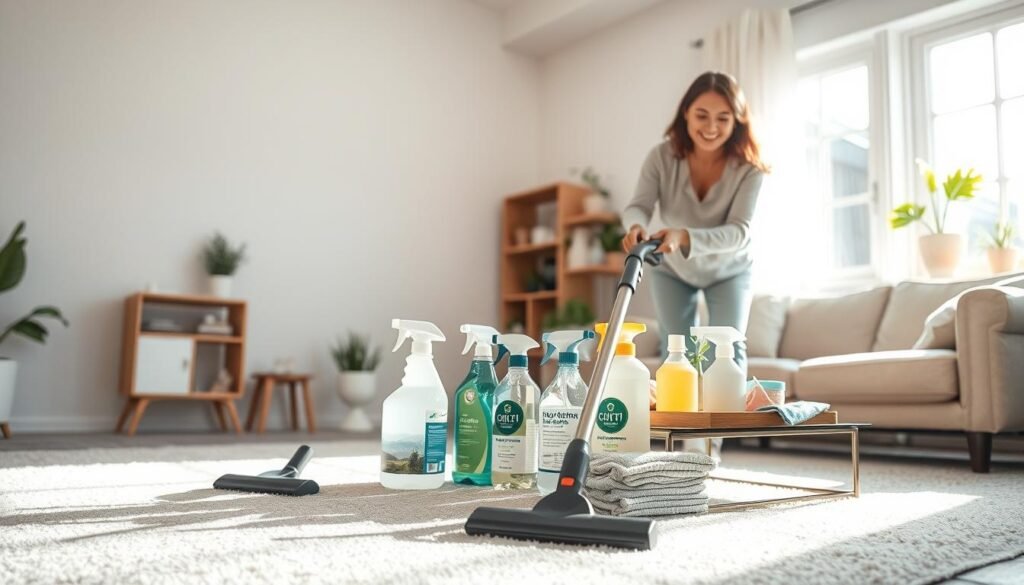
Living Room: Keeping It Cozy and Clean
The living room is the heart of your home. It gets dusty and cluttered fast. Start by fluffing pillows and folding blankets to make it look neat.
Quickly picking up items like books or remote controls makes it feel welcoming.
Kitchen: Maintaining Cleanliness and Organization
Your kitchen needs daily care to stay clean and functional. Wipe down sinks and counters after meals to stop bacteria. This keeps your kitchen ready for cooking.
Bathroom: Ensuring Hygiene and Freshness
Keeping the bathroom clean is all about quick touches. Wipe down mirrors and sinks every day to keep them shiny. Good air flow is also important to stop moisture buildup.
| Room | Primary Task | Frequency |
|---|---|---|
| Living Room | Declutter surfaces | Daily |
| Kitchen | Sanitize sink | Daily |
| Bathroom | Wipe mirrors | Daily |
Using these house cleaning tips helps you manage your home well. Focus on small tasks to avoid messes. A regular cleaning routine keeps your home organized and stress-free.
Time Management for Housekeeping
Changing how you use your time can make a big difference in keeping your home clean. Learning to manage your schedule helps you stay tidy without losing your personal time. Breaking tasks into smaller parts makes them easier to handle and less stressful.
Setting Aside Time for Daily Cleaning
Being consistent is key to a good daily housekeeping routine. Instead of waiting for the weekend, try setting aside 15 to 20 minutes each day. This keeps clutter away and makes your home feel clean.
Linking cleaning tasks to daily habits can be helpful. For example, clean the bathroom counters while brushing your teeth or do the dishes right after dinner. These small actions help keep your home tidy with little effort.
Efficient Cleaning Techniques
Being efficient means cleaning smarter, not harder. Try the “batching” method, where you do similar tasks in different rooms at once. This saves time by reducing the need to switch between cleaning supplies.
If your schedule is always full, think about getting housekeeping services. They can help you keep up with cleaning without using up your time. Here’s a comparison of doing it yourself versus hiring help.
| Feature | DIY Cleaning | Professional Services |
|---|---|---|
| Time Investment | High | Low |
| Cost | Low | Higher |
| Flexibility | High | Scheduled |
| Consistency | Variable | Reliable |
Involving the Family in Housekeeping
Make cleaning a team effort at home. This way, everyone helps out and learns to take responsibility. Working together makes keeping your home clean easier and more fun.
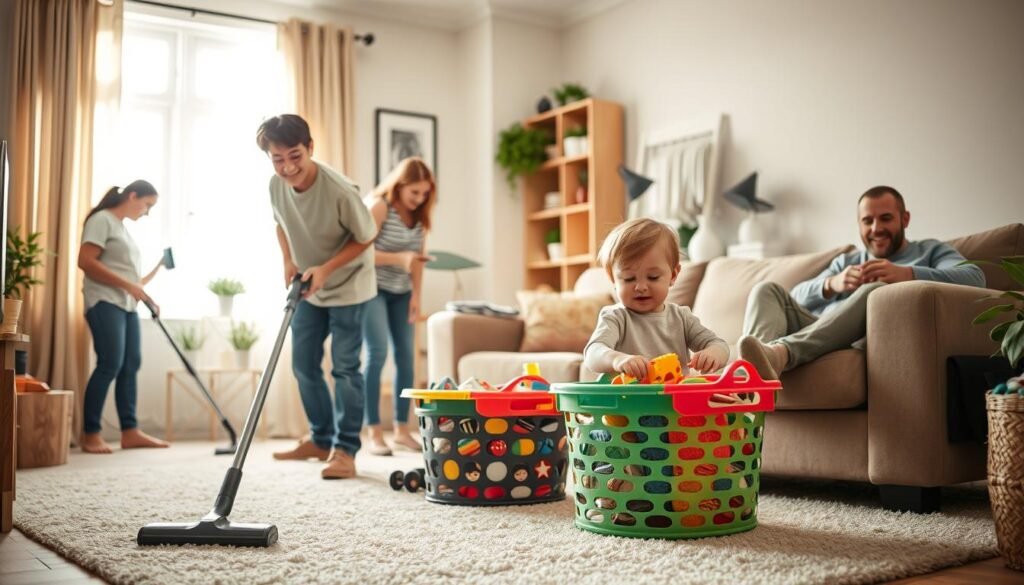
Tips for Keeping Kids Engaged
To get kids excited about cleaning, be creative and patient. Turn cleaning into a game. Positive reinforcement helps build lasting habits.
- Use a timer to see how quickly the family can finish a specific task together.
- Create a reward chart where completed household chores earn points toward a fun weekend activity.
- Play upbeat music to keep the energy high while everyone works on their assigned areas.
Assigning Age-Appropriate Tasks
Give each person tasks that fit their skills. When kids feel they can do their job, they stay motivated. Here’s a guide for assigning tasks.
| Age Group | Simple Tasks | Advanced Tasks |
|---|---|---|
| Toddlers (3-5) | Putting away toys | Dusting low surfaces |
| School Age (6-10) | Making the bed | Setting the dinner table |
| Pre-Teens (11+) | Vacuuming floors | Loading the dishwasher |
Involve every family member in cleaning. This way, no one feels too much work. It keeps your home tidy and prepares kids for the future. Consistent participation leads to a happy, organized home.
Prioritizing Areas That Need Attention
Learning to clean your home well starts with knowing where to focus. Not every room needs the same cleaning every day. By picking the rooms that get dirty the most, you can keep your home clean easily.
Identifying High-Traffic Zones
High-traffic areas are the heart of your home. They get dirty fast because of all the people walking through. Focusing on these zones first keeps your home looking good and clean.
Here are some key areas to clean every day:
- Entryways: Sweep or vacuum daily to stop dirt from spreading.
- Kitchen Floors: Clean spills right away to keep the kitchen clean.
- Living Room Pathways: Move things that block the way to make it easier to walk.
Focusing on Cluttered Spaces
Clutter builds up in places where things are left without a home. These messy spots can make a clean room feel messy. Cleaning these areas brings calm and order to your life.
Here are some tips to manage clutter:
- The “One-Touch” Rule: Put things away as soon as you use them.
- Clear Surfaces: Keep counters and tables free of clutter.
- Daily Decluttering: Spend a few minutes each evening putting things back where they belong.
By focusing on these areas, you make cleaning easier. This way, you can have a clean home without spending too much time on cleaning every day.
Seasonal Housekeeping Adjustments
Your home maintenance plan should change with the weather. This keeps your home healthy and comfy all year.
Adapting Your Routine for the Seasons
Each season has its own challenges for your home’s air and cleanliness. For example, winter keeps dirt inside. Spring brings pollen and allergens that need extra care.
If cleaning feels too hard, get help from a cleaning service. They can do special jobs like washing windows or cleaning carpets. This lets you focus on your daily cleaning.
Cleaning Tasks for Spring and Fall
Changing seasons is a great time to clean areas you’ve ignored. In fall, clean your vents to improve air flow before heating starts. Spring is best for getting rid of winter dirt and clutter.
Here’s a schedule to keep your home clean:
| Season | Primary Focus | Recommended Action |
|---|---|---|
| Spring | Deep Refresh | Wash windows and shampoo carpets |
| Summer | Outdoor Prep | Clean patio furniture and screens |
| Fall | Air Quality | Clean vents and replace filters |
| Winter | Indoor Comfort | Deep clean high-traffic entryways |
Sticking to this plan keeps your home clean. Don’t forget, a good cleaning service can help with tough seasonal jobs.
Maintaining Motivation for Housekeeping
Staying motivated is key to a tidy and peaceful home. Daily chores can feel the same, but your mindset changes everything. By changing how you see it, cleaning can become a positive part of your day.
Setting Goals and Rewards
Keeping up with cleaning routines helps make your home tidy. Start with small, easy goals. When you hit these, reward yourself to stay motivated.
Enjoying a podcast or a cup of tea after cleaning boosts your mood. These rewards make cleaning feel like a success, not a chore.
Finding Joy in a Clean Space
Seeing your clean space is rewarding. Take time to enjoy the calm and clarity it brings. This feeling helps you keep up good cleaning habits.
Seeing your home as a peaceful place makes cleaning a self-care act. It’s not just tidying; it’s making a space for you to relax and thrive.
| Strategy | Action Item | Expected Benefit |
|---|---|---|
| Micro-Goals | Clean one surface daily | Reduces overwhelm |
| Positive Rewards | Listen to music while working | Increases enjoyment |
| Visual Check | Admire the finished room | Boosts mental clarity |
| Habit Stacking | Clean while coffee brews | Saves valuable time |
Troubleshooting Common Housekeeping Challenges
Life’s surprises can mess up your cleaning plans. Even with a strict schedule, unexpected events can happen. It’s key to adapt quickly to keep your home and mind calm.
Managing Unexpected Messes
Spills and messes are part of daily life. Tackle them right away to stop them from getting worse. Having a small cleaning kit in busy spots helps you clean fast.
- Keep microfiber cloths and a multipurpose cleaner in a central location.
- Address liquid spills instantly to avoid permanent stains on carpets or wood.
- Use a handheld vacuum for quick cleanup of dry debris or crumbs.
Dealing with Household Clutter
Clutter builds up slowly, causing stress. Decluttering before holidays helps avoid clutter during busy times. This way, every item has its place.
When your space gets too full, spend 15 minutes daily on one drawer or shelf. This keeps your cleaning routine easy and stops big, tiring cleanings. Remember, keeping your home tidy is an ongoing task.
Conclusion: The Impact of Daily Housekeeping
Daily habits make your home a true sanctuary. They help you build a wellness foundation by keeping things tidy and clean.
Creating a Comfortable and Inviting Home
Your home shows your commitment to a good life. Regular care makes it welcoming for your family and visitors. You can do it yourself or get help from professional housekeeping.
A clean home invites relaxation and peace after a busy day.
Long-Term Benefits of Staying Organized
Keeping up with cleaning reduces stress and improves air quality. It saves you time and keeps your home clutter-free. Many find housekeeping services helpful in managing a busy home.
These daily actions protect your home’s value. You deserve a healthy and beautiful home for years to come.