
Keeping your home clean is not just about cleaning. It’s about making consistent daily habits a part of your life. Doing small tasks every day stops clutter from building up. This keeps your home peaceful.
Good tips for organizing home spaces are about simple routines. These routines fit into your daily life. They change your space without the hassle of big, rare cleanings.
Adding these strategies to your life helps keep your home organized for good. Starting these habits early makes them feel easy for everyone at home.
Table of Contents
Establish a Daily Cleaning Routine
Keeping your home tidy doesn’t need to be hard. Small, daily actions can make a big difference. It’s all about being consistent.
Morning Tidying Tips
Your morning sets the tone for the day. Start by making your bed right after waking up. It’s quick and makes you feel good.
When your bed is made, your room looks cleaner. This small step helps you keep other areas tidy too. It’s a great way to begin your day.
Evening Cleanup Essentials
Stop clutter from building up at night. Spend ten minutes before bed tidying up. This way, you wake up to a clean home.
Clear kitchen counters and put away living room items. These essential evening habits keep your home welcoming. A quick tidy at night saves your energy for tomorrow.
Declutter Regularly
Keeping your home tidy is easier when you stop things from getting out of hand. A regular cleaning schedule helps avoid the stress of big clean-ups. It makes keeping your space organized simple and keeps it peaceful.
The Power of 10-Minute Decluttering
You don’t need a whole weekend to make a big difference. Just ten minutes a day can clean up small areas. This makes decluttering house tasks feel less overwhelming.
Being consistent is key to keeping your home clean. Doing small tasks every day stops clutter from building up. It’s better than trying to clean everything at once.
Identifying Items to Let Go
Choosing what to keep and what to throw away can be tough. The 80/20 rule helps. It means you’re okay with 80% of the cleaning being good enough.
Think if an item is useful or makes you happy. If you haven’t used something in a year, it’s probably time to get rid of it. This way, you only keep what’s truly important.
| Strategy | Time Required | Primary Benefit | Best For |
|---|---|---|---|
| 10-Minute Dash | 10 Minutes | Quick Wins | Daily Maintenance |
| Room-by-Room | 2-4 Hours | Deep Results | Seasonal Resets |
| The 80/20 Rule | Ongoing | Efficiency | Decision Making |
Use Storage Solutions Effectively
Storage solutions are key to a tidy home. They make sure every item has its place. This turns messy piles into neat displays.
It makes organizing your home easier and faster.
Bins, Baskets, and Boxes
Using bins, baskets, and boxes keeps clutter at bay. They hide items while keeping them easy to find. Keep cleaning supplies in a bin near where you use them.
This makes quick cleaning easier. Grouping similar items keeps your space looking neat. The right material for your containers can also improve your decor.
Labeling for Easy Access
Labeling is crucial for keeping things in order. Clear labels help everyone put things back where they belong. This habit makes tidying up simpler for everyone.
Use labels, tags, or chalk markers to mark your containers. This saves time and reduces stress when you need something fast. It’s a small step that makes a big difference.
Vertical Space Utilization
Don’t forget to use the space above you when organizing. Vertical storage maximizes space in small rooms or crowded closets. Shelves or wall-mounted racks save floor space.
Use over-the-door organizers for shoes or cleaning supplies. Tall bookcases or stackable units also make the most of wall space. These storage solutions keep your home feeling open and airy.
| Storage Type | Best Use Case | Material Benefit |
|---|---|---|
| Woven Baskets | Living Room | Adds texture and warmth |
| Plastic Bins | Garage or Pantry | Durable and easy to clean |
| Fabric Boxes | Closets | Lightweight and breathable |
| Metal Shelving | Utility Rooms | High weight capacity |
You Might Also Like:
Linen Closet Organization Ideas That Keep Everything Neat
10 Cleaning Habits That Keep Your Home Clean Every Day
Medicine Cabinet Organization Ideas for a Clutter Free Bathroom
Create a Functional Entryway
Make your entryway a functional zone to keep your home tidy. It stops dirt and debris from entering. By organizing home entry points, you stop clutter from spreading.
Shoe Storage Solutions
Having a spot for shoes is key to a tidy living space. A shoe rack or tray at the door helps everyone remove their shoes. This keeps mud and allergens in one place.
Hooks and Racks for Coats
Outerwear often gets scattered without a place to hang it. Wall hooks or a coat rack fix this. Vertical storage keeps clothes organized and furniture clear.
Daily Essentials Station
A console table or wall organizer is great for daily items. It keeps keys, bags, and mail in one spot. This saves time and keeps your space tidy.
| Storage Type | Primary Benefit | Best For |
|---|---|---|
| Shoe Trays | Contains moisture | Rainy or snowy climates |
| Wall Hooks | Saves floor space | Small apartments or hallways |
| Console Table | Centralizes mail/keys | Large entryways |
| Cubby Units | Categorized storage | Families with children |
Organizing your entryway makes a big difference. It helps you transition smoothly from outside to inside. Start with one solution that fits your needs.
Organize Your Kitchen
Make your kitchen efficient by organizing it well. This room is very busy, so it needs to be clean. A tidy kitchen helps you cook better, not search for tools.
Pantry Organization Hacks
Use clear containers for dry goods like flour and sugar. These storage solutions let you see what you have. This way, you won’t buy things you already have.
The Importance of Zones
Divide your kitchen into zones for better work flow. This means prep and cooking areas are separate. Keep cutting boards and knives near prep, and pots and pans by the stove.
Keep your floors clean to make your kitchen feel fresh. A robotic vacuum for daily crumbs and dust is helpful. It saves you from deep cleaning and keeps your floors clean easily.
Appliance Storage Strategies
Don’t let small appliances clutter your counters. Store them in lower cabinets or on deep shelves. Use a spot for daily appliances to keep your space clear.
| Storage Area | Primary Goal | Recommended Tool |
|---|---|---|
| Pantry | Visibility | Clear Canisters |
| Prep Zone | Accessibility | Drawer Dividers |
| Countertop | Spaciousness | Appliance Garage |
| Floor | Cleanliness | Robotic Vacuum |
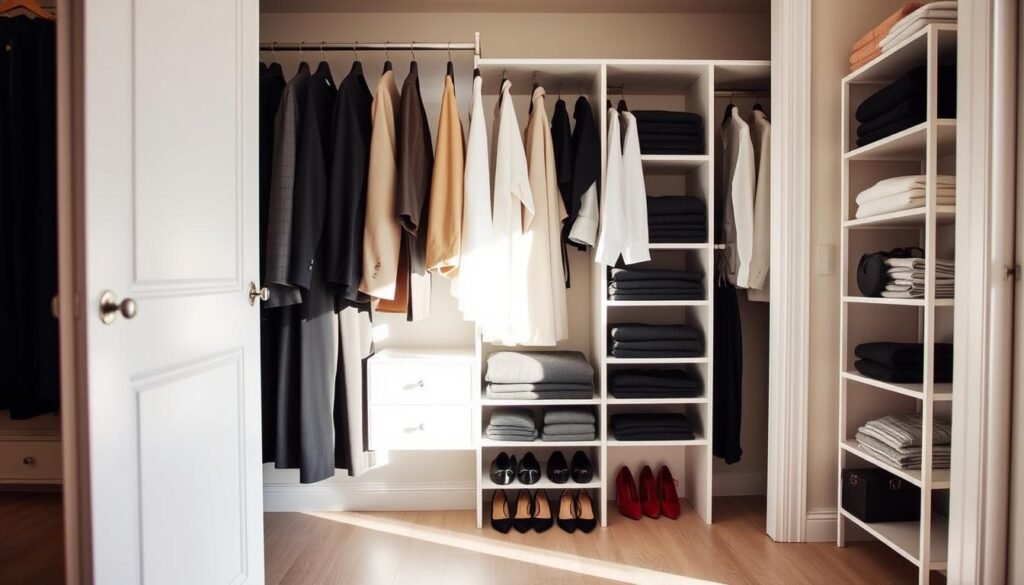
Streamline Your Closet
A well-organized closet makes mornings easier. The one-touch rule helps keep things tidy. It stops clutter from building up.
Seasonal Rotation Tips
Seasonal wardrobe management saves space. Store out-of-season clothes in bags or bins. This makes room for what you wear now.
The Marie Kondo Method
Start decluttering with the Marie Kondo method. Keep only what brings you joy. This makes your closet feel better.
Color-Coding Your Wardrobe
Organize clothes by color for easy dressing. It helps you see what you need. You can spot missing pieces too.
Think about what works for you. Here’s a comparison of common methods:
| Strategy | Primary Benefit | Effort Level |
|---|---|---|
| Seasonal Rotation | Maximizes space | Moderate |
| Marie Kondo | Reduces stress | High |
| Color-Coding | Visual efficiency | Low |
| One-Touch Rule | Prevents mess | Minimal |
Regular cleaning keeps your closet useful. Mix these methods for a system that lasts all year.
Manage Paper Clutter
Managing paper at home is key to a peaceful space. Taking control of your mail and documents makes decluttering house easier. It helps keep your home tidy.
Go Digital with Important Documents
Switching to a paperless life boosts home efficiency. Use apps on your phone to scan receipts and more. This turns paper into digital files.
Cloud services keep these files safe and accessible. This cuts down on paper clutter. It also keeps your important info organized.
Creating a Filing System
Some papers, like birth certificates, need a physical copy. Create a color-coded filing system for them. This makes finding important documents easy.
Consistency is key for keeping files in order. Check your storage regularly. This ensures only useful items are kept.
Daily Paper Management Strategies
Stop paper piles by sorting mail right away. Toss junk mail over a recycling bin. This keeps your kitchen counter clear.
Use a tray or folder for important papers. Daily, deal with bills and school papers. This improves home efficiency and avoids clutter.
Set Up a Cleaning Schedule
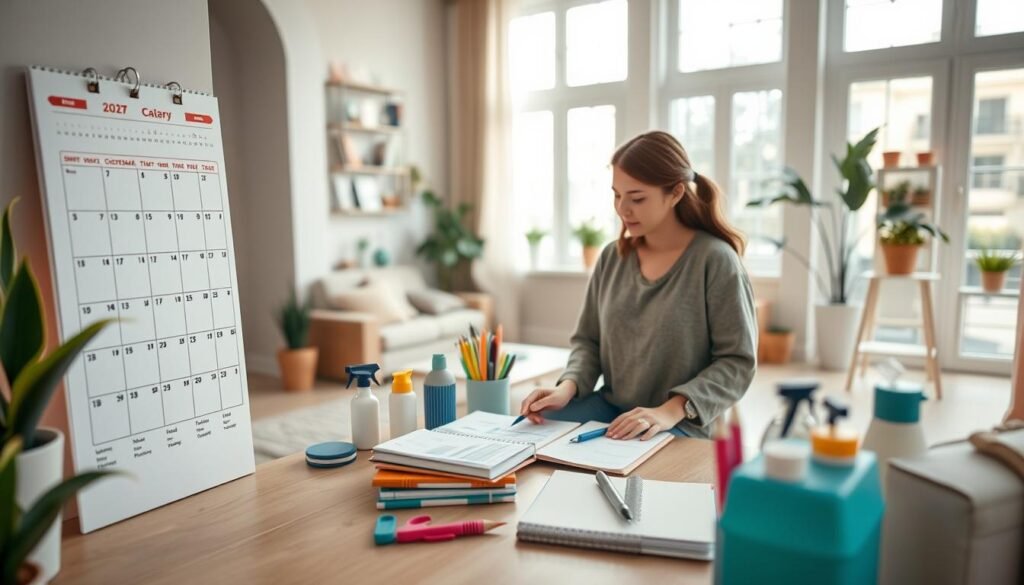
A clean home needs a regular cleaning schedule. This keeps dirt away and your home in order. It’s a great way to improve home efficiency and lower stress.
Start by picking the top cleaning tasks for the day. This helps you stay focused and avoid feeling overwhelmed. It’s a key part of tips for organizing home to keep everything clean.
Frequency for Different Areas
Not all rooms need the same cleaning. Busy areas like the kitchen and living room need daily or weekly cleaning. Guest rooms or closets might only need a deep clean once a month.
Think about your home’s traffic and your lifestyle to set a cleaning schedule. Vacuuming busy areas twice a week can keep floors clean. Dusting and wiping baseboards can be done every two weeks.
Combining Tasks for Efficiency
Grouping similar tasks can save time. Carry your cleaning supplies as you move from room to room. This way, you can improve home efficiency by doing more in one go.
Pair quick tasks, like wiping mirrors while waiting for laundry. These tips for organizing home routines make small moments count. Use the table below to plan your weekly cleaning.
| Task Category | Frequency | Primary Goal |
|---|---|---|
| Kitchen Surfaces | Daily | Sanitation |
| Vacuuming Floors | Weekly | Dust Control |
| Bathroom Deep Clean | Weekly | Hygiene |
| Window Cleaning | Monthly | Visibility |
Involve Your Family in Organization
Keeping your home tidy is easier when everyone helps. When you all work together, it feels like a team effort. This makes cleaning less of a burden and makes you all proud of your home.
Making Cleaning a Team Effort
Teach your family to put things back where they belong. This stops clutter from building up. It also makes your daily life easier.
Being consistent is important. Try a “power hour” on weekends to clean together. It’s a fun way to keep your home clean and bond as a family.
Assigning Household Responsibilities
Give kids jobs that fit their age. It teaches them important skills and makes them feel good. Choose tasks that match their abilities to keep them motivated.
Use a rotation to make things fair and fun. Here are some tasks for different ages:
- Toddlers: Putting toys away and sorting laundry.
- School-age children: Making beds, setting tables, and helping with closets.
- Teenagers: Vacuuming, loading dishwashers, and doing laundry.
Sharing tasks keeps your home tidy without overloading one person. Praise your family for their efforts. Working together makes your home a happy place for everyone.
Review and Adjust Your Systems
Keeping your living space tidy needs a flexible plan. Your life changes, like when your family grows or your work hours change. It’s important to check your habits often.
Evaluating Your Organizational Habits
Look at what works well in your home and what doesn’t. A 15-minute nightly clean can help you see if your storage works. If you always move things back, it might need a small change.
Staying Flexible with Changes
Life is always changing, so your tidiness plan should too. Think of your home as a space that grows with you. Making small changes often keeps your home peaceful and stress-free.



[…] Home Organization Habits That Keep Your Home TidySmall Closet Organization Guide for a Clutter-Free HomeStorage and Organization Tips for Everyday Living […]