Ever thought your home could feel bigger without moving? Many struggle with small spaces. But, the trick is in how you arrange your furniture, not just the size of your home.
Learning how to arrange furniture in a small apartment can make your home feel bigger. By using smart zoning and choosing items that do more than one thing, you can create a cozy space for all your needs.
Maximizing space in a small apartment means seeing things differently. Focus on making your rooms flow well and work well. This guide will show you how to make your home stylish and useful.
Table of Contents
Assessing Your Space and Defining Zones
Getting good at small apartment furniture arrangement means planning well. Before moving anything, notice your home’s special features. Look at things like radiator spots, window places, or odd wall shapes.
These first steps are key small apartment design hacks. They help you avoid wasting time and effort. Knowing your room’s limits helps you place furniture right where it fits.
Measuring Your Floor Plan Accurately
Being precise is important in small spaces. Use a tape measure to get exact wall, doorway, and window sizes. Accurate measurements stop you from buying too big items.
Make a simple sketch of your floor plan. It helps you see how furniture will fit together. This keeps your room looking good, not cluttered.
Identifying High-Traffic Pathways
Living rooms are key for moving around your home. Find these paths to keep your layout useful and easy to move through. Keeping walkways clear makes your small home feel bigger and welcoming.
Don’t block the way between your entrance and main seating area with big items. A smooth path makes your tiny studio feel bigger and nicer.
Defining Multi-Purpose Living Zones
You can make the most of your space by setting up different zones. Even in a small room, you can have areas for relaxing, working, or eating. Use rugs or lights to visually anchor these zones without walls.
By setting up these zones, your home meets both your fun and daily needs. Using these small apartment design hacks makes your living space feel organized and thoughtful.
Selecting the Right Furniture for Compact Living
Living in a small space means every piece of furniture must be chosen carefully. A good small apartment furniture arrangement starts with picking items that fit your life well. This way, your home stays both useful and open.
Prioritizing Scale and Proportion
Choosing big furniture is a big mistake in small rooms. Always measure your space before buying new furniture. Proportion is key to keep your room balanced.
Choose low-profile sofas or chairs to keep your view clear. Furniture that’s the same height helps your eye move smoothly around the room. This keeps your home feeling open and not crowded.
Choosing Multi-Functional Pieces
In a small space, you need furniture that works hard. Using multi-functional pieces is a smart compact furniture arrangement technique. For example, a storage ottoman can be a footrest, extra seat, or a place for blankets.
Look for coffee tables with drawers or beds with shelves. These smart choices help you use space well and keep surfaces clean. Choosing versatile furniture is key to a neat home.
The Benefits of Leggy Furniture for Visual Flow
Choosing furniture with tall, tapered legs is a great compact furniture solution. Seeing the floor under your sofa or chair makes your room seem bigger.
This design creates an illusion of openness that solid-base furniture can’t match. “Leggy” designs let light move freely, making your apartment feel bigger and more welcoming.
How to Arrange Furniture in a Small Apartment for Optimal Flow
Getting the layout right in a small apartment is all about movement and balance. Many people make the mistake of pushing all furniture against walls. This makes rooms feel stiff and not welcoming.
Establishing a Focal Point
Every room needs a central point to feel grounded. This could be a big window, a fireplace, or a standout piece of art. These small apartment design hacks help you arrange other items around it.
After picking your focal point, place your main seating towards it. This simple move adds purpose and visual harmony to your living space. It stops the room from looking like a mess of things.
Creating Balanced Furniture Groupings
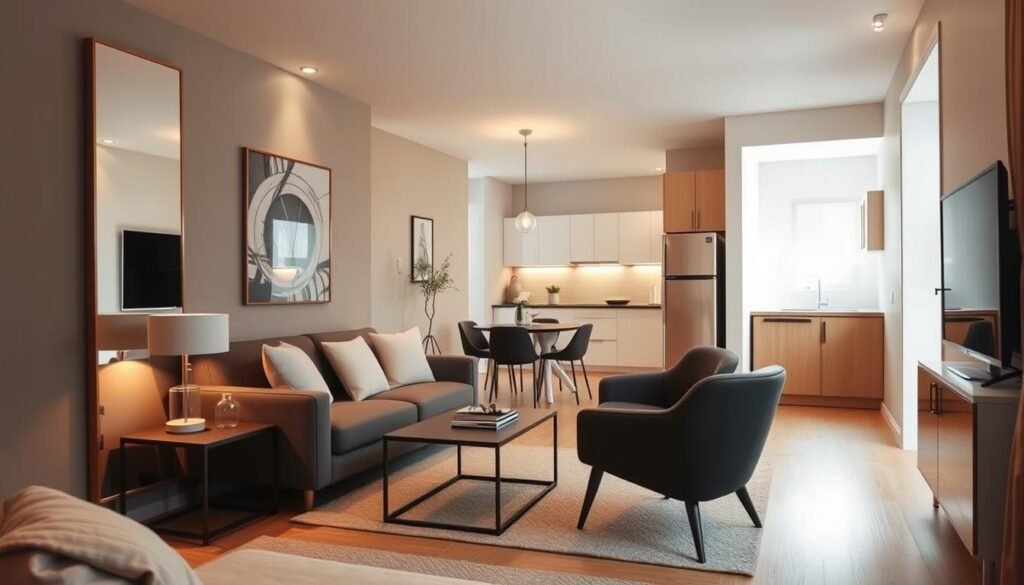
To make your space cozy, move sofas and chairs 15 centimeters from walls. This small gap lets air move and makes the room seem bigger. These compact furniture arrangement techniques create a snug area for chatting.
When space is tight, balance is essential. Spread out big items to avoid an uneven look. Symmetry helps the eye move smoothly, making the space feel planned, not cluttered.
Maintaining Clear Walkways
In a small home, being practical is as important as looking good. Your space-saving furniture layout must allow for easy movement. Don’t block paths with big items.
Try to keep main paths at least 90 centimeters wide. This makes moving around easy and avoids bumping into things. Prioritizing clear paths makes daily life smoother and more relaxed.
Utilizing Vertical Space to Maximize Square Footage
When you don’t have much floor space, look up. Use your wall height to make the most of it. This trick makes your room feel bigger and less cramped.
Installing Floor-to-Ceiling Shelving
Installing shelving from floor to ceiling is a great idea. It gives you lots of space for books and other things. This keeps your floor free and makes moving around easier.
Mounting Wall-Hung Desks and Tables
Need a desk but don’t have room? Try a wall-mounted one. It folds up when not in use. This keeps your space looking neat and tidy.
Using Vertical Storage for Decor
Don’t ignore your walls. Use them for your favorite things. Shelves or grids on the wall are perfect for this. They keep your space looking good and organized.
Strategic Placement of Seating in Tiny Living Rooms
Setting up seating in a small apartment means thinking differently. You can make your space feel bigger and more welcoming. Follow these small space furniture tips to use every inch of your home.
Floating Furniture Away from Walls
Don’t push all furniture against walls to save space. It can make your room feel tight. Try moving your sofa or chairs a bit from the walls.
This change makes your room feel more open and friendly. It also helps the room flow better.
Use a big rug to anchor your seating area. Make sure it fits under the sofa and armchair. This makes your furniture look like it belongs together.
Selecting Compact Sofas and Loveseats
Choosing the right size is key in small spaces. Look for sofas with slim arms and exposed legs. They add comfort without taking up too much room.
Going for space-saving furniture ideas keeps your room feeling light and airy. A sleek loveseat is perfect for two people. It leaves room for side tables or lamps.
Incorporating Nesting Tables and Ottomans
Versatility is important in a small living room. Nesting tables are great because they can be hidden away. Pull them out when you need more space for drinks or books.
An ottoman is a multi-functional hero in your home. It can be a footrest, coffee table, or extra seat. Choosing pieces that do more than one thing keeps your room tidy and useful.
Optimizing Bedroom Layouts for Rest and Storage
Your bedroom should be a peaceful place, even if it’s small. You need to plan well to move around and keep things tidy. With smart design, a tiny room can be both cozy and organized.
Positioning the Bed for Maximum Space
The bed is the biggest piece in your room. Place it against the longest wall to keep paths clear. This space-saving furniture layout lets you move easily around your bed.
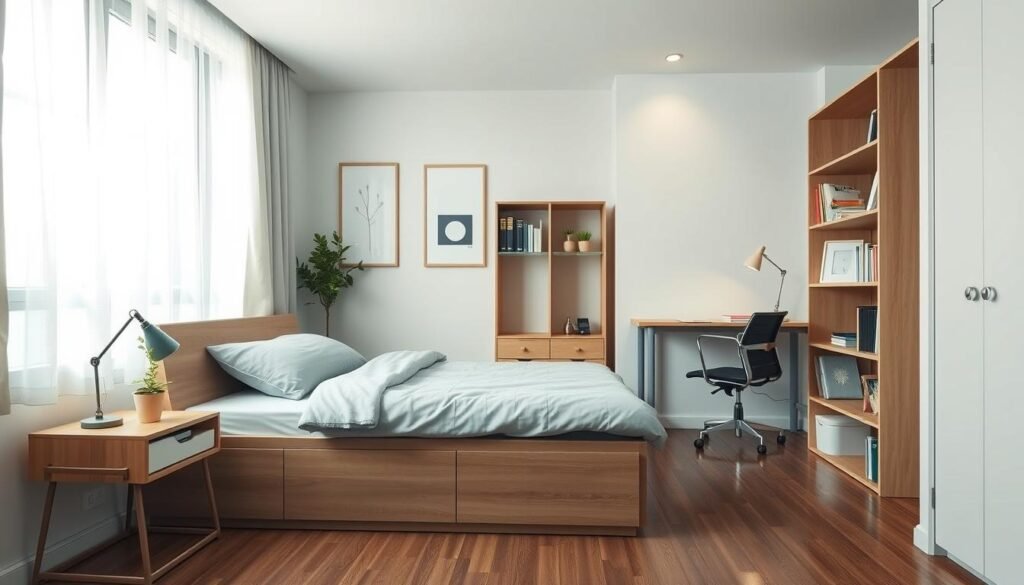
Use built-in alcove units if your room is special. They can hold your TV and have deep cupboards for clothes. Shelves at the top are great for showing off personal things without using floor space.
Utilizing Under-Bed Storage Solutions
The space under your bed is perfect for storing things. Use bins or vacuum-sealed bags for clothes, linens, or shoes. Keeping these items hidden makes your room look neat and helps you sleep better.
Choosing Slim Nightstands and Wall Sconces
Big bedside tables can make a small room feel too full. Choose slim, floating nightstands for just enough space. Wall sconces instead of lamps save room on your nightstand.
Small changes can make a big difference in a small room. Removing clutter and using vertical space makes your bedroom feel bigger and more welcoming. Choosing consistent designs helps make your home restful and organized.
Creating a Functional Dining Area in Tight Quarters
Start by thinking differently about your dining space. Even with little room, you can make a special area for meals. By organizing furniture in a compact living space carefully, your home stays stylish and useful.
Selecting Drop-Leaf or Foldable Tables
Flexible dining areas need furniture that changes with your needs. A drop-leaf table is great because it’s small when alone but big for guests. Or, a wall-mounted foldable table can hide when not needed, keeping your floor free.
Using Versatile Seating Options
In small spaces, furniture must do more than one thing. Think about multi-functional footstools that can be coffee tables, extra seats, or storage. Chairs that fit under the table keep the room looking neat and open.
Defining the Dining Zone with Rugs
You can make your dining area stand out without walls. A cool rug under your table makes a clear anchor for the space. This trick makes your dining area feel like its own room, yet keeps your home feeling open and connected.
Implementing Smart Storage Solutions to Reduce Clutter
Managing your stuff is key when organizing furniture in a compact living space. Clutter is bad when every inch matters. Using smart storage keeps your home calm and tidy.
Maximizing Closet and Cabinet Interiors
Look beyond the surface for hidden space in your storage. Shelf dividers and stackable bins use vertical space well. Efficiency is key for keeping things handy but out of sight.
Adding over-the-door organizers for shoes or accessories is smart. It saves floor space, keeping your home looking neat. Maximizing your storage capacity keeps things organized without cluttering your space.
Using Hidden Storage Ottomans
Multi-functional furniture is great for small homes. A storage ottoman is a comfy footrest with a hidden spot for less-used items. Rattan baskets are incredibly effective for storing papers and toys.
These baskets hide items and add a natural touch to your decor. You can slide them under consoles or hide them in corners. This keeps your floor clear and your home tidy without losing your style.
Decluttering Surfaces for a Spacious Feel
Clear surfaces make a room feel bigger and welcoming. Removing unnecessary items lets the room breathe. These small apartment layout tips work best with a minimalist approach.
Keep only what you use daily on surfaces. This clears the way for a room that feels open and airy. Consistency is the secret to keeping your space feeling spacious and functional.
Enhancing the Perception of Space with Lighting and Mirrors
Light and mirrors are key for arranging a small apartment for optimal space. They make your home feel bigger. This helps when you live in a small place.
Strategic Mirror Placement to Reflect Light
Mirrors make dark spots bright. Place a mirror by a window to spread light. This makes your room feel bigger.
Make sure your mirror is not too big. It should match the furniture it’s over. This keeps the room looking good.
Layering Ambient and Task Lighting
One light can make shadows and make your space feel smaller. Use different lights for different areas. This makes your home feel cozy and inviting.
This way, your home feels open and easy to move around. Thoughtful lighting makes every part of your home special.
Using Transparent Materials to Reduce Visual Weight
Big, solid furniture can make a room feel tight. Use clear materials like acrylic chairs or glass tables. They make your room feel bigger.
These items don’t take up much space. They help keep your home looking clean. Choosing furniture that blends in is smart. It makes your home feel light and open.
Choosing the Right Color Palette and Textiles
Color and textiles are key when arranging a small apartment for optimal space. The colors you pick for walls and floors set the tone for your design. Choosing well can make your home look bigger than it is.
The Impact of Light and Neutral Tones
Neutral colors and textures are great for walls and floors. Colors like soft cream, light gray, or warm beige let light bounce back. This simple shift makes your furniture look like it’s part of the room, not cluttering it.
Using Monochromatic Schemes to Expand Space
Monochromatic schemes make space feel bigger by blending walls and furniture. When your sofa matches the wall, your eye moves smoothly around the room. This cohesive look keeps the room feeling open and calm.
Selecting Low-Profile Window Treatments
Choose light window treatments like sheers or bamboo shades to let in more light. This is key when organizing furniture in a tiny home. Clear windows keep a seamless connection to the outdoors, making your home feel bigger.
Common Mistakes to Avoid When Arranging Small Spaces
Some simple mistakes can make your home feel smaller. When organizing furniture in a tiny home, every inch matters. Avoiding common design traps keeps your space open and comfortable.
Overcrowding with Oversized Furniture
Choosing furniture that’s too big is a common error. A big sectional might look good in a store, but it can make a small room feel cramped. Prioritizing scale is key to a functional layout.
Big furniture can block your way. Pick furniture that’s not too bulky. This way, your room stays open and easy to move around in.
Blocking Natural Light Sources
Natural light makes rooms feel bigger. But, tall bookcases or heavy cabinets in front of windows can block it. Always keep your windows clear for sunlight.
If furniture must go near a window, choose low or open frames. This keeps the room feeling open. Maximizing natural illumination is key for organizing furniture in a tiny home.
Ignoring the Importance of Negative Space
Many people line furniture against walls to make a room feel bigger. But, this can make a room feel like a waiting room. Negative space, or empty areas, is just as important as furniture.
Leaving some areas empty helps your room feel balanced. Try moving your seating away from walls. This creates a cozy and intentional space. Mastering furniture placement for small rooms means leaving some areas open.
Conclusion
Living in a small space is all about being creative and smart. You can make a small area feel big and cozy. It’s all about showing off your style and meeting your needs.
Getting furniture right in small rooms is key. Think of every spot as a chance to be efficient. This way, your home feels big and welcoming.
Choosing the right furniture helps keep your space tidy and comfy. Look for pieces from West Elm or IKEA. They’re great for small spaces and grow with you.
Start making your home better one small step at a time. Look at your space and pick one area to fix today. Tell your friends about it to help others too.
You have everything you need to make a lovely home, no matter the size. Enjoy making your space perfect for you.