
Looking for a simple way to organize there fridge without wasting time? Try lazy susan fridge organization ideas and fridge organization ideas that make every item visible and reachable.
In the past few years homeowners in the United States turned to pro tools to tame clutter in the kitchen. A rotating tray acts as a smart organizer so small containers and jars don’t hide at the back.
When you add a turntable to a shelf, you free up usable space and keep favorite food and snacks front and center. You can group similar items together, stash sauces in clear containers, and reduce forgotten leftovers.
This short guide shows step-by-step ways to optimize your home fridge. It explains practical setup tips so you can reclaim shelves and make mornings faster.
Table of Contents
Why You Need Lazy Susan Fridge Organization Ideas
Deep shelves often hide leftovers and condiments, turning good food into waste. Professional organizer Debra Baida of Liberated Spaces notes that items tucked at the back get forgotten. That lost space becomes wasted groceries and money.
Heather Aiello, CEO and founder of The Organized You, urges you to assign one spot for leftovers so they are eaten quickly. Placing a turntable on a shelf keeps things in your direct line of sight. This helps with quick meal planning and prevents meat or perishable foods from being overlooked.
- Prevent waste: a rotating tray makes items visible so food doesn’t sit unused.
- Group like items: use a box or container to corral condiments and small jars.
- Set a leftovers spot: one labeled place improves follow-through and reduces duplicates.
These simple organizing tips change how your kitchen runs at home. Small swaps create clear ways to save space and cut waste.
Selecting the Right Turntable for Your Fridge
Picking a turntable that fits your shelf changes how your kitchen stores items. The right organizer keeps small jars and containers visible and stops things from hiding at the back.
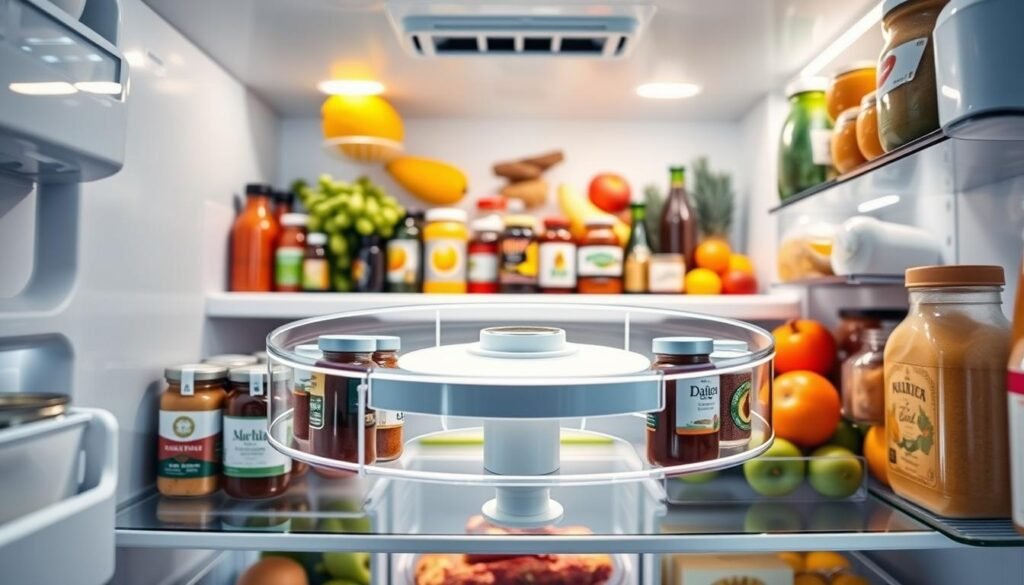
Round vs. Rectangular Designs
Round turntables work on small, centered shelves and let you reach things from all sides. Rectangular models, like the LAMU Rectangular Lazy Susan Organizer, offer a larger surface and fit along the depth of many shelves.
Measuring Your Shelf Space
Measure shelf width and depth before you buy. A rectangular turntable often slots into modular systems and reduces dead zones that lead to waste.
- More surface: rectangular shapes give you extra room for bottles and small containers.
- Easy to clean: sturdy plastic makes wiping spills simple and keeps your fridge hygienic.
- Save food: a proper fit helps you see what you have and cut down on waste.
Managing Leftovers and Small Containers
Keep leftovers visible and labeled so you eat them before they spoil. A small routine saves you money and frees shelf space. Place all short-term meals in one spot so you know what to use first.
Labeling for Freshness
Bridget Flynn of Divine Organizing recommends MESS Food Labels for Containers to track when you made each meal. These simple stickers cost about $12.35 and make freshness checks fast.
Professional organizer Debra Baida suggests placing a turntable on the back of a shelf so leftovers stay in your line of sight. When you rotate the tray, small things no longer hide at the back.
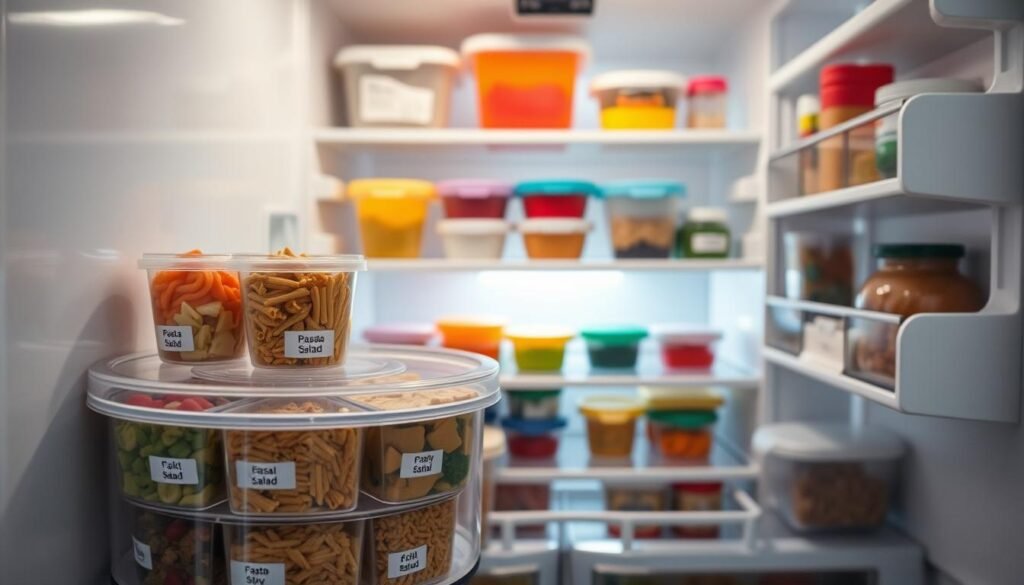
- Use labels: write the date on each container to track freshness and reduce waste.
- Designate a spot: keep all leftovers together so you don’t search the entire fridge for meals.
- Group small items: arrange jars and small containers on the tray so you avoid moving things to reach the back.
- Check weekly: rotate and inspect foods to discard anything past its safe window.
These steps help you manage foods more effectively and maintain a clear sense of what you have. With labeling and a dedicated area, your leftovers last longer and your kitchen runs smoother.
Categorizing Condiments and Sauces
Give every bottle and jar a dedicated spot to cut down on clutter. This makes it simple to find sauces when you cook.
Create categories for dressings, hot sauces, pickles, and spreads. Assign each group a place on a shelf so you always know where to look.
- Door hacks: Brenda Scott suggests using an egg carton lid to hold bottles upside down and catch drips on a door shelf.
- Mini shelves: Abby Kahn turns magazine files on their side to stack cans and small items neatly.
- Bottle storage: Amanda Clark uses stackable acrylic wine holders to store water and beverages horizontally, saving space for meat and vegetables.
- Turntable grouping: by grouping like items on a turntable, you make foods visible and avoid buying duplicates.
These small swaps keep your kitchen tidy and reduce wasted food. Use an organizer to keep containers in sight and make meal prep faster.
Maintaining Fridge Freshness and Cleanliness
You can cut odors and boost shelf life with a few inexpensive supplies and simple routines. A clean interior keeps meat and other perishables safer and helps food last longer.
Using Activated Charcoal
Activated charcoal absorbers, like the remodeez Refrigerator Deodorizer Eliminator, reduce moisture and odors. Place one near the back of a shelf or inside a box to trap smells.
Creating DIY Fridge Liners
Cut vinyl or plastic place mats from the dollar store to fit shelves. These liners protect surfaces and make spills quick to remove.
- Swap liners weekly to prevent stains and lingering odors.
- Use a small box of baking soda or dry oatmeal on a shelf as a low-cost deodorizer.
Proper Produce Storage
Keep fruits and vegetables separated in different drawers to slow spoilage. Line crisper drawers with paper towels so moisture wicks away and cleanup is easier.
Organization of containers and a routine check of items helps you spot what’s going bad in the back. These small ways reduce waste and keep your kitchen running smoothly.
Conclusion
Small shifts to how you store items can free shelf space and cut food waste fast. Place a turntable where it makes the most sense and set groups of similar things together. This simple swap makes scanning your fridge quick and stress-free.
Use clear containers so you can spot snacks, sauces, and leftovers at a glance. Keep like items together and label short-term meals to track freshness.
Maintain a weekly check to wipe spills and discard expired goods. With these steps you will save money, find what you need faster, and enjoy a more functional kitchen for your family.