
Start with one small area, like a drawer, to avoid feeling overwhelmed. This simple approach helps you build momentum. It lets you tackle your home bit by bit, without stress.
Effective storage and organization don’t have to happen fast. By doing tiny tasks, you build a rhythm. This rhythm turns your living space into a tidy sanctuary.
Our proven process gives you the framework to improve daily habits. You’ll learn to reduce household chaos with small, consistent steps. These steps lead to lasting results.
Table of Contents
Understanding the Importance of Storage and Organization
Many people don’t realize how much their surroundings affect their daily life. By focusing on storage and organization, you build a strong base. This base helps your mind stay clear and your body move smoothly.
Benefits of an Organized Space
A tidy home brings peace that’s hard to find in chaos. When everything has its place, you save time. This means you can do more of what you love, not just clean up.
- Reduced stress levels through predictable surroundings.
- Increased availability of time for hobbies and family.
- Enhanced ability to maintain focus on important tasks.
How Clutter Affects Your Mood
Your surroundings reflect your inner state. Too much clutter can make you feel overwhelmed. By cleaning up, you lower stress and create a calm space.
A clean area helps you think positively. Getting rid of unnecessary stuff frees up your mind. This helps you deal with life’s ups and downs better.
The Financial Impact of Poor Organization
Bad storage and organization habits cost you money. You might buy things twice because you can’t find the first ones. This wastes money that could be used for other things.
Also, things not stored right can get damaged or worn out. Taking care of your stuff saves money and keeps it in good shape for longer. Managing your belongings wisely helps your wallet stay healthy.
Assessing Your Space
Good home organization begins before you shop. First, look at your home to find where clutter builds up. This helps you avoid buying things you don’t really need.
Evaluating Areas That Need Attention
Walk through your home with a notepad. Note where mail, toys, or laundry pile up. These spots show where your current systems fail.
Think about how you move around your home. If you trip over shoes or search for keys, mark those areas as top priorities. A smart home organization plan focuses on the most annoying spots first.
Measuring for Storage Solutions
Getting accurate measurements is key for new shelves or cabinets. Use a tape measure to record space dimensions. Remember to include door swings and outlets that might get in the way.
Keep these measurements in a notebook or app. Having them ready makes shopping easier. Precise measurements ensure your new storage fits perfectly.
Identifying Key Trouble Spots
Some areas in your home get messier than others. A messy entryway or disorganized garage storage needs quick attention. These spots are where your busy life meets your home.
Check your garage storage for unused items. Clearing out old stuff makes room for new projects. By pinpointing these trouble spots, you can make a plan that meets your needs.
Choosing the Right Storage Solutions
Choosing the right storage solutions can change how you live in your home every day. The right tools help you create a system that fits your life, not hinders it. Good storage and organization come from matching your needs with the right containers.
You Might Also Like:
Linen Closet Organization Ideas That Keep Everything Neat
Medicine Cabinet Organization Ideas for a Clutter Free Bathroom
Best Under Sink Organization for Small Apartments Ideas
Types of Storage Units Available
You have many choices for storing your things, from fixed units to flexible furniture. Modular shelving units grow with you, adapting to your changing needs. Freestanding cabinets offer a clean look and hide items from view.
Wall-mounted systems save floor space. They’re great for small places. Choose metal racks or wooden bookcases that fit your room’s size.
Considerations for Selecting Bins and Baskets
Don’t spend a lot on storage bins to keep things tidy. Look for durability and size, not fancy names. Measure your spaces before buying to fit everything perfectly.
Think about the material of your containers. Plastic bins are good for damp places like basements. Woven baskets or fabric bins warm up living areas and keep small items in order.
Pros and Cons of Open vs. Closed Storage
Choosing between open and closed storage depends on your style and how tidy you like things. Open shelving is quick to use but needs constant order. Closed storage hides mess, perfect for busy homes.
| Storage Type | Primary Benefit | Best Use Case |
|---|---|---|
| Open Shelving | Quick access | Frequently used items |
| Closed Cabinets | Visual calm | Cluttered or seasonal items |
| Clear Bins | High visibility | Deep storage or pantries |
The best storage solutions mix both open and closed styles. Use open shelves for books and closed storage bins for craft supplies. This balance makes your home beautiful and functional for daily storage and organization.
Decluttering Your Home
To organize your home, you must learn to let go. Getting rid of too much stuff makes it easier to keep things tidy. This lets your space breathe and work better.
Steps to Effective Decluttering
Begin with a small area to avoid feeling too much stress. Sort things into three piles: keep, donate, and throw away. Proven decluttering tips say get rid of items you haven’t used in over a year.
Be tough when deciding what to keep. Only keep things that make your life better. Clean the area well, then put back only what you really need. This stops clutter from moving around.
The “One In, One Out” Rule
Use the “one in, one out” rule for new things. This means for every new item, an old one must go. It’s great for keeping your garage storage tidy.
This rule helps keep your stuff in check. It makes you think twice before buying something new. It’s a good way to stay organized without always cleaning.
Seasonal Clean-Out Strategies
Do a big clean-out at the start of each season. Use these times to change your clothes and check your garage storage. This keeps your home balanced and prevents clutter.
| Item Category | Keep | Donate | Discard |
|---|---|---|---|
| Clothing | Fits well | Gently used | Stained/Torn |
| Kitchenware | Used weekly | Duplicate tools | Broken items |
| Paperwork | Essential records | None | Expired bills |
Regularly check your stuff to keep your home up to date. By doing this, you keep your space useful all year. Being consistent is key to keeping your home organized.
Designing a Functional Organization System
A good home organization plan fits your daily life and needs. When your system matches your daily habits, you’re more likely to keep it up.
Elements of an Effective System
At the heart of a great plan is knowing where everything goes. When you know where things belong, you avoid clutter.
Visual reminders help too. For example, post-it notes on shelves remind you to put things back. Consistency is key to keeping your space clean.
Prioritizing Personal Needs and Lifestyle
Your home should fit your life, not the other way around. Busy professionals need quick and easy systems. Large families need shared spaces for everyone to help.
* Look at where clutter builds up.
* Pick storage that’s easy to reach.
* Update your setup as your life changes.
Technology Tools for Organizing
Today’s tech helps manage your home tasks and schedule. Apps like Todoist or Trello track cleaning and decluttering. They clear your mind and keep tasks on track.
| Method | Best For | Primary Benefit |
|---|---|---|
| Visual Cues | Daily Habits | Immediate Reminders |
| Digital Apps | Task Management | Centralized Tracking |
| Designated Zones | Item Storage | Reduced Clutter |
Using digital tools with physical habits makes a strong system. Smart planning and tech support your lifestyle.
Organizing Your Kitchen
A tidy kitchen makes cooking easier and less stressful. When everything has its place, you waste less time looking for things. Good storage solutions help make your kitchen work better for you.
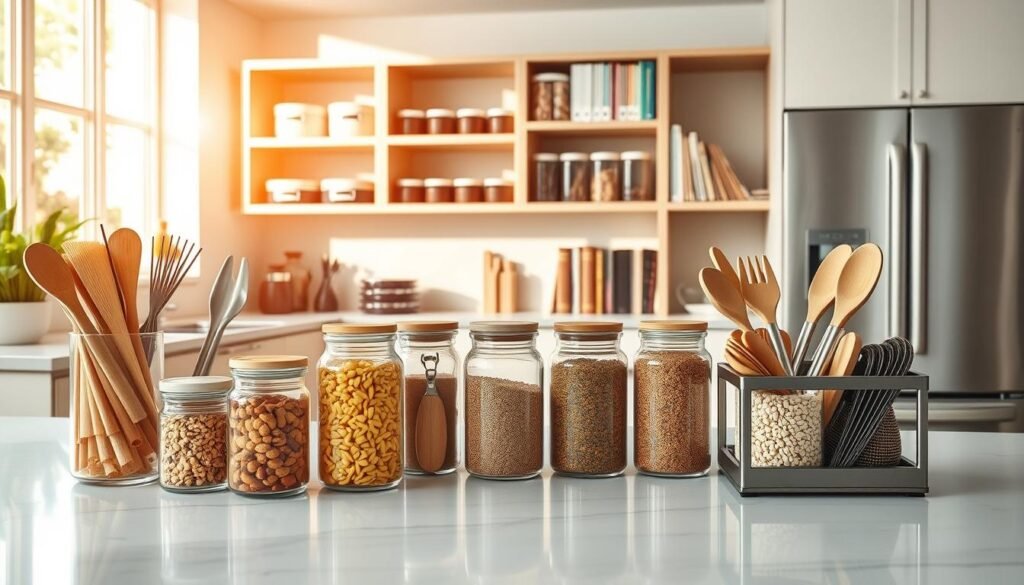
Smart Storage Ideas for Small Kitchens
In small kitchens, every inch counts. Use wall space for hanging pots, pans, or utensils. This keeps your counters clear and makes tools easy to find.
Drawer dividers help keep cutlery and gadgets in order. Under-sink bins are great for cleaning supplies. These small changes can make a big difference.
Labeling for Easy Access
Clear labels are a big help in busy homes. Using the same containers for things like flour and sugar makes your pantry easy to navigate. Labels help everyone know where things go, keeping your kitchen tidy.
- Use waterproof labels for items stored near the sink.
- Apply labels to the front of bins for quick identification.
- Include expiration dates on the bottom of containers for better inventory management.
Maintaining an Organized Pantry
An organized pantry saves you from buying things twice or finding expired food. Group similar items together, like baking supplies and snacks. This makes it easy to see what you have.
Always put new items behind older ones. Check your shelves for expired food regularly. A few minutes each week can keep your pantry tidy and your kitchen welcoming.
Maximizing Closet Space
To make your closet better, think vertically and use smart storage. Many ignore the top of their closets, wasting space. With space-saving ideas, you can turn a small area into a useful spot for getting dressed.
Techniques for Vertical Storage
First, add double hanging rods to double your clothes space. This change lets you sort clothes better and use the floor below. Tall, narrow shelves or over-the-door organizers also use unused space.
Utilizing Shelf Dividers and Bins
Shelf dividers keep folded clothes from falling over. They make it easy to find what you need. Storage bins help group small items like scarves and belts.
Clear bins let you see what’s inside without digging through. This saves time and keeps things tidy. Adding labels helps keep things organized over time.
Seasonal Clothing Rotation Tips
Good closet organization means keeping current clothes easy to find. Store out-of-season clothes in bins under your bed. This makes your main closet more organized.
Change your clothes seasonally to keep your closet fresh. Check clothes for damage or donate what you don’t wear. This keeps your closet from becoming a storage place.
Organizing Your Home Office
Turning your workspace into a place of efficiency starts with planning. A messy desk can block your focus, making it hard to meet deadlines. By organizing your space, you create a place that boosts creativity and clear thinking.
Creating a Productive Work Environment
Your surroundings affect how well you can focus. Begin by removing everything from your desk except what you use every day. This simple step helps keep your desk clean, a key space-saving idea for any home office.
Place your desk near a window to improve your mood and energy. Keep things you use often within reach to avoid getting up too much. A well-thought-out layout helps your work flow smoothly all day.
Essential Supplies for Organization
Choosing the right tools can greatly improve your work flow. You don’t need expensive furniture to stay organized. Instead, focus on items that help you organize your work materials well.
- Drawer dividers to keep pens, clips, and sticky notes separate.
- Vertical file sorters to use your desk space better.
- Cable management clips to keep cords from getting tangled.
Using wall-mounted shelves is another smart space-saving idea that keeps your floor clear. Moving supplies off your desk gives you more room for your projects. This keeps your important tools handy while keeping your space simple.
Digitizing Documents for Clarity
Paper is often the main cause of clutter in offices. Switching to digital files saves space and makes finding documents easier. This change is key for anyone wanting to organize their information better.
Use a good scanner or a mobile app to turn paper files into digital PDFs. Once digital, you can safely throw away the paper copies. Adopting these space-saving ideas will help keep your home office clean, professional, and efficient for a long time.
Kid’s Space Storage Solutions
You can make your child’s room useful with the right storage. It’s important to find a balance between play and order. Choose furniture that kids can reach to help them manage their stuff.
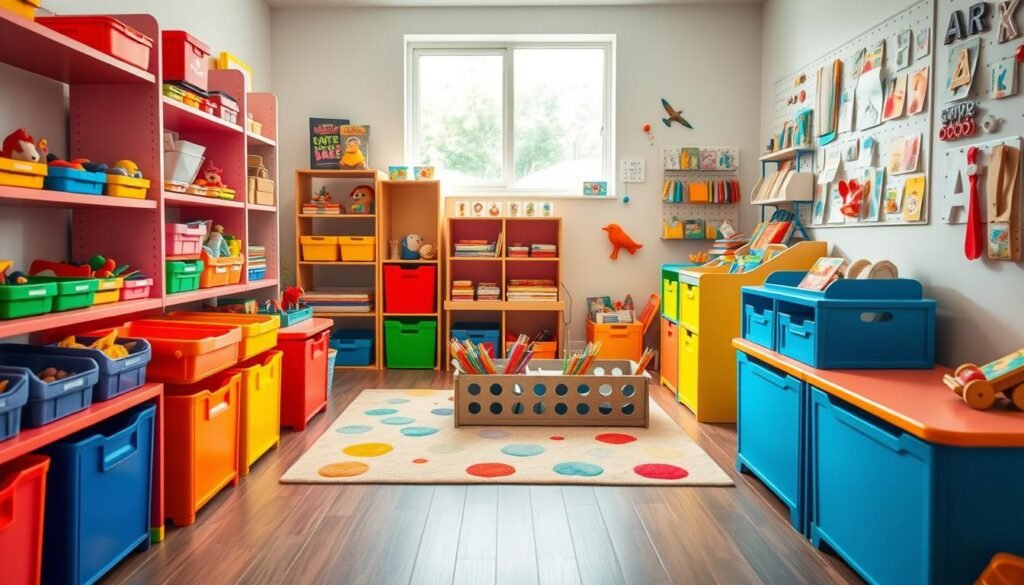
Fun Storage Options for Children’s Rooms
Make cleaning up fun for your kids. Use colorful bins and baskets that fit in low cubbies. This lets kids put away toys by themselves.
Wall-mounted organizers keep the floor free for play. Clear containers help kids find their favorite toys easily. This stops the hassle of searching through big boxes.
Teaching Kids Organization Skills
Teaching kids to organize is a great life skill. Start by labeling bins with pictures or simple words. This helps them sort toys like blocks or dolls on their own.
Being consistent is important. Encourage kids to put things back after play. Cleaning up together makes it a fun activity.
Creating a Toy Rotation System
A toy rotation system keeps rooms tidy. It limits toys to avoid clutter. This also keeps kids interested in what they have.
- Choose a few toys for the main play area.
- Store other toys in labeled bins in a closet or garage.
- Change the toys every few weeks to keep things exciting.
This method keeps playtime focused. It also makes cleaning up easier. Regularly switching toys keeps the room neat and encourages creativity.
Organizing Digital Files and Documents
Digital clutter can slow you down and make you stressed. It’s like a messy desk on your computer. Taking control of your digital space makes work easier and less stressful.
Tips for File Naming and Layout
Being consistent is key to a good digital filing system. Start with a logical folder hierarchy that makes sense to you. Don’t hide important files in hard-to-find places.
Use a simple naming system for files. Try “YYYY-MM-DD_ProjectName_DocumentType” for easy sorting. Avoid generic names like “Document1” to avoid confusion.
Cloud Storage Options to Consider
Cloud storage is safe and easy to access. It backs up your files automatically. Pick a service that fits your needs for storage and software integration.
| Service | Best For | Free Storage | Key Feature |
|---|---|---|---|
| Google Drive | Collaboration | 15 GB | Real-time editing |
| Dropbox | File Syncing | 2 GB | Fast synchronization |
| OneDrive | Windows Users | 5 GB | Office integration |
| iCloud | Apple Users | 5 GB | Seamless ecosystem |
Regular Maintenance for Digital Spaces
Your digital space needs regular care. Do a weekly audit to clean up your “Downloads” folder. This keeps your space tidy.
Do a deeper clean once a month. Archive old projects and update your folders. This keeps your digital files organized and easy to find.
Simple Organization Hacks for Everyday Life
Keeping your home tidy is about finding smart ways to use what you have. You don’t need to spend a lot to make your space work for you. A few clever organizing hacks can change your home without costing much.
Everyday Items That Double as Organizers
Look around your home for things that can do more. Empty shoeboxes are great for sorting socks or office stuff. Tension rods under the sink can hold spray bottles, saving space.
Old glass jars are perfect for pantry items like rice or beans. They keep food fresh and let you see what you have. Using these decluttering tips turns old items into useful storage.
DIY Organization Projects
Custom storage fits your needs better. A pegboard in a craft room or garage is great for hanging tools. Paint it to match your decor for a stylish touch.
Make custom labels for bins with chalkboard paint or vinyl. Clear labeling helps everyone know where things go. These small projects make a big difference in your home.
Time-Saving Tips for Busy Lives
Keeping things tidy is hard when you’re busy. Spend ten minutes each night tidying up main areas. This stops clutter from building up and makes mornings easier.
Keep a donation box in your closet for things you don’t need. Drop it off at a charity when it’s full. These decluttering tips keep your home peaceful and stress-free.
Maintaining Your Organized Spaces
Keeping your home tidy is not a one-time job. It’s a continuous effort that changes with your daily life.
Establish Consistent Habits
Make a cleaning schedule to keep your home neat. Spend ten minutes each night tidying up. This stops clutter from building up.
Refine Your Methods
Check if your organization systems work for you. If not, change them. Good closet organization means adjusting as needed.
Embrace Flexibility
Needs change with seasons or family growth. Use smart organizing tricks to adapt. Stay ahead to keep your space calm.
How do you keep your home tidy? Share your tips and keep making your space peaceful.



[…] Storage and Organization Tips for Everyday LivingOrganizing Pantry Shelves for Maximum StorageOver the Toilet Storage Ideas for Small Bathrooms […]
[…] Storage and Organization Tips for Everyday LivingBest Under Bed Storage Solutions to Maximize SpaceHome Organization Habits That Keep Your Home Tidy […]
[…] Storage and Organization Tips for Everyday LivingHome Organization Habits That Keep Your Home TidyHow Often to Wash Towels and Keep Them Fresh […]