Did you know nearly 30% of city folks feel stressed because of no boundaries at home? Living in one room can make it hard to relax after a long day. Smart studio apartment bed divider ideas can turn your open space into a peaceful and productive area.
You don’t need to spend a lot on big changes to have separate areas for sleep and chill time. With versatile furniture or cool screens, you can keep things light and private. These ideas help you use your space well without losing your style. Learn how to make a home that’s both big and tidy.
Table of Contents
Assessing Your Studio Layout for Optimal Privacy
Creating a private spot is more than just picking a screen. You need to think about how your furniture fits with your room’s layout. A smart plan makes sure your divider improves your life, not makes it cramped.
Measuring Your Available Floor Space
First, map out your room’s size to find the best spot for a divider. Designer Leanne Kilroy recommends using circular circulation to keep the space open. This way, paths flow around your bed, avoiding dark, cramped areas.
Identifying Traffic Flow and Natural Light Sources
Your studio apartment layout ideas must consider how you move. Look at your room’s natural light before setting up a divider. You want to keep important sunlight from being blocked. Strategic placement lets light through while giving you privacy.
Determining Your Privacy Needs versus Open Concept Goals
Finding the right mix of privacy and openness is key. You might want a solid wall for privacy or a semi-transparent screen for openness. Think about what you need for a quiet sleep area versus an open design to pick the best studio apartment bed divider ideas for you.
Selecting the Right Materials for Your Bed Divider
Your choice of materials is key for studio apartment bed divider ideas. The right materials help with privacy and look. Whether it’s a quick fix or a permanent setup, the feel of your space changes with the materials.
Comparing Lightweight Fabrics and Heavy Curtains
Fabrics make your room feel softer. Light materials like linen or cotton let in natural light. For dark sleep, heavy velvet or blackout curtains block out light and sound.
- Sheer fabrics: Keep your room airy and bright.
- Heavy drapes: Create a cozy, quiet sleep area.
- Installation: Both work with ceiling tracks or simple rods.
Evaluating Wood and Metal Structural Options
Wood and metal give a solid, lasting look. Wood screens are easy to move for a quick change. But, built-in bookcases or metal frames need more work but last longer.
Here’s a quick guide to help choose:
| Material Type | Effort Level | Primary Benefit |
|---|---|---|
| Folding Screens | Low | Maximum Flexibility |
| Wood Shelving | High | Storage & Stability |
| Metal Frames | Medium | Modern Aesthetic |
Considering Transparent versus Opaque Materials
Choose between clear and solid materials based on your needs. Clear materials like glass or metal make spaces feel bigger. Solid materials like wood panels or thick fabric offer privacy.
The best studio apartment bed divider ideas mix privacy with style. By picking the right materials, you can make a cozy, functional space that suits your life.
Installing Floor-to-Ceiling Curtain Tracks
Learning to install ceiling tracks is crucial for diy bed divider projects. These systems help create a room divider that you can open or close as needed. They turn a studio into a spacious one-bedroom suite, like Megan Grehl’s design with a hidden curved track.
Choosing the Right Hardware for Your Ceiling Type
First, figure out what your ceiling is made of. Drywall ceilings need toggle bolts or heavy-duty anchors for the track and fabric. Concrete ceilings require a hammer drill and masonry anchors for a secure, long-lasting hold.
Measuring and Cutting Fabric Panels for a Custom Fit
When working with small space bedroom solutions, precision is key. Measure from the ceiling track to the floor, then subtract an inch to avoid fabric dragging. Leave extra fabric for the top hem where you’ll attach the curtain tape or hooks.
Step-by-Step Installation Guide for Ceiling Tracks
Begin by marking the ceiling path with chalk or a pencil. Place track brackets every 12 to 16 inches to avoid sagging. After securing the brackets, snap the track into place and slide in the curtain carriers before attaching the end caps.
Safety Tips for Drilling into Drywall or Concrete
Always wear safety goggles to protect your eyes from debris. Use a stud finder to avoid hitting wires or plumbing lines. When drilling into concrete, keep the drill bit cool with lubricant or take breaks to avoid overheating.
Building a Custom Open-Shelving Room Divider
Creating a partition in a studio apartment is tricky. You need privacy but also storage. Open shelving is great for this because it makes a clear boundary without blocking light. It turns one room into different zones.
Selecting Modular Shelving Units like the IKEA Kallax
Modular units are perfect for renters and homeowners. They are flexible and look modern. The IKEA Kallax is a top pick because of its design and size options.
These units keep your apartment connected while making a clear bed area.
Securing Shelving Units for Stability and Safety
When using tall furniture as a divider, safety is key. You must attach your shelves to the floor or wall. This prevents them from tipping, which is important in busy areas.
Use strong furniture straps or L-brackets to keep your small space bedroom solutions safe and stable for a long time.
Styling Your Divider with Books and Decorative Objects
After setting up your shelves, it’s time to decorate. Use books, plants, and personal items to show off your style. Strategic placement of these items controls how much light gets through.
This helps you find the right mix of privacy and openness.
Try mixing open spaces with filled cubbies to avoid a cluttered look. This makes your small space bedroom solutions look stylish and intentional. With the right decor, your divider becomes a beautiful centerpiece for your studio.
Utilizing Multipurpose Furniture as a Partition
You can make your living space feel bigger by using furniture as a room divider. This trick is great for small space bedroom solutions and doesn’t cost much. Just moving things around can make different areas for different times of the day.
Jen Levy’s 600-square-foot studio is a great example. She used a big, cream-colored couch to separate her living area from her bedroom. Using multipurpose furniture for studio apartments keeps the room open but private.
Positioning Dressers and Credenzas to Define Zones
Putting a dresser or credenza at your bed’s foot works as a room anchor. They offer storage and act as a barrier. You can also decorate them to make your divider look better.
Using Tall Bookcases to Create a Solid Wall Effect
A tall, open-backed bookcase is great for more privacy. Fill it with books, plants, or bins to block your bed’s view. This makes your space feel open while keeping areas separate.
Integrating Desks as Functional Bed Dividers
A desk can be both a workspace and a stylish divider. Place it next to your bed to create a separate office area. It’s perfect for those who work from home and want to keep work and rest areas separate.
| Furniture Type | Primary Benefit | Privacy Level |
|---|---|---|
| Large Couch | Comfortable Zoning | Low |
| Tall Bookcase | Visual Blocking | High |
| Dresser/Credenza | Storage & Surface | Medium |
| Writing Desk | Functional Workspace | Medium |
Implementing Creative Studio Apartment Bed Divider Ideas with Folding Screens
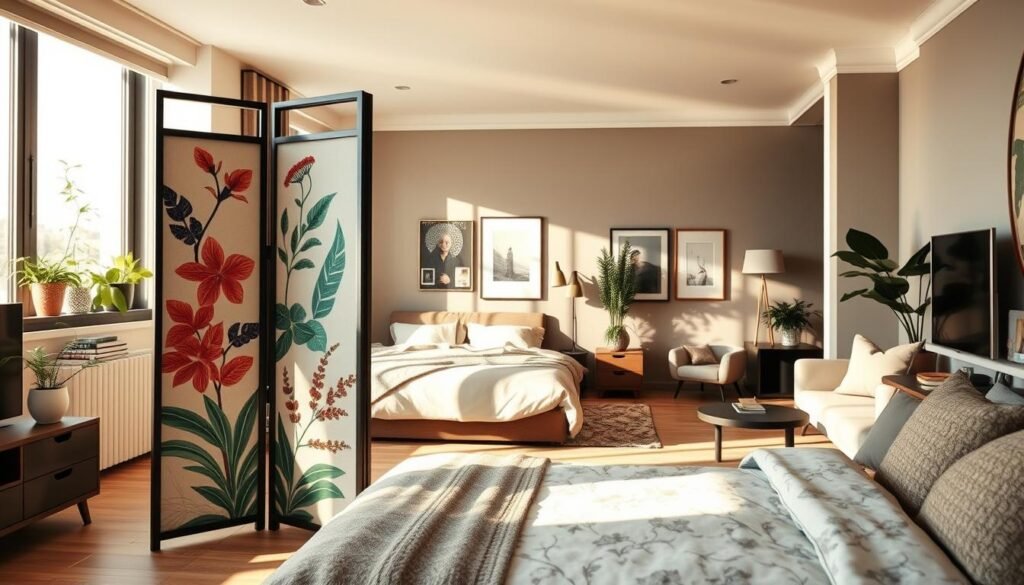
Folding screens are a top creative room divider idea today. They let you change your space as you need. Unlike fixed walls, they keep your area feeling open.
Choosing Between Rattan, Fabric, and Wooden Screens
The right material makes a big difference. Rattan and cane screens add a natural feel to your home. They let light through, making rooms bright.
Fabric screens are soft and block sound. They’re great for quiet areas. Wooden screens give a solid look, dividing spaces clearly.
| Material | Best For | Light Filtering | Durability |
|---|---|---|---|
| Rattan | Boho/Natural Style | High | Moderate |
| Fabric | Sound Dampening | Low | High |
| Wood | Privacy/Structure | None | Very High |
How to Position Folding Screens for Maximum Versatility
Placing screens right is key for studio apartment layout ideas. Use a cane screen to divide a seating area from a fireplace. This makes each area special.
“A well-placed screen acts as a piece of functional art, grounding the space while providing the necessary separation for a restful night.”
Put your screen across a corner to make a private bed area. This turns a corner into a bedroom. When guests come, fold the screen away to open up the space.
Maintaining Flexibility in Your Small Space Layout
Folding screens are super mobile. They let you change your space easily. Move them to let in more light.
Make sure the floor is clear near the screen. This makes it easy to move. Choosing light materials keeps your space flexible, like your lifestyle.
Designing with Glass and Acrylic Partitions
Glass and acrylic partitions are a smart way to change your living space. They let in natural light and add a modern, industrial look. This keeps your home bright and open. Using clear barriers helps you add room dividers that improve your space, not clutter it.
Benefits of Maintaining Visual Connectivity
Using glass keeps your space feeling open. Even with a separate sleeping area, the room stays airy and expansive. For example, Jessica Wright’s Parisian loft uses a 14-foot glass and steel wall to divide living and sleeping areas well.
This design lets light move freely around the apartment. It’s a top idea for avoiding the feeling of being trapped. You get privacy but still feel connected, making small spaces seem bigger.
Installing Sliding Glass Doors for a Modern Look
Sliding glass doors are great for a functional partition. They give a sleek, professional look that improves your home instantly. These doors can be hidden for an open layout or closed for a private bedroom.
They work well because they don’t take up floor space. Perfect for renters or homeowners wanting a lasting upgrade.
Using Acrylic Sheets for a Lightweight DIY Solution
Acrylic sheets are a light, easy DIY option. They are durable and simple to work with, loved by DIY fans. You can make custom panels by mounting these sheets in frames.
This is a flexible idea because acrylic is lighter than glass. You can change its color or opacity to fit your style. It’s a budget-friendly choice for stylish studio apartment designs.
Creating Green Dividers with Indoor Plants
Bringing nature into your home is a beautiful way to create a soft, organic partition. It improves air quality. If you are looking for creative room divider ideas, using indoor plants is a refreshing alternative. These living barriers add texture and life to your studio apartment while keeping it open and airy.
Selecting Tall, Low-Maintenance Houseplants
Designer Jess Blumberg often uses tall greenery to divide sleeping spaces. By choosing the right species, you can create a natural visual break. Snake plants and palm trees are great because they grow vertically and need little care.
- Snake Plants: Highly durable and perfect for low-light corners.
- Parlor Palms: Provide a lush, tropical aesthetic that fills vertical space.
- ZZ Plants: Extremely resilient and thrive in various indoor conditions.
Building a Vertical Garden Partition
For a more structured approach, consider building a vertical garden partition. It acts as a living wall, adding depth and character to your studio. Use modular shelving units or wall-mounted planters to stack your greenery. This creates a dense barrier that offers privacy and is one of the most creative room divider ideas available.
Make sure your structure is stable, even if you’re stacking heavy pots. A tiered system lets you mix trailing vines with upright plants for a layered, professional look.
Ensuring Proper Lighting for Your Living Divider
Your plants need the right amount of light to thrive. Before finalizing your layout, watch how natural light moves through your studio. If your sleeping area is far from a window, you might need grow lights to keep your divider healthy.
Rotate your plants occasionally to ensure even growth on all sides. By monitoring their health, you keep your living partition vibrant and functional in your home decor.
Incorporating Hanging Room Dividers and Macramé
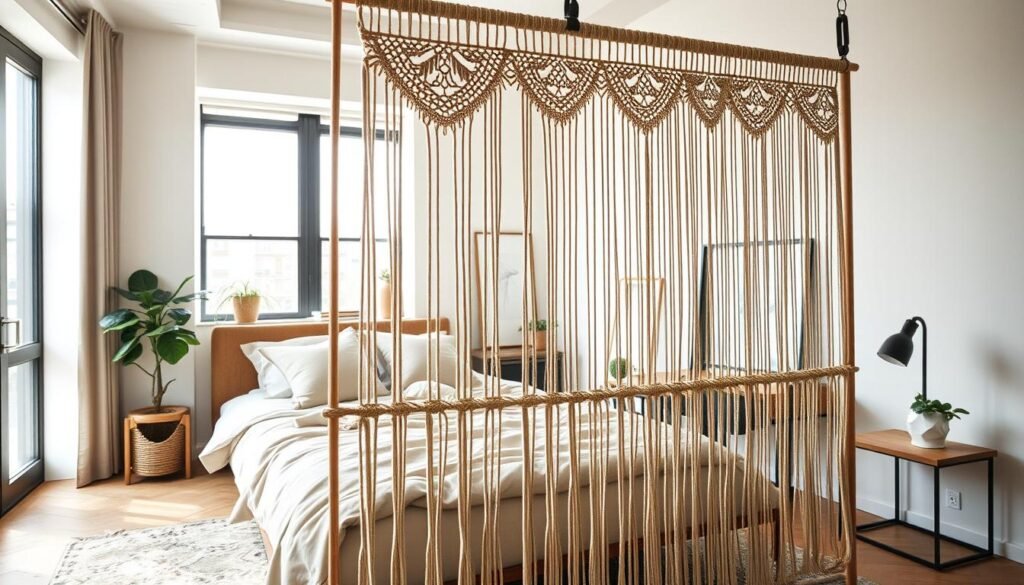
Hanging room dividers are a creative way to define your space. They don’t take up floor area. They add a soft, artistic touch that traditional furniture can’t.
These installations make your home feel taller and more open. They draw the eye upward.
Choosing Bohemian-Style Macramé Wall Hangings
Artist Laurence Leenaert shows how textiles can be architectural elements. He mounts handcrafted fabrics to the ceiling with metal hooks. This creates a stunning, bohemian-inspired partition.
“Textiles are not just for walls; they are the soft architecture that defines how we live in our most intimate spaces.”
Choose pieces with intricate knots and natural fibers like cotton or jute. These materials add organic warmth. They complement stylish studio apartment design ideas that focus on comfort and character.
Installing Tension Rods for Temporary Hanging Dividers
If you rent or want a non-permanent solution, tension rods are great. These adjustable bars fit between two walls. They let you hang lightweight curtains or macramé without drilling holes.
- Measure the width of your intended divider space accurately.
- Select a heavy-duty tension rod capable of supporting the weight of your chosen fabric.
- Ensure the rod is level to keep your hanging display looking professional and clean.
Layering Textures for a Cozy Bedroom Atmosphere
To make your bedroom a private sanctuary, focus on layering. Mix sheer, airy fabrics with heavier macramé hangings. This creates depth and visual interest.
This tactile approach softens your apartment’s hard lines. It makes your bedroom cozy and inviting. By mixing different weights and patterns, you get a sophisticated look that feels curated and welcoming.
Executing DIY Bed Divider Projects on a Budget
You can make your living space look fancy with diy bed divider projects. You don’t need a big budget or a pro to do it. A little creativity can turn your studio into a cozy bedroom without losing the open feel.
Repurposing Old Doors or Window Frames
Using old stuff to divide a room is very stylish. Anthony D’Argenzio made a movable wall with old doors and a ceiling track. It brings a unique charm that new items can’t match.
Find these materials at local salvage yards or online. Make sure your ceiling track can hold the weight of the wood. It’s a great way to have a movable wall instead of regular multipurpose furniture for studio apartments.
Creating a Tension-Rod Fabric Wall
If you rent, you need something that won’t hurt your walls. A tension-rod fabric wall is cheap and easy to set up. Just put a heavy-duty rod between walls and hang your fabric.
- Choose lightweight linen for a light, airy feel.
- Go for heavy velvet to block out light and sound.
- Use patterned cotton to brighten up your studio.
Painting and Finishing Your DIY Divider
The last step is to make your divider match your decor. A new paint job can make salvaged doors look like they were meant to be there. Choose a matte finish for modern or a distressed look for bohemian.
For fabric dividers, add trim or tassels for a neat look. Finishing it well makes it look like a real design choice. With these tips, you can make a space that shows off your style.
Styling Your New Bedroom Nook
Your new bedroom nook is a great place to show off your style. After setting up your divider, it’s time to decorate. Focus on space-saving bedroom decor to make it cozy and useful.
Adding Task Lighting and Bedside Accents
Lighting sets the mood in your bedroom. Use cordless lamps to add height and warmth. This makes your studio apartment layout ideas look better without taking up space.
Decorative plants or a small tray for essentials add polish. This keeps your bedside area tidy and organized.
Coordinating Bedding with Your Divider Aesthetic
Your bedding should match your divider’s material and color. Soft linens or neutral tones work well with light curtains. For wood or metal dividers, bold patterns or textured throws add a sophisticated contrast.
Sticking to a color scheme makes your design look intentional. When your bedding matches the decor, the room feels planned and stylish.
Balancing Decor to Keep the Studio Feeling Spacious
Keeping your nook open is key in small spaces. Don’t overdo it with accessories. Choose a few pieces that show your personality.
Using mirrors or reflective surfaces can make your space feel bigger. Clear surfaces and purposeful decor keep your home stylish and useful.
| Element | Styling Tip | Benefit |
|---|---|---|
| Lighting | Use cordless lamps | Saves floor space |
| Furniture | Slim console tables | Adds vertical interest |
| Textiles | Coordinated bedding | Creates visual harmony |
| Decor | Minimalist accents | Prevents visual clutter |
Conclusion
Creating a private space in one room needs creativity and planning. You can change your living area by picking partitions that show your style.
Using smart bedroom decor keeps your space open but private. This makes your studio into a useful home.
Try making your own bed dividers to save money and get a unique look. Doing it yourself can make your space feel special.
Begin your makeover by looking at your floor plan and picking the right materials. These steps will help you make your apartment more organized and stylish.