You can make your home bigger by picking multi-functional pieces. These items do more than one thing without taking up too much space. This way, a small area can look big and stylish.
Many people face the challenge of small spaces. But, with smart planning, you can make a big difference. Using vertical storage and designs that can change helps a lot. Experts use these tricks to make every inch of your home useful.
Choosing good small space furniture keeps your room feeling open. By using these smart ideas, you can turn a small space into a cozy place you love.
Table of Contents
Understanding Tiny Living Rooms
Turning a small room into a stylish space is all about creativity. Instead of seeing small rooms as a problem, see them as a challenge. The right tiny living room furniture can make every inch count, keeping your style intact.
The Challenges of Small Spaces
One big challenge in small homes is avoiding clutter. Too many things can make a room feel cramped and messy. Keeping a clear path is key to a comfortable home.
Choosing the right size furniture is also crucial. Big pieces can make a room feel even smaller. Make sure to measure your space carefully to fit your tiny apartment furniture perfectly.
Benefits of Tiny Living
Living small has many perks. Cleaning is easier because there’s less to do. It also makes you picky about what you keep, focusing on what’s truly important.
- Increased Efficiency: Everything you need is within arm’s reach.
- Cozy Atmosphere: Small rooms feel more intimate and welcoming.
- Cost-Effective: You spend less on decor and utilities.
How Furniture Choices Affect Space
Your furniture choices shape your room’s feel and function. Bold colors can add depth and character to small spaces. A deep wall color can make a room feel cozy and snug.
Choose furniture that does more than one thing. A coffee table with storage or a sofa that doubles as a bed saves space. The table below shows how different design choices affect your space.
| Design Element | Small Space Strategy | Impact on Room |
|---|---|---|
| Color Palette | Bold or Monochromatic | Adds depth and visual interest |
| Furniture Scale | Low-profile and Slim | Maintains open sightlines |
| Storage | Vertical and Hidden | Reduces floor clutter |
| Lighting | Layered and Reflective | Enhances perceived volume |
Essential Furniture for Small Living Rooms
When space is tight, every piece of furniture must do more. Choosing the right space-saving furniture keeps your home open and functional.
Focus on items that serve more than one purpose. This way, you avoid clutter and create a cozy, intentional space.
Space-Saving Sofas and Chairs
Finding the right seating is key for compact living room furniture. Modular living room furniture is great because it can change to fit your room perfectly.
Consider a slim sofa or one with exposed legs. These designs make your room feel bigger and less crowded.
Versatile Coffee Tables
A coffee table is often the room’s centerpiece. Choose a minimalist living room furniture like a lift-top table. It turns into a workspace in seconds.
Nesting tables are also smart for small spaces. They can be hidden when you need more room and pulled out for guests.
Multi-Functional Storage Solutions
Adding storage to your furniture changes the game for small homes. Look for ottomans with hidden spots for blankets, books, or remotes.
Wall-mounted shelves keep your floor clear. They help keep your living area organized and clutter-free by using vertical space.
| Furniture Type | Primary Benefit | Best For |
|---|---|---|
| Modular Sofa | Customizable layout | Oddly shaped rooms |
| Lift-Top Table | Hidden storage | Small home offices |
| Storage Ottoman | Dual-purpose utility | Living room organization |
You Might Also Like:
Living Room Decorating Ideas for Small Apartments
Home Reset Routine to Keep Every Room Organized
Small Bedroom Ideas to Create More Space
Choosing the Right Colors and Patterns
Choosing the right colors is key for a small living room. Colors and patterns affect how we see the room’s size and feel. Smart choices can make your space feel bigger and more welcoming.
The Impact of Color on Perception
Many think bright white is best for small spaces. But, warm off-white shades are better. They prevent harsh shadows and create a cozy glow.
Use the 60-30-10 color rule to balance your room. This means 60% neutral, 30% secondary color, and 10% bold accent. It keeps your decor balanced and avoids feeling too much.
Patterns that Enhance Small Spaces
Patterns add personality but scale is key. Big prints work better than small, busy ones in small rooms. A bold rug or patterned pillows can be a focal point without cluttering.
Choose patterns with open space between motifs. This keeps the room feeling open and not chaotic. Strategic pattern placement makes the room look bigger by guiding the eye.
Tips for Cohesive Design
A cohesive look ties everything together. Repeat accent colors in small doses. For example, match throw pillows to wall art or rug colors.
Consistency is crucial for a professional look. When furniture colors match the walls, the room feels bigger. This simple trick makes your space look intentional and larger.
Optimizing Layout for Functionality
Getting your living area to flow well needs a smart plan for where to put furniture. A well-thought-out layout makes your home feel on purpose and cozy. By thinking about how you move around, you can turn a small space into a cozy spot.
The Importance of Traffic Flow
Having clear paths is key to a working home. Make sure there’s at least 30 inches between big pieces for easy moving. Don’t block doors or windows, as it makes the space feel tight.
When paths are clear, the room feels bigger and welcoming. Prioritizing circulation stops the area from feeling too full, even with guests. This simple change makes daily life easier.
Arranging Furniture for Maximum Usability
Choosing the right small space living room furniture is just the start. You also need to place it right for your needs. For example, putting a sofa under a window in a long room makes it look better.
Think about using modular living room furniture to change your layout as needed. These pieces let you set up your space for different events. Keeping furniture away from walls can make the room feel more cozy and balanced.
Creating Focal Points in Small Rooms
Every room needs a main attraction to draw the eye and bring order. Use a fireplace, big art, or a feature wall as your anchor. Then, arrange your seats to face it.
This method helps make clear areas for relaxing or having fun in a small space. Using modular living room furniture around a central point keeps the look together. Here’s a guide to pick the best layout for your room shape.
| Room Shape | Primary Strategy | Key Benefit |
|---|---|---|
| Narrow/Long | Sofa under window | Balanced proportions |
| Square | Floating furniture | Improved traffic flow |
| Open Concept | Zoned seating | Defined utility |
By using these layout tips, your small space living room furniture will work better for you. Keeping your arrangement consistent makes your living space more peaceful and useful.
Smart Storage Solutions
You can make your small living room feel big by using hidden storage. Clutter makes small homes feel cramped. Choosing the right space-saving furniture helps keep things tidy and your mind calm.
Built-In Shelves and Cabinets
Using a whole wall for shelves and cabinets is smart for small homes. These units keep everything organized and look good together. Floor-to-ceiling designs use every inch without making the room feel small.
Under-Furniture Storage Options
When space is tight, look for hidden spots in your furniture. Modern pieces often have drawers or hidden spots for items. Space-saving furniture like ottomans or sofas with storage makes a big difference in small spaces.
- Choose coffee tables with lower shelves or hidden compartments.
- Look for sofas that feature built-in side pockets for magazines.
- Utilize rolling bins that slide easily beneath your seating area.
Creative Use of Vertical Space
Storage isn’t just about the floor; it’s also about using walls. Floating shelves or tall bookcases make rooms with low ceilings look taller. This keeps your floor open, making your home feel bigger. Using space-saving furniture that goes up high makes every inch count.
Best Material Choices for Tiny Furniture
The right furniture materials are key to a great home. When picking compact living room furniture, think about how each piece looks in your room. The right materials make your room feel big and your furniture strong.
Lightweight and Durable Options
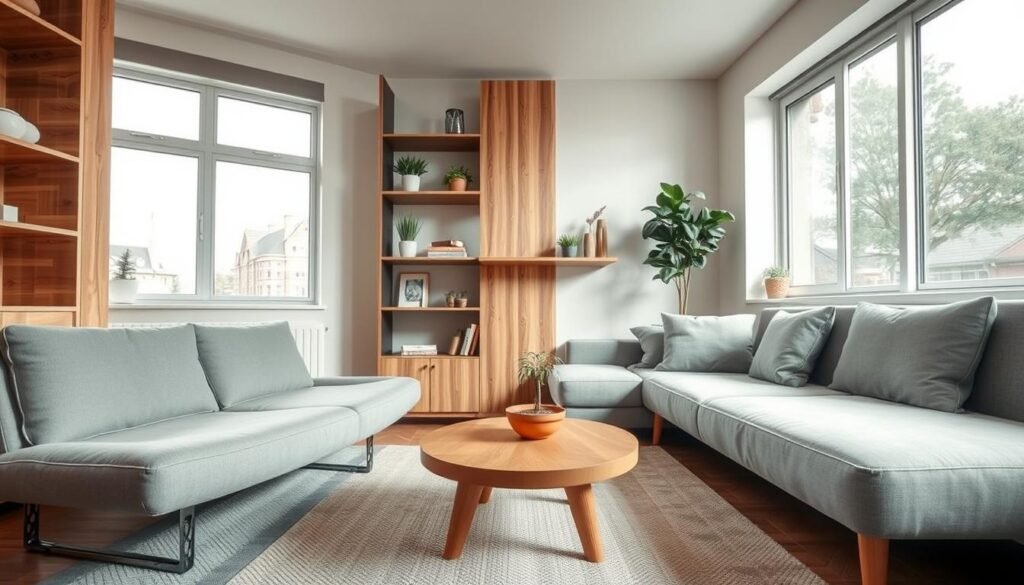
Look for materials that are strong but not heavy. Metal frames, like powder-coated steel or aluminum, are sleek and keep your floor clear. They’re perfect for small space living room furniture because they don’t take up too much space.
Acrylic and glass are also good for keeping your room open. A clear acrylic chair or a glass table lets light through, making your room seem bigger. These pieces are highly durable and easy to clean, great for busy areas.
Textures that Add Warmth
Even though you want furniture that’s light, don’t forget about comfort. Adding soft textures balances out the hard feel of metal or glass. Coir rugs are a great choice for adding warmth and texture to small spaces without taking up too much room.
Velvet on a slim sofa adds luxury and depth. Linen or cotton throws also bring organic elements. These tactile additions make your home cozy and inviting, not cold or sterile.
Eco-Friendly Materials to Consider
Many people now want sustainable furniture. Bamboo is a fast-growing, strong material that’s perfect for shelves or side tables. It’s light and doesn’t look heavy.
Recycled fabrics and reclaimed wood are also good choices. They often have unique stories and textures that add character. By choosing eco-conscious materials, you help the environment and create a stylish home.
| Material Type | Best Use | Key Benefit | Visual Impact |
|---|---|---|---|
| Acrylic | Coffee Tables | Transparency | High Openness |
| Bamboo | Shelving | Sustainability | Natural Warmth |
| Powder-Coated Metal | Chair Frames | Durability | Minimalist |
| Coir Fiber | Area Rugs | Texture | Tactile Depth |
Incorporating Technology into Small Spaces
Adding your favorite gadgets to a tiny living room needs a smart plan. You want to enjoy modern tech without wires and big screens taking over your space-saving furniture. The right gear helps keep your space clean and neat.
Space-Saving Tech Gadgets
Choosing gadgets that do more than one thing is key. For instance, the Frame TV is great for small rooms. It looks like wall art when not on, so it doesn’t take up too much space.
- Wall-mounted soundbars save valuable surface area.
- Projectors with retractable screens offer a cinematic experience without permanent hardware.
- Wireless speakers provide high-quality audio without the need for messy floor-standing units.
Smart Furniture Solutions
Modern tiny apartment furniture often has built-in tech to make life easier. You can find coffee tables with wireless charging or sofas with hidden USB ports. These items cut down on the need for extra tables or power strips.
Smart furniture lets you keep devices charged while keeping things simple. Look for ottomans with media consoles or side tables with Bluetooth speakers. These items do double duty, keeping your room both useful and tidy.
Charging Stations and Cable Management
Visible cords can make a small room look messy. Use cable sleeves or adhesive clips to hide wires behind furniture legs. This keeps your area neat and safe from tripping.
Think about getting a charging station in a drawer or a decorative box. This keeps your devices hidden while they charge, which is key with space-saving furniture. Organized cables make your tech fit your style, not mess it up.
Personalized Decor Tips
Making your living area special is key to a cozy small space. You can show off your style with small living room decor choices. Pick items that tell your story without making the room feel too full.
Choosing Artwork that Fits
Finding the right art is crucial for a balanced look. Choose one big piece to anchor the room. For a gallery wall, use the same frames to keep it neat.
Hang your art lower than usual. This makes the room feel cozy and inviting. It also makes the seating area feel more stable.
Adding Personal Touches Without Clutter
It’s easy to collect small items, but less is more in a small home. Choose items that really mean something to you. Here’s how to keep your space tidy:
- Change your decor with the seasons to keep things fresh.
- Use decorative trays to group small items together.
- Choose items that serve more than one purpose, like a bowl for keys.
Effective Use of Textiles and Accessories
Textiles are great for adding color and texture to your small living room decor. A throw blanket or patterned pillows can change the room’s feel. They add warmth without taking up space.
When picking accessories, match them to your room’s colors. Consistency is key to avoiding a cluttered look. A few bold pieces can make your home stylish and personal.
Maximizing Natural Light
Using the sun’s power is smart for small homes. Brightness makes your space feel bigger. The right tiny apartment furniture helps keep it open.
Importance of Natural Light in Small Rooms
Natural light makes rooms look bigger. Paint your ceiling a light color. This makes your room seem taller and more spacious.
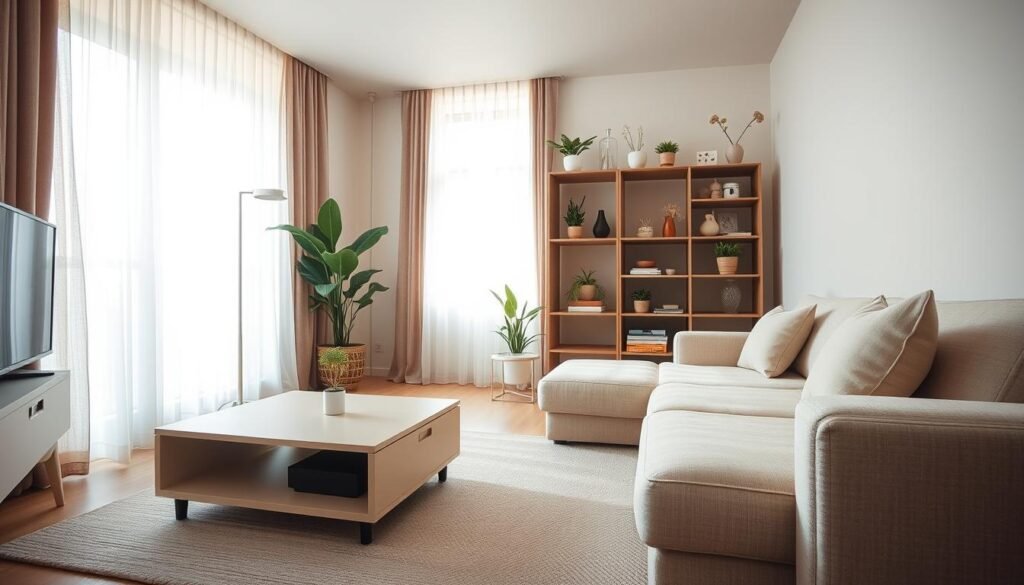
Rooms with lots of light feel welcoming. Keep windows clear for the most daylight. This makes your tiny apartment furniture look intentional, not just necessary.
Window Treatments that Work
Choosing window coverings is key. Go for sheer fabrics or blinds that let in light. They keep your room bright and private.
Stay away from dark drapes. They make small rooms feel heavy. Use wide curtain rods to make windows look bigger. This lets in more light and shows off your tiny apartment furniture.
Mirrors and Reflective Surfaces
Mirrors are great for adding light. A big mirror by a window doubles the light. It makes your room seem larger.
Use metallic or glass items for more light. They add elegance. Placing them right catches every sunbeam.
Outdoor Furniture for Indoor Use
Some of the best home pieces are in the outdoor section. They have clean lines and fit well in modern homes. By exploring outdoor furniture, you can find versatile items that enhance your home’s look.
Balancing Indoor and Outdoor Design
Blending outdoor pieces with soft indoor textures is key. For example, woven wicker panels add texture to small areas. Layering with throw blankets and pillows keeps the room cozy.
Using natural materials like rattan or teak creates a warm feel. Mixing these with indoor fabrics gives a balanced look. This is a great way to find compact living room furniture that’s unique.
Don’t Overlook Balcony Ideas
Balcony furniture is designed to save space. It’s perfect for small areas where every inch matters. Look for bistro sets or slim benches for seating.
Think about how these pieces can be used in different ways. A small, foldable table can be a desk or side table. This flexibility helps keep your home open and airy.
Selecting Weather-Resistant Pieces
Outdoor-inspired furniture is durable. It’s resistant to spills, stains, and heavy use. This makes it a smart choice for busy areas.
When shopping, look for modular living room furniture. Many outdoor collections are modular, allowing you to change your space as needed. Choosing high-quality, weather-resistant materials ensures your furniture stays stylish and functional for years.
Seasonal Decorating Ideas for Tiny Spaces
Updating your home for the seasons doesn’t mean adding more stuff. You can refresh your small living room decor with temporary changes. This way, you keep your space clean and useful all year.
Changing Decor Without Overcrowding
The key to a seasonal update is the “one-in, one-out” rule. Add a new item, then take away an old one. This keeps your small living room decor tidy and clutter-free.
Seasonal Accessories that Pack a Punch
You don’t need to change big furniture to update your room. Use colorful cushions and throws to change the look. These small changes can quickly change your room’s color scheme.
- Swap lightweight linen covers for cozy wool textures in the winter.
- Introduce bright, floral patterns during the spring months.
- Use metallic accents or deep earth tones to transition into autumn.
Simplifying Holiday Decor
Holiday decorating in a small home focuses on vertical space. Use wall-mounted items instead of a big tree. Minimalist holiday styling makes your home festive without using up too much space.
Final Thoughts on Tiny Living Room Furniture
Designing a small living room is fun and lets you get creative. You can turn a small space into a cozy retreat. This is done by choosing smart layouts and designs carefully.
Painting your skirting boards the same color as your walls makes your room look taller. This trick helps your room feel bigger and more open. Choosing minimalist furniture keeps your space clean and comfy.
Brands like West Elm or Article have sleek furniture that fits well in small spaces. These pieces add function without taking up too much room. Having smart storage helps keep your space clutter-free.
Make your space your own with things that make you happy and show your style. A room that’s well-chosen feels bigger when every item has a purpose. Begin your makeover today and enjoy a home that’s perfectly suited for you.