
Did you know the average American master suite has shrunk by nearly 15% in the last decade? Many homeowners now face the challenge of making a cozy sanctuary in a small space. Learning how to arrange a small bedroom can make your small space feel big and welcoming.
You don’t have to give up comfort or style, even with a small space. Using clever design tricks can make every inch count. These smart choices can turn a small sleeping area into a functional and beautiful space.
Using smart storage and light-reflecting decor can make your room feel open and airy. You’ll see that making a cozy space is possible with the right ideas. Get ready to rethink your layout and find the hidden potential in your home today.
Table of Contents
Assessing your space and planning the layout
Changing a small room starts with knowing your space. Learning how to arrange a small bedroom is key. It makes your room both useful and calm.
Measuring your room dimensions accurately
Get your room’s measurements right before buying new stuff. Use a tape measure for wall lengths, window, and door spots. Accurate measurements ensure furniture fits well.
Make a simple floor plan on paper or use a digital tool. This helps you see how much space you have left. It’s important for choosing the right furniture size.
Identifying focal points and traffic flow
Every room has a main spot, often where your bed is. This area should be the room’s highlight. Furniture should support this spot, not fight it.
Think about how people move around in your room. Keep paths clear to make moving easy. A good small bedroom furniture arrangement balances storage and space, making your room feel open.
How to arrange a small bedroom for maximum flow
The secret to a comfy bedroom is in its flow. Make sure the room feels open and not cramped. Use small bedroom layout tips to make it feel spacious.
Positioning the bed for optimal movement
Your bed is the biggest piece of furniture. Where you put it sets the room’s flow. Place it in the middle of the longest wall for balance.
If your room is narrow, put the bed in a corner. This saves space and makes a cozy spot. Make sure you can walk around the bed easily.
Creating zones for sleeping and dressing
Make your bedroom do more than one thing. Use a rug or screen to divide sleeping and dressing areas. This adds structure without big dividers.
Put your dressing area near your closet. This makes mornings easier. Grouping things together keeps your sleep area calm.
Maintaining clear pathways around furniture
Keep paths clear around furniture for an open feel. Don’t block walkways with big items. A good small bedroom design keeps these paths open.
Clear floor space makes a room look bigger. When you can see across the floor, the room seems bigger. Keep the path from the door to the bed clear.
Selecting space-saving furniture
When your space is small, every piece of furniture must be special. By choosing smart design choices, you can make your bedroom feel big and open.
Choosing multi-functional pieces like storage beds
A bed takes up a lot of space. So, it should do more than just sleep. A storage bed lets you hide clothes, linens, or shoes under your mattress.
This is key for small bedrooms. It turns your bed into a secret dresser. This keeps your floor free.
Opting for wall-mounted nightstands
Old-style bedside tables can make a room feel tight. Wall-mounted nightstands are a better choice. They keep your floor clear.
These floating surfaces are perfect for lamps, books, and phones. They make your room look cleaner and more modern. This makes the room seem bigger.
Selecting furniture with exposed legs to create openness
Look for dressers or chairs with exposed legs. This lets light shine under your furniture. It makes your room feel less closed in.
Seeing more floor makes your room seem bigger. Choosing furniture that looks light is a simple trick. It keeps your bedroom cozy and fresh.
Utilizing vertical storage solutions
When you don’t have much floor space, the walls are key for storage. By looking up, you can find space saving bedroom ideas. This makes your room feel bigger and cleaner.
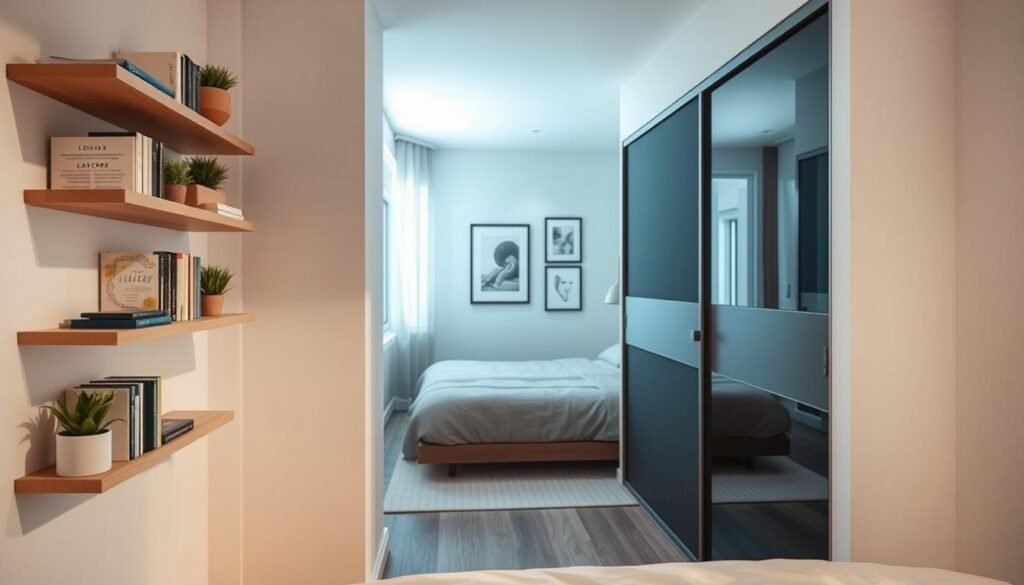
Installing floor-to-ceiling shelving units
Floor-to-ceiling shelves are great for more storage without taking up floor space. They make your room look taller. You can put books, decorations, or storage bins on them.
“The best way to organize a small space is to treat every vertical inch as a potential storage opportunity.”
Using over-the-door organizers for accessories
Keeping your room tidy is important. Over-the-door organizers are great for bedroom storage solutions. They hold things like scarves, belts, and jewelry. This way, your accessories are easy to find but hidden.
Maximizing closet space with tiered hangers
Closets can get cluttered fast. Tiered hangers help you hang more clothes in the same space. This keeps your closet neat and organized.
Choosing the right color palette and lighting
Lighting and colors are key for a small bedroom. They help make the room look bigger. Smart choices can make your room feel larger.
Using light and neutral paint colors
Choose light and neutral paint for small rooms. Colors like soft white or pale gray reflect light. This makes walls seem to go back, making the room feel bigger.
Stay away from dark colors that suck up light. They make rooms feel tight. Paint trim and ceiling the same as walls to make the room feel open.
Layering ambient, task, and accent lighting
One harsh light can make a room feel heavy. Use different lights for a better look. Start with ambient light for overall light, then add task light for specific areas.
“Light is the most important tool in the designer’s kit; it defines the mood and the perceived size of any interior space.”
Accent lights, like LED strips, add depth. They light up dark spots, making the room feel welcoming. Layered lighting makes your bedroom balanced and useful.
Incorporating dimmable fixtures for a cozy atmosphere
Dimmable lights let you change the room’s mood. Keep them bright during the day for a big feel. At night, dim them for a cozy feel.
Adding a dimmer switch is easy and cheap. It changes your room from busy to calm. It’s a big part of making a small bedroom cozy and useful.
Incorporating mirrors and reflective surfaces
Reflective surfaces make your bedroom look bigger. They create a powerful spatial illusion. This makes small rooms seem larger.
Mirrors are not just for getting ready. They help make your room look bigger.
Placing large mirrors to bounce natural light
Put a big mirror across from a window. It catches sunlight and sends it to dark spots. Maximizing natural light makes rooms feel airy.
Get a floor-length mirror or a big wall piece for best results. Light bouncing off these surfaces makes rooms feel less cramped. Your room will look brighter and feel better.
Using mirrored furniture to expand visual depth
Mirrored furniture does two things. It gives you storage and makes your room look bigger. Nightstands or dressers with mirrors blend in. This seamless integration keeps your room from feeling crowded.
Mirrored nightstands make your bed area look deeper. They add a modern look and keep your room clean. These pieces make your room seem bigger than it is.
Decluttering and organizing your bedroom essentials
Learning to organize is key to making a small bedroom feel big. A messy room always seems smaller, no matter the furniture. By focusing on small bedroom organization, you can make your space feel welcoming.
Implementing a minimalist approach to decor
Thinking like a minimalist helps you decide what stays and what goes. Ask if each item is useful or brings happiness. If not, it might be time to let it go for better bedroom storage solutions.
Choosing a few special items over many makes your room feel more open. A few well-chosen decorations can make a bigger impact than many small ones.
Using under-bed storage bins for seasonal items
The space under your bed is often wasted. Using bins here is a smart way to save floor space for bedroom storage solutions.
- Store off-season clothes in vacuum-sealed bags to save space.
- Keep extra bedding or heavy blankets tucked away until needed.
- Use labeled containers to find your items easily.
Keeping surfaces clear to reduce visual noise
Clearing surfaces of clutter makes a small room feel calm. When nightstands and dressers are tidy, the room looks bigger and more organized. To keep things organized, put things away right after use.
Clear surfaces help your mind relax after a long day. Keeping these areas clean stops your room from feeling too busy with daily stuff.
Adding cozy textiles and personal touches
Adding layers of texture and personal flair makes a big difference. Even in small spaces, you can keep things cozy and stylish. The right choices can turn a small room into a cozy haven.
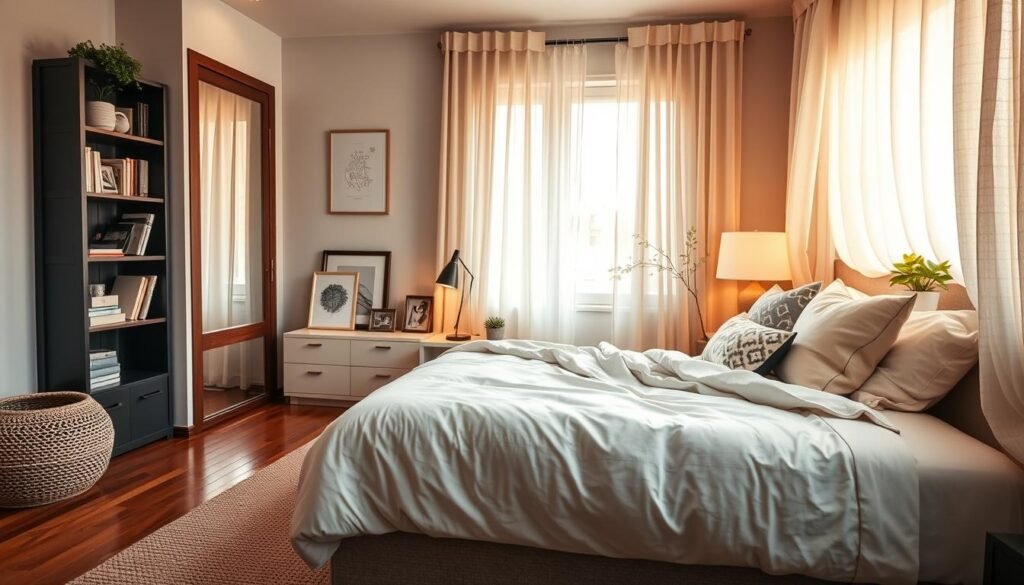
Layering rugs for warmth and texture
Rugs help anchor furniture and define the bed area. Try layering a small, patterned rug over a big, neutral one. Natural textures like linen, stone, or wood add warmth and depth without clutter.
Selecting soft bedding and plush throw pillows
Your bed is the room’s centerpiece. So, choose soft, high-quality bedding. Mix fabrics like a linen duvet with a chunky throw for depth. Add plush throw pillows for extra comfort.
Curating wall art that reflects your personality
Blank walls can make a room feel cold. Instead, create a gallery wall or hang a big piece of art that shows your interests. Personal touches like photos or prints make your room feel like home.
Avoiding common small bedroom design mistakes
Getting a balanced look in a small space is more about what you take away than add. Many struggle with small bedroom decor ideas because they pick items that make the room feel too full. Spotting these common mistakes early helps you make a cozy space that feels big.
Steering clear of oversized furniture
Choosing furniture that’s too big is a big mistake. Big pieces make it hard to keep a room balanced, making it seem smaller. Prioritize scale and proportion to pick furniture that fits well without taking over.
“The essence of interior design will always be about people and how they live. It is about the realities of what makes for an attractive, civilized, meaningful environment.”
Avoiding heavy, dark window treatments
Heavy, dark curtains can make a room feel small and dark. Choose light fabrics or sheers to let sunlight in. This simple change helps make your room feel bigger and more open.
Preventing the overcrowding of floor space
Keeping the floor clear is key for both looks and function. Too many things on the floor can make a room feel cramped and hard to move around. Here are some tips to keep your floor free:
- Use wall-mounted shelves to lift items off the ground.
- Choose furniture with exposed legs to create a sense of openness.
- Limit floor decor to essential pieces that serve a clear purpose.
By focusing on small bedroom organization, you make sure every inch is useful. Avoiding these common mistakes helps keep your space peaceful and feels bigger than it is.
Conclusion
Designing a small bedroom needs careful choices. You can make a cozy space by choosing wisely. Focus on smart layouts and decor that feels good to you.
Every inch counts in a small room. Use the walls to keep the floor free. Choose furniture that does more than one thing, like from West Elm or IKEA. These small steps make your room feel bigger.
Your bedroom shows who you are and what you need. Keep it clean to feel calm. Use these tips to make your room feel big and welcoming.
Begin your bedroom makeover today. Start with one area. Share your work with friends or find ideas on Pinterest. Your dream bedroom is just a few changes away.

[…] your bed as soon as you wake up also helps. It makes your bedroom look neat and sets a good day […]
[…] space into a cozy home is a big step. It can be hard with small budgets and tight spaces. Learning small space decorating needs creativity and smart […]
[…] Choose flexible furniture that serves multiple purposes in small rooms. […]
[…] How to arrange a small bedroom to look bigger and cozy 2026Studio Apartment Ideas to Maximize Every Square FootHow Often to Wash Bed Sheets for Better Sleep and Hygiene […]
[…] How to arrange a small bedroom to look bigger and cozy 2026Apartment Bedroom Ideas for Small SpacesSmall Apartment Living Room Ideas That Feel Spacious […]