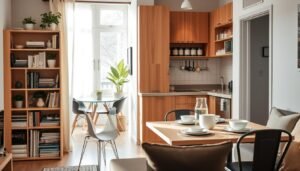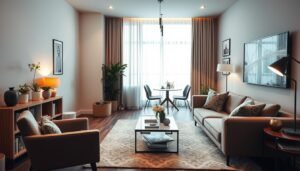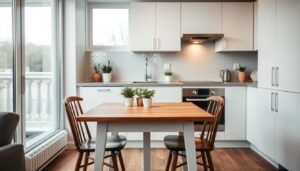
You can turn your living space into a calm, intentional place. Get rid of things you don’t need and focus on what’s important. A minimalist apartment makes your home peaceful and shows your true values.
Choosing simplicity helps you save time and energy. By picking what you need, you make a space that’s clear and calm. Every piece of furniture has a purpose in your life.
Table of Contents
What is a Minimalist Apartment?
The average U.S. household has about 300,000 items. This can make you feel stressed and trapped. A minimalist apartment helps you focus on what’s important by clearing out the clutter.
Defining Minimalism in Interior Design
Modern minimalism is about choosing what you really need. It’s not just about empty rooms. It’s about making your space a place of joy and calm.
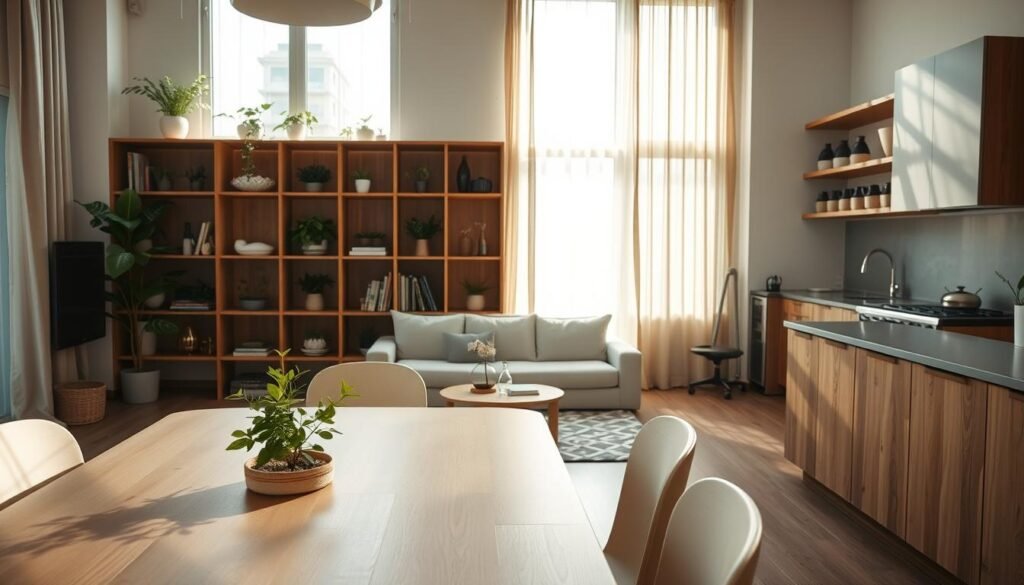
The Scandinavian interior style is a big inspiration for minimalist homes. It uses simple designs and natural colors. This style shows how less can be more, making a room feel bigger and more welcoming.
Key Principles of Minimalist Living
Living minimally means changing how you see your stuff. You should value what’s important, not just what you can buy. Here are some key ideas to get you started:
- Intentional Selection: Keep only what brings you joy or is useful.
- Visual Clarity: Keep surfaces clean to feel calm and relaxed.
- Functional Design: Choose furniture that is both useful and fits well in your space.
- Sustainable Habits: Pick items that last a long time to reduce waste.
By following these ideas, you can make your home a peaceful place. It should feel open and truly yours. Remember, the goal is to have a home that feels welcoming and calm.
Benefits of a Minimalist Lifestyle
Choosing a decluttered home is more than looks. It brings mental clarity. By getting rid of too much stuff, you make room for what’s important.
Reduced Stress and Clutter
Too much stuff distracts us. Studies show a simple living space lowers stress. Less stuff means less visual noise, helping us relax.
With fewer things, you spend less time cleaning. You can enjoy hobbies, travel, and friends more. This is a big plus of a minimalist lifestyle.
Enhanced Focus and Productivity
A tidy space helps you focus better. When your area is clean, your brain works faster. You’ll do deeper work more easily.
Let’s compare a cluttered home to a minimalist one:
| Feature | Cluttered Home | Minimalist Home |
|---|---|---|
| Visual Stimuli | High distraction | Low distraction |
| Cleaning Time | Several hours weekly | Minimal effort |
| Mental State | Increased anxiety | Improved focus |
| Space Utility | Limited by items | Optimized for living |
Keeping a decluttered home makes a space for success. A simple living space is key to a better life. Choosing a minimalist lifestyle is good for your future happiness.
Choosing the Right Color Palette
Your color palette is key to a harmonious home. It sets the tone for a balanced space. This choice is crucial for a home that shows your style and order.
Neutral Tones for Calmness
A Scandinavian interior often starts with soft, neutral colors. White, cream, and light gray reflect light, making rooms feel bigger. These colors also help keep things calm and simple.
Adding different textures in the same color family can make your space feel richer. For example, a wool throw on a linen sofa adds depth without bold colors. This keeps your home a peaceful place.
Adding Accents for Personality
While neutrals are the base, don’t shy away from bold accents. A sleek design can benefit from a bold color that catches the eye. Think deep navy, forest green, or terracotta to add interest.
Here’s a table to help balance your colors:
| Color Strategy | Primary Use | Visual Impact |
|---|---|---|
| Monochromatic | Walls and Large Furniture | Creates a serene, expansive feel |
| Soft Neutrals | Flooring and Textiles | Adds warmth and comfort |
| Bold Accents | Art and Decorative Objects | Provides character and focus |
Keep your space balanced by using only one or two bold colors. This keeps your home sophisticated and open. It lets your personality shine while keeping things light.
Essential Furniture Pieces for Minimalism
Minimalism is not just about empty space. It’s about choosing furniture that has a purpose. Every item in your home should add to a sleek design that feels calm and intentional. This way, you create a space that supports your life without distractions.
You Might Also Like
Small Apartment Decor Ideas on a Budget
Moving into an Apartment Alone for the First Time Tips
Renter Friendly Wall Decor Ideas to Refresh Your Space
Multi-Functional Furniture Solutions
In small living areas, every inch matters for comfort. Choose furniture that does more than one thing, like a storage ottoman or a sofa that turns into a bed. These pieces keep your space clean and organized.
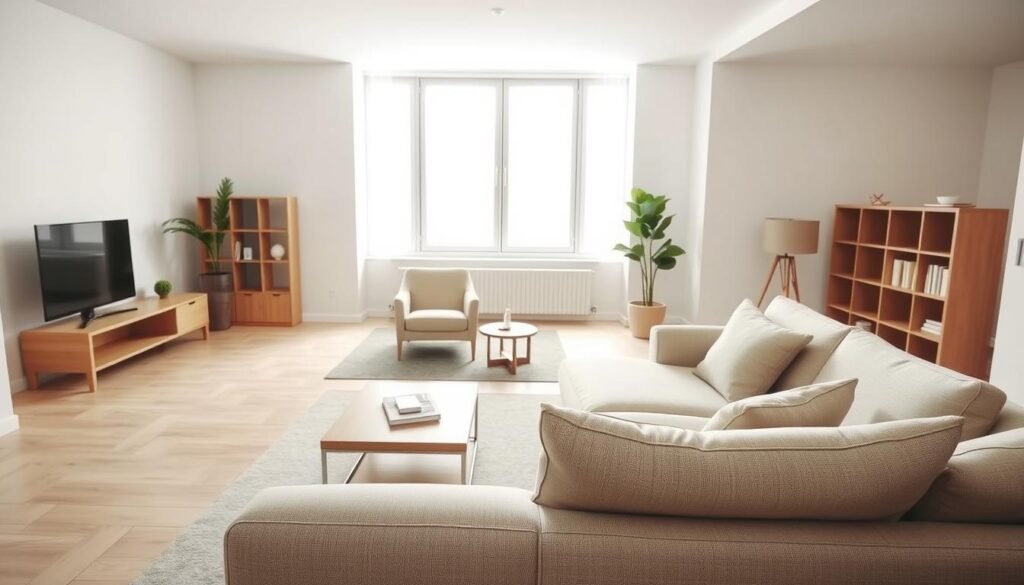
Opting for minimalist furniture that meets your needs is smart. A wall-mounted desk or a nesting coffee table offers extra space when needed. They also hide away when not in use, keeping your home feeling open and uncluttered.
The Importance of Quality Over Quantity
Investing in one high-quality piece is better than buying many cheap ones. Quality furniture lasts longer, saving you money and reducing waste. It’s a smart choice for your home.
Choosing well-made items means your space will stay beautiful and strong for years. Opt for materials like solid wood or metal for a lasting look. Here’s how different choices affect your home:
| Feature | Cheap Furniture | Quality Furniture |
|---|---|---|
| Durability | Low (1-3 years) | High (10+ years) |
| Aesthetic | Dated quickly | Timeless appeal |
| Sustainability | High waste | Eco-friendly choice |
| Maintenance | Frequent repairs | Minimal upkeep |
Decluttering Your Current Space
To get a decluttered home, you need more than a weekend of cleaning. It’s about changing your daily habits. Start small to avoid feeling overwhelmed.
Strategies for Effective Decluttering
Begin with one small area, like a junk drawer or closet shelf. This helps you see progress and avoid burnout. After clearing a space, set rules to keep it clean.
The “one in, one out” rule is key for keeping things tidy. When you get something new, get rid of something old. This stops clutter from building up.
- Start with high-traffic areas like the entryway or kitchen counters.
- Dedicate just fifteen minutes each day to sorting through a small bin.
- Use the “one in, one out” rule to prevent future buildup.
Tips for Letting Go of Unused Items
It’s hard to let go of items, but it’s crucial for a decluttered home. Try the three-month test. Put items you’re unsure about in a sealed box and hide it.
If you don’t miss the items in three months, you can donate or recycle them. This way, you don’t have to decide right away. You’ll find you don’t need them as much.
Remember, your goal is a space that makes you feel good, not one full of stuff. By sticking to these habits, you’ll keep your home decluttered and welcoming.
Incorporating Sustainable Practices
Minimalism and sustainability aim to reduce waste and value quality over quantity. By owning fewer items, you lower your demand for new products. This approach makes your home better for you and the planet.
Eco-Friendly Materials
Choose items made from sustainable and renewable resources for your home. Look for furniture made from bamboo, reclaimed wood, or recycled metals. These materials last longer than mass-produced ones.
Think about the finish of your furniture and decor too. Use non-toxic, low-VOC paints and natural fabric dyes. Investing in eco-friendly goods means you won’t need to replace them as often. This is key to a minimalist lifestyle.
Minimalist Living and Sustainability
Digitizing your media is a great way to be sustainable. Turn CDs, DVDs, and paper documents into digital files. This saves space and reduces waste.
Living with fewer, more durable items is sustainable. Focus on essential items that serve a clear purpose. This stops the cycle of buying things you don’t need. It simplifies your life and helps the planet.
Maximizing Space in Small Apartments
Designing a small home means looking at walls, not just floors. Keeping floors clear of clutter is a key rule for a bigger feel. This keeps your space airy and open, like a true minimalist apartment.
Creative Storage Options
In a small space, you need smart ways to hide things. Choose furniture that does more than one thing to cut down on items.
- Use ottomans with hidden spots for blankets or books.
- Bed frames with drawers underneath are a good choice.
- Nesting tables that hide away when not needed are smart.
These ideas help keep your space neat without losing function. Hidden storage keeps things looking clean and organized.
Utilizing Vertical Space
When floor space is gone, walls are your best friend. Wall shelves let you show off important items without blocking paths.
Think about tall, thin cabinets that make your ceiling seem higher. They use space well and keep furniture small. Vertical organization makes your space feel bigger and brighter.
Minimalist Decor: Keeping It Simple
Minimalist design is not about having nothing. It’s about having just what you need to feel at home. When you choose minimalist decor, you focus on quality over quantity. Each item should have a purpose or make you happy every day.
Selecting Art and Accessories
Choosing the right art is key to a cohesive look that matches your minimalist furniture. Pick one or two big, meaningful pieces for your walls. This keeps the room calm and lets your art be the main attraction.
For accessories, go for clean lines and neutral colors. A single sculptural piece or a quality ceramic bowl works well on a side table. Keeping surfaces clear keeps your home feeling calm and airy.
Using Natural Elements for Warmth
Adding organic materials brings depth and texture to your space. Think raw wood, smooth stone, or woven textiles. They add warmth and balance to your minimalist decor.
Plants are great for adding life to a minimalist space. A vase with flowers or a single potted plant is perfect. They contrast nicely with the structured, functional pieces in your home.
Creating a Cozy, Minimalist Atmosphere
Minimalism doesn’t have to feel cold. It’s great for making a cozy home. Focus on design choices to warm up your space. This way, your home stays simple yet feels welcoming and personal.
The Role of Lighting in Minimalism
Lighting changes a room’s mood fast. Choose warm, layered lights over harsh overhead ones. Gold hanging pendants can make a dining area feel fancy and cozy.
Use floor lamps with soft shades for cozy light spots. They add a gentle glow, making your home feel calm. Strategic lighting keeps your rooms cozy at night.
Textiles for Comfort Without Clutter
Textiles add warmth and comfort. Pick high-quality materials like wool, linen, or cotton. A plush rug or soft throw blanket can make your space cozy without clutter.
Choose curtains for privacy and natural light. They balance your furniture’s hard lines. Thoughtful layering of textures keeps your home comfy and functional.
Maintaining Your Minimalist Lifestyle
Your journey to a peaceful home needs daily care. Success comes from seeing your space as it changes with you.
Regular Decluttering Habits
Try a 10-minute timer for quick cleaning. It helps keep your space tidy without stress. IKEA’s modular storage makes it easier.
Staying consistent keeps your home feeling new and open.
Finding Joy in Simplicity
Modern minimalism is a journey that brings happiness. Owning less means more room for life’s moments. Enjoy the calm of a curated home.
Your dedication to minimalism brings clarity to your days. Keep making your space better.