
Did you know nearly 60% of city homes feel too small for guests? You’re not alone if your space is tight or has weird shapes. Making a small area beautiful and useful is doable with the right plan.
By choosing intentional design, you can beat common space problems. A smart small living room layout lets you use every inch without losing style. We’ll show you how to make your home feel big and welcoming.
Expert tips can help you use your space better, even with narrow walls or low ceilings. Let’s explore how to make your home a cozy and efficient haven.
Table of Contents
Assessing Your Space and Defining Your Needs
Changing your home starts with knowing your space. Before buying new decor, understand your apartment living room design well. This helps avoid mistakes and makes sure each item has a role.
Measuring Your Room Dimensions Accurately
Getting your room’s layout right is key. Use the magicplan app to make detailed 2D or 3D designs. It’s easy and gives you a pro-grade plan without needing CAD skills.
“Design is not just what it looks like and feels like. Design is how it works.”
Having the right floor plan is crucial for optimizing small spaces. With your measurements, you can see where furniture fits. This keeps your space both useful and nice-looking.
Identifying Your Primary Living Room Activities
Your furniture should match how you live. List your favorite activities, like movie nights or reading. This helps pick the right furniture for your life.
Thinking about your lifestyle is important for optimizing small spaces. If you don’t have big parties, choose smaller furniture. This makes your apartment living room design feel bigger and better.
Mastering the Small Living Room Layout
Creating a good small living room layout is more than picking furniture. You need to think about how each piece fits with your home’s design. This makes the room feel planned, not cramped.
Establishing a Focal Point
Every room needs a main focus to keep furniture from looking lost. Choose a key spot like a big window, fireplace, or media console. This gives your eyes a clear place to land.
Without this anchor, your room can feel messy and confusing. After picking your focal point, arrange your seats to face it. This helps the room feel more stable.
Creating Clear Traffic Paths
Function is key in stylish small living rooms. Make sure moving around is easy to avoid feeling like you’re in a maze.
Keep a path of 30–36 inches open in your room. This lets you and others move easily without hitting furniture.
Keeping paths clear makes your home welcoming and useful every day. By doing this, even small rooms can feel bigger.
Selecting Space-Saving Furniture Pieces
When you are optimizing small spaces, every piece of furniture must earn its keep. You should pick items that are versatile but still comfy and stylish. This way, you can make a room that feels open and useful.
Choosing Multi-Functional Furniture
The best space-saving furniture ideas are pieces that do more than one thing. For example, a storage ottoman can be a coffee table, footrest, and a place to hide things. This makes your room feel less cluttered.
“Good design is as little design as possible. Less, but better, because it concentrates on the essential aspects, and the products are not burdened with non-essentials.”
Opting for Leggy Furniture to Create Openness
Furniture with exposed legs makes a room look bigger. Seeing the floor under your sofa or chairs makes your room feel lighter. This trick helps your room not feel stuck to the ground.
Benefits of Open-Base Sofas and Chairs
Open-base designs are great for busy homes where things get worn out. Choose polyfill cushions instead of down. Polyfill keeps its shape longer, keeping your seats comfy and neat.
| Furniture Type | Primary Benefit | Best Use Case |
|---|---|---|
| Storage Ottoman | Hidden storage | Living room seating |
| Leggy Sofa | Visual openness | Small floor plans |
| Polyfill Chair | Shape retention | High-traffic areas |
By using these tips, you can make the most of small spaces. Your goal is to find furniture that’s useful but also looks clean and airy. Picking the right furniture now will keep your home comfy for a long time.
Strategic Furniture Placement for Better Flow
Your furniture arrangement makes a small space feel big and welcoming. Many people put all furniture against walls, making the middle feel empty. But, by changing how you arrange things, you can make your space more useful.
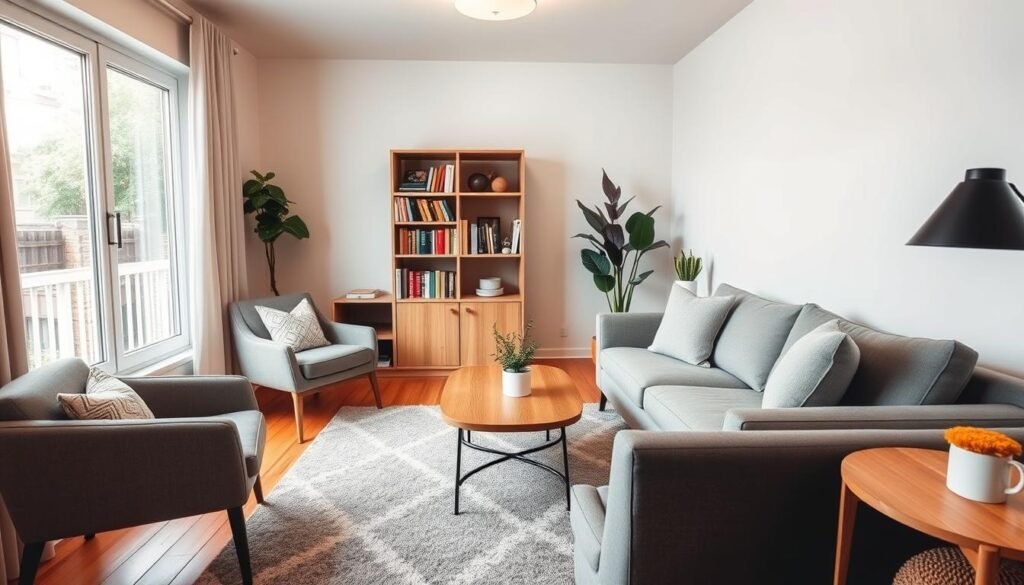
Floating Furniture Away from Walls
Moving your sofa and chairs a bit from the walls makes them feel closer together. This makes the seating area feel cozy and connected. Floating furniture also helps people move around the room better.
“The essence of interior design will always be about people and how they live. It is about the realities of what makes for an attractive, civilized, meaningful environment.”
Avoiding Oversized Pieces That Overwhelm the Room
It’s more important to choose the right size than to have a lot of furniture in a small living room layout. Big sectionals or heavy recliners can take up too much space. Pick furniture that fits your home well.
Here are some tips for choosing the right furniture:
- Choose slim-profile sofas with tight backs to save precious inches.
- Opt for nesting tables that provide surface area only when you need it.
- Use accent chairs with open frames to maintain visual lightness.
By choosing furniture carefully, your small living room layout can be both stylish and useful. A well-thought-out space lets you enjoy your home without feeling cramped.
Utilizing Vertical Space to Maximize Square Footage
When your floor space feels tight, look up. Many overlook their walls, but they hold the most potential. By focusing on the ceiling, you make the room feel bigger and more open.
Installing Floor-to-Ceiling Shelving
Floor-to-ceiling shelving is great for storage and style. It holds books, decor, and essentials without taking up floor space. Custom built-ins or tall shelves can turn a blank wall into something amazing.
Using the room’s full height keeps clutter off the floor. This keeps your space clean and organized. It also lets you move around easily.
Using Wall-Mounted Media Consoles
A wall-mounted media console changes the game for small living room organization. It makes the room feel lighter and less crowded. Plus, it’s easy to clean and looks modern.
Mounting your TV above the console is a smart move. It frees up space for decorations or storage. This helps keep your room organized and stylish.
Enhancing Your Cozy Living Room Setup with Lighting
Lighting is the secret ingredient for a cozy living room. It’s key when you don’t have much natural light. Choosing the right lights can change the mood and show off your home’s features.
A well-lit room feels bigger, welcoming, and useful for everyday activities.
Layering Ambient, Task, and Accent Lighting
For a balanced look, mix different lights in your space. Ambient lighting gives a general glow. Task lighting shines on areas like reading spots or side tables.
Accent lighting highlights special features like art or textures on walls.
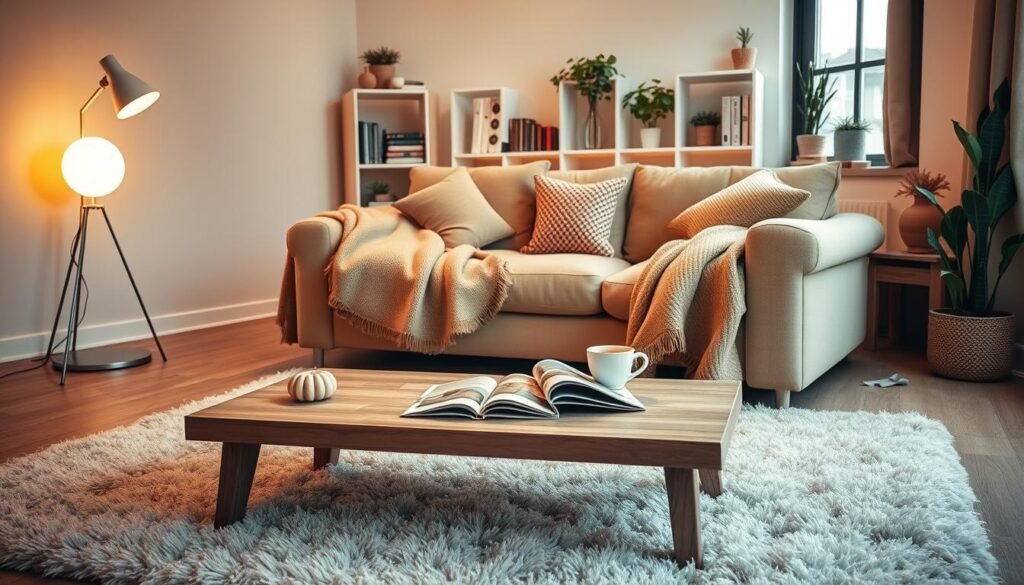
Using all three types of lighting makes your room look good. Dimmers help change the light’s strength. This makes your cozy room comfy at any time.
Using Sconces to Save Floor Space
When space is tight, every inch counts. Wall-mounted sconces are a smart choice. They light up your room without taking up floor space.
These lights add a sophisticated, designer touch to your walls. You can adjust them to light up your sofa or reading area.
This keeps your floor clear and makes the room feel open. Choosing wall lights helps you use your space better and makes your home look great.
Incorporating Mirrors and Reflective Surfaces
Light and reflection are key to maximizing small spaces. They help make a room look bigger than it is. This trick is great for making a room feel airy and open without changing the layout.
Placing Mirrors to Create Depth
A big mirror can make a wall feel like a window. It adds instant depth to a small space. When you put a mirror opposite a window, it spreads natural light around the room.
Using floor-length mirrors or many small ones can make a cool gallery. Make sure the mirror shows off something nice, like art or a plant. This adds style and keeps the room feeling open.
Selecting Glass and Acrylic Furniture
Choosing the right furniture is key when maximizing small spaces. Glass and acrylic furniture is great because it doesn’t block your view. These materials let your eyes move through them, making the room feel less crowded.
For example, a clear coffee table or a glass side table gives you space without blocking your view. These pieces are incredibly versatile and fit any style. They keep the floor visible, helping to maximize small spaces and keep the room flowing.
| Material Type | Visual Impact | Best Use Case |
|---|---|---|
| Glass | High Transparency | Coffee and side tables |
| Acrylic | Lightweight/Modern | Chairs and accent pieces |
| Mirrored | Reflective Depth | Wall decor and consoles |
The goal is to keep the room feeling light and free. By picking the right furniture and using mirrors, you can easily maximize small spaces.
Choosing the Right Color Palette for Tiny Living Room Decor
Your wall color is key for your apartment living room design. It sets the mood for your space. The right colors can make a small room feel big and welcoming.
Using Light and Neutral Tones
Light colors make your room feel bigger. Soft white, cream, or light gray reflect light. This makes your room look bigger and feel fresher.
Neutral colors are great for changing things up. They don’t clash with other colors. This is why designers love them for apartment living room design.
Adding Depth with Monochromatic Schemes
Try a monochromatic scheme for a unique look. Use different shades of one color for your tiny living room decor. This adds depth and interest without being too busy.
This style blends your furniture with the walls. It makes your room look bigger. Play with subtle changes to keep your space calm and connected.
| Color Strategy | Primary Benefit | Best Application |
|---|---|---|
| Light Neutrals | Reflects light | Walls and ceilings |
| Monochromatic | Adds depth | Furniture and textiles |
| Soft Pastels | Adds personality | Accent pillows or rugs |
Implementing Smart Small Living Room Organization
Mastering small living room organization makes your home stress-free. Every inch is important in a small space. Intentional storage makes your tiny living room decor better and keeps it inviting.
Utilizing Hidden Storage Solutions
To keep your room airy, hide your clutter. Look for space-saving furniture ideas that do more than one thing. For example, an ottoman with a removable top is great for hiding blankets, games, or extra pillows.
Here are some smart storage ideas:
- Lift-top coffee tables with hidden spots for remotes and magazines.
- Storage benches under windows for seating and secret bins.
- Modular shelving units that you can change to fit your needs.
Decluttering Regularly to Maintain Openness
Don’t buy more storage just because you can. This is like the “Concorde Fallacy,” where you fill space because you can. Keep only what you really use and love.
Regular decluttering keeps your home open. Check your stuff every few months. This way, your storage works for you, not just for storing things. By being careful about what you bring home, your living room stays peaceful, not cluttered.
Adding Personal Touches Without Clutter
Making your home special is easy, even with little space. You can make stylish small living rooms by picking items that mean a lot to you. It’s all about mixing your personality with a clean look that doesn’t feel too busy.
Curating Meaningful Decor Items
In small spaces, every item should have a reason or make you happy. Don’t fill shelves with random things. Choose a few meaningful pieces that share your story. This keeps your home from feeling too full.
Think about showing off travel keepsakes or family photos on one shelf. This makes a special spot that looks planned, not messy. Remember, it’s better to have a few special things than many.
Using Textiles to Add Texture and Warmth
Textiles are key for a cozy living room setup. They bring color, pattern, and softness without taking up space. A soft rug or velvet pillows can change your room’s feel.
Switching these items with the seasons keeps your decor new. Layering different textures, like a big blanket on a chair, adds warmth and depth. These touches make your space welcoming and organized.
Your home should show off your style. By picking textiles and decor you love, your cozy living room setup stays a special place. This careful choice helps you keep a beautiful, useful home that feels just right.
Conclusion
Creating a small living room layout is all about making smart choices. You can make a small space look great and work well for you.
Using furniture that’s the right size and adding storage up high saves space. Each piece should add value, whether it’s comfy or useful. A good layout mixes looks with storage.
Try out different setups to find what works best for you. Stores like West Elm and IKEA have pieces that fit small spaces well. Listen to your gut as you make your space your own.
Your home should show who you are. By using these tips, you can make your small living room feel big and welcoming. Begin your makeover today and enjoy your new space.

[…] are perfect for defining spaces without building walls. They separate your sleeping area from your living room. This keeps your functional studio layout by giving you privacy when […]
[…] a good living room layout is more than picking furniture. It’s about how you move and use your furniture. This way, you […]