
You can make your living area bigger by using vertical storage and furniture that does more than one thing. Good studio apartment design means smart layouts. These layouts help keep your sleeping, working, and relaxing areas separate without taking up too much floor space.
Living in a small space means seeing your area differently. By picking items that do two jobs, you turn one room into a super-efficient place. Use light colors and mirrors to make your space look bigger and brighter.
Using these tips, you can keep your home tidy and show off your style. Even the smallest places can feel big and welcoming with the right ideas.
Table of Contents
Understanding Studio Apartment Layouts
Learning your floor plan is key to living well in the city. By understanding your space, you can make the most of it. A studio apartment has everything you need in one room.
Types of Studio Apartments
Studios vary, and knowing yours is important for good studio apartment design. There are a few main types that affect how you arrange your furniture.
- Alcove Studios: These have an L-shaped nook great for a bed.
- Convertible Studios: These have a separate area for a bedroom or office.
- Standard Studios: These are open spaces that need creative zoning.
Common Features of Studio Designs
Modern studios have certain features to save space. Knowing these helps you plan better.
Expect an open-plan kitchen that blends with your living area. This layout is open but needs smart planning to stay tidy. High ceilings and big windows also make rooms feel bigger.
How Layout Affects Your Living Experience
Your floor plan affects your comfort and work. Knowing your home’s flow helps you arrange furniture well.
Strategic placement of your bed and seats is key. It keeps your space balanced and peaceful for urban living. Planning your layout makes your home more functional and enjoyable.
Choosing the Right Color Palette
Your wall colors and accents are key in studio apartment design. The colors you choose can make your space feel big or small. Light or neutral tones can make your area feel open and fresh.
You Might Also Like:
Studio Apartment Ideas to Maximize Every Square Foot
Creative Studio Apartment Bed Divider Ideas You’ll Love
How to Arrange a Studio Apartment to Feel Spacious and Cozy
Impact of Color on Space Perception
Light colors reflect more natural light, making rooms look bigger. A minimalist interior reduces clutter, letting the space’s architecture stand out. This keeps walls from feeling like they’re closing in.
Popular Color Schemes for Studios
A cool blue color palette is great for a calm space. It avoids the mistake of too many patterns or dark colors. Soft blues with whites or grays keep things clean and airy.
For a warmer feel, try beige or cream. These earth tones are cozy and work with many textures. Keeping colors consistent makes your space feel whole.
Tips for Choosing Complementary Colors
Choosing complementary colors is key for a calm atmosphere. Pick a neutral wall color and add colors with textiles or decor. This keeps your studio apartment design balanced and calm.
In a minimalist interior, small color pops add personality without losing space. Always test paint samples in different lights before painting. The table below shows how colors affect your space.
| Color Strategy | Visual Effect | Best For |
|---|---|---|
| Monochromatic | Expands space | Smallest studios |
| Cool Blues | Calming/Serene | Relaxation areas |
| Warm Neutrals | Cozy/Inviting | Living/Dining zones |
| High Contrast | Energetic | Accent walls only |
Furniture Selection for Small Spaces
You can make any small studio great by choosing furniture that works hard. Every piece must have a purpose in a small space. This way, your home can change with your needs all day.
Multi-Functional Furniture
Getting furniture that does two things is key for small spaces. A Murphy bed saves floor space by folding into the wall. A lift-top coffee table has hidden storage and works as a desk or dining area.
Essential Furniture Pieces to Include
Some furniture is a must for small spaces. A good sleeper sofa is essential for both relaxing and hosting guests. An extendable dining table is also great. It’s small for everyday meals but big for parties.
| Furniture Type | Primary Benefit | Best Use Case |
|---|---|---|
| Murphy Bed | Floor reclamation | Sleeping area |
| Lift-Top Table | Hidden storage | Living room work |
| Sleeper Sofa | Guest accommodation | Living room seating |
| Extendable Table | Flexible dining | Kitchen or nook |
Space-Saving Tips for Furniture Arrangement
How you arrange your furniture is as important as what you choose. Keep paths clear to avoid feeling trapped. Pulling furniture away from walls adds depth, making your space feel bigger.
Always measure your space before buying new furniture. This ensures a perfect fit. Using multifunctional furniture means your layout can change. This keeps your studio stylish and functional.
Creating a Distinct Living Area
Even the smallest studio can feel like a multi-room home. This is true when you master the art of zoning. By setting clear boundaries, you can separate your sleeping, working, and relaxing areas.
This approach helps you keep things organized. It also lets you use multifunctional furniture to keep the space feeling open and airy.
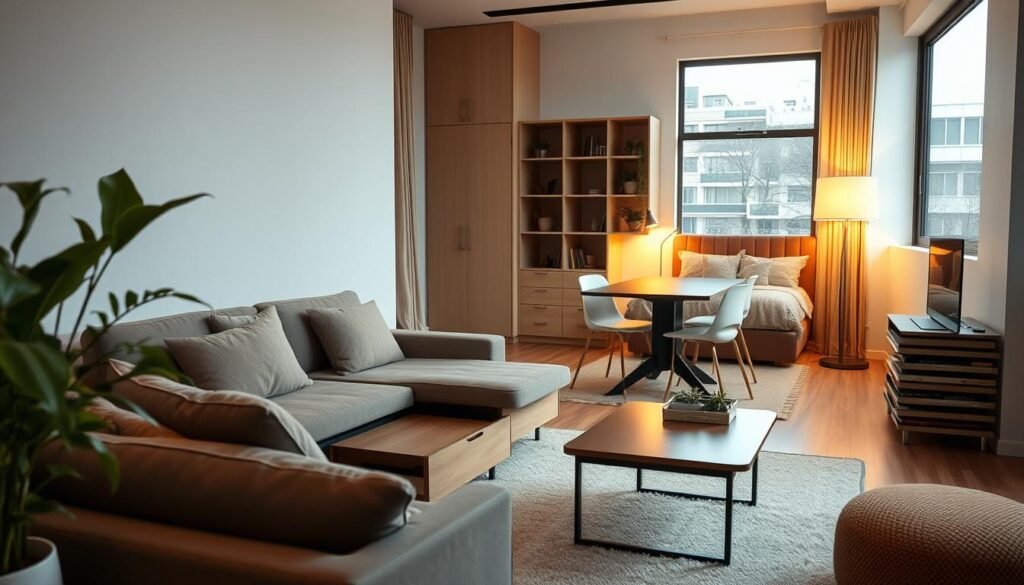
Dividing Spaces with Area Rugs
Area rugs are great for marking different zones in your apartment. A plush rug under your sofa makes a cozy living room area. This is separate from your sleeping quarters.
Choosing distinct textures or colors for each rug helps make these zones seem like separate rooms.
Using Furniture as Dividers
You don’t need walls to create privacy in a studio. A piece of multifunctional furniture, like a Kallax shelf, at the foot of your bed works well. It provides a functional visual divide.
This strategy lets you store books or decor. It also creates a clear separation between your bedroom and main living space.
Open-backed bookshelves are great because they let natural light flow through. You can also use a console table behind your sofa. This marks the transition between a dining area and a lounge.
These pieces offer essential storage without making the room feel cramped or closed off.
Incorporating Wall Separators
For a more flexible solution, think about using curtains or folding screens. Ceiling-mounted curtains can be pulled shut for privacy and tucked away for guests. Lightweight room dividers are also a good choice. They add style while keeping your home flowing.
Maximizing Storage Solutions
Good storage is key to a great minimalist design. In a small studio, every inch matters for comfort. Clear surfaces make your home feel bigger.
Clever Storage Ideas for Studio Apartments
Choose furniture that does more than one thing. Ottomans and coffee tables with drawers are great space-saving solutions. They hide items like blankets and books without losing style.
Wall hooks and magnetic strips in the kitchen and entryway are smart. They keep things handy and off the counters. This keeps your space tidy and welcoming.
Vertical Storage Options
Look up when space is tight. Wall-to-ceiling shelves make your room seem taller. They’re perfect for books and decor, keeping the floor free.
- Use tall bookcases to divide zones without blocking light.
- Install floating shelves above doorways for extra storage.
- Utilize wall-mounted cabinets to hide seasonal clothing.
Utilizing Under-Bed Storage
The space under your bed is often ignored. Use bins or bed frames with drawers for out-of-sight storage. It’s great for linens, winter clothes, or hobbies.
Right space-saving solutions keep your home tidy and minimalist. Organizing in hidden spots makes your space feel open and calm. Here’s a table to help you choose the best storage for your studio.
| Storage Method | Best For | Visual Impact |
|---|---|---|
| Wall Shelving | Books and Decor | High (Adds Height) |
| Under-Bed Bins | Linens and Clothing | None (Hidden) |
| Multi-use Furniture | Daily Essentials | Low (Streamlined) |
| Wall Hooks | Kitchen/Entryway | Moderate (Accessible) |
Lighting Techniques for Small Studios
Good lighting can make your studio feel bigger and more welcoming. Choose the right lights to make your space feel open and airy. Place lights in smart spots to use every inch of your home without feeling cramped.
Importance of Natural Light
Using natural light is the best way to make a small room look bigger. Keep your windows clear to let sunlight in. Mirrors can also help by reflecting light into dark spots, making your home brighter.
Types of Lighting to Consider
When space is tight, you need creative space-saving solutions. Wall sconces are great because they light up areas without taking up floor space. They help keep your floors clear, making your home look neat and tidy.
- Wall sconces: Perfect for bedside reading or task areas.
- Pendant lights: Great for defining a dining or kitchen zone.
- LED strips: Ideal for under-cabinet lighting to save space.
Layering Light for Coziness
To create a cozy feel, layer different lights in your home. Mix overhead lighting with task lamps for depth and warmth. This works well with multifunctional furniture, letting you change your space’s use from day to night.
By using these space-saving solutions, your lighting supports your lifestyle. A well-lit studio looks intentional and stylish, showing that small homes can be bright and beautiful with the right design.
Decorating with Style
Decorating a small home is like a puzzle. It’s about finding the right pieces for a small space. You can still show your style without using too much room.
Personalizing Your Space
Choosing the right size for your furniture is key. Big items can make a room feel tight. Pick pieces that fit your space well.
Choose items that mean something to you. A few special pieces are better than many random ones. This keeps your space clean and simple.
Selecting Artwork and Decor
Art is a great way to show your style without taking up space. Hang a big piece on a main wall. This adds character and keeps the floor open.
Think about the weight of your decor. Light materials like glass or metal add interest without being heavy. This keeps your space looking good without feeling cluttered.
Balancing Aesthetics with Functionality
Every item in your home should have a purpose or make you happy. Look at your decor with a practical eye. Use the table below to decide what to keep and how to display it.
| Decor Type | Functional Benefit | Styling Tip |
|---|---|---|
| Wall Art | Adds personality | Use vertical space |
| Decorative Baskets | Hidden storage | Group by texture |
| Mirrors | Reflects light | Place opposite windows |
Prioritizing quality over quantity keeps your home feeling open. Change your decor often to keep things fresh. This way, you can enjoy your favorite items without cluttering your space.
Outdoor Connections
Many studio dwellers miss the extra space outside their doors. By using your balcony or patio, you can make your life better. This is key for urban living, where every inch matters.
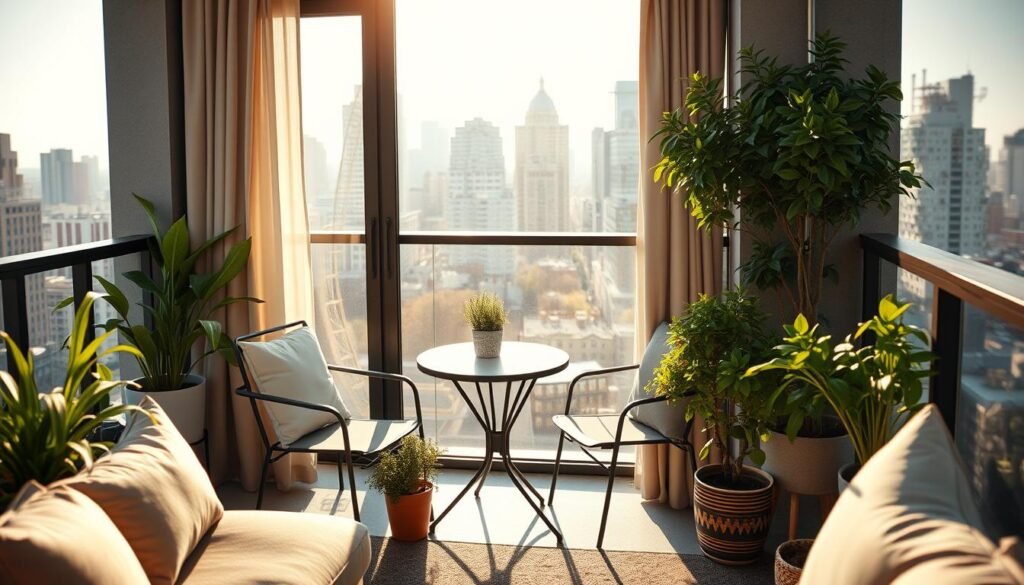
Benefits of a Balcony or Patio
Having a small outdoor area is a big plus. It lets you escape the single room feel. Turning 3sqm of indoor space into a terrace makes your home bigger.
This extra space is great for many things. It’s perfect for morning coffee or relaxing after work. It also keeps your home peaceful, away from the city noise.
Ideas for Small Outdoor Spaces
You don’t need a big deck for a nice outdoor spot. Choose items that use space well and look good. Here are some ideas:
- Foldable bistro sets that save space when not in use.
- Vertical planters for greenery without taking up floor space.
- Weather-resistant rugs to make the area cozy and define it.
- String lights or solar lanterns for a warm evening feel.
Integrating Indoor and Outdoor Living
To make your home feel bigger, blend your indoor and outdoor areas. Use the same flooring or colors to connect them. This is a sign of smart urban living.
Choose furniture that doesn’t block your view. When your indoor and outdoor spaces match, your home feels bigger and more welcoming. This connection makes your home a cozy and inviting place.
Incorporating Technology Smartly
Using smart solutions changes the game for city dwellers. Technology helps make your daily life easier and keeps your home tidy. With the right gadgets, you can use every inch of space without losing out on comfort.
Smart Home Devices for Efficiency
Smart home devices let you control your space with voice commands or apps. Smart plugs and automated lighting help save energy in small homes. They also keep your space clean by cutting down on physical clutter.
Smart thermostats are great for keeping your home just right. They learn your schedule and adjust the temperature for you. This saves you time and mental effort, making your apartment more comfortable.
Tech for Space Optimization
Replacing big, old electronics with smart ones can really help. A good projector can take the place of a big TV. This makes your walls free and your space more open.
Here’s why using projectors in small apartments is a good idea:
- Portability: Move your entertainment easily from room to room.
- Minimalism: No need for big media centers or TV stands.
- Immersive Experience: Get a movie theater feel without a huge screen.
Creating a Home Office Nook
Having a dedicated workspace is key for staying productive, even in small spaces. A wall-mounted desk that folds up is a great option. It keeps your living area open and gives you a place to work.
Keeping your workspace tidy is all about cable management. Use clips or cord sleeves to hide wires. This keeps your home office calm and organized, making it a better part of your daily routine.
Final Tips and Tricks for Studio Success
Living in a small space needs a lot of effort. Make sure to check your stuff every few months. This stops things from piling up and making your space feel cramped.
Maintaining a Clutter-Free Environment
Use bins from places like Container Store to keep things tidy. A clean home helps your mind stay clear. Only keep things that you really need every day.
Regularly Updating Your Design
As your life changes, so should your home. Try new things like changing your curtains or moving furniture. These small changes can make a big difference without a big expense.
Embracing Change in Your Space
See your home as a work in progress, not just a room. Using smart space-saving ideas lets you change your home as you do. Being open to change is key to enjoying your studio for years to come.

[…] Studio Apartment Design Ideas for Small SpacesBaking Sheet Storage Ideas for a Small KitchenL Shaped Living Room Layout Ideas for Better Flow […]